Identical New Products, Very Different Returns
Warehouses are judged on what they ship out, not what comes back, and departments often work apart on returns.
 Yahoo Finance · A Dyslexic High School Dropout Tackled the Massive Problem of Online Returns. This Year, His Business Will Make Over $500 Million.
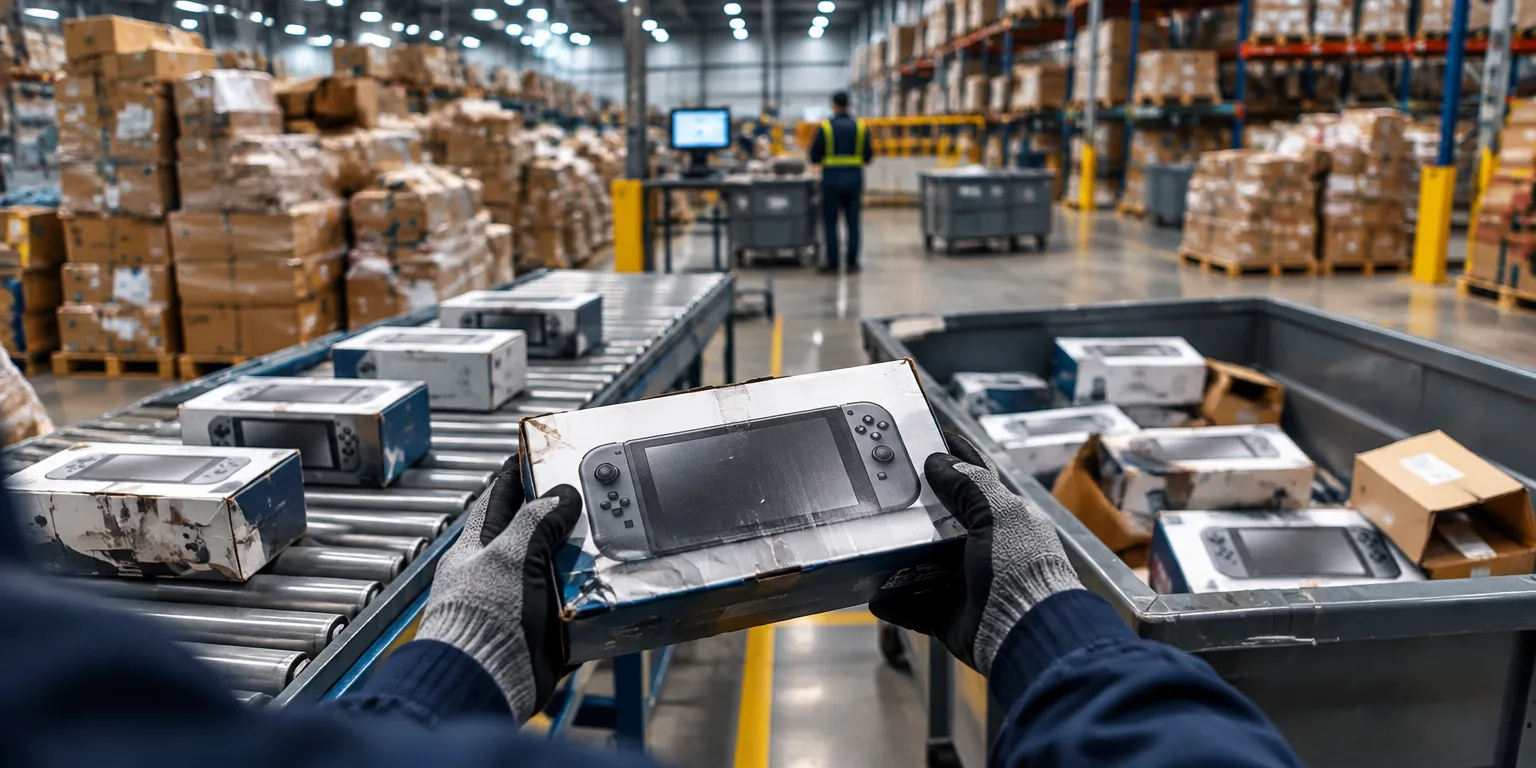
Shipping 1,000 new game consoles is simple because they are all the same. Bringing them back is hard because each return tells a different story.
Going out, 1,000 Nintendo Switch 2s can share one UPC code, the barcode that identifies them as the same product. Coming back, each unit needs its own judgment call. One might show wear from use, another arrive with crushed packaging, another look untouched after opening, another show heavy handling, and another turn out not to be genuine. Each must be checked and routed on its own.
The trip back usually runs on a different path, too. A package sent back by mail often does not go to the store that sold it. It often goes to a large warehouse. Will O'Brien, a veteran of the supply chain business who now helps lead True North Growth Partners, calls the buildup there "almost literal mountains of returns to be processed."
The mismatch is about incentives. O'Brien says a distribution center operator's measures center on outbound shipping, and he puts the operator's question this way: "How can I afford to spend 100 hours this week processing those returns?"
Even when the work gets done, the math is punishing. The retailer may have to send an item elsewhere for cleaning, repair, or new packaging, and then send it on again for resale, likely for less. Sometimes it is cheaper to throw it away or sell it to a bulk reseller for a tiny fraction of its original price.
The structure inside the company adds friction. Store, online, shipping, and marketing teams usually work separately. That separation works for moving products out in volume, but it is much less efficient for managing returns, which need close coordination over how returns are promoted and handled.
Questions people ask
Why can't a returned item just go back on the store shelf?
Sometimes it can, if you return it in person and it is unopened and undamaged. Mailed returns usually go to a central warehouse because sorting, testing, and repackaging thousands of different used items takes space and equipment most stores do not have. Centralizing also lets retailers decide whether each item should be resold, refurbished, liquidated, or donated.
Why do stores offer free returns if they lose so much money on them?
Free returns help sell more in the first place. Shoppers say free and easy returns matter a great deal when buying online, especially for clothing and shoes where fit is uncertain. Retailers keep offering them to stay competitive, even though handling the returns is costly.
What happens to returns that are cheaper to throw away?
Historically, many were sold in bulk for a tiny fraction of the original price or sent to landfills, particularly low cost fast fashion. More retailers now try to resell, refurbish, recycle, or donate returns to recover value and meet waste reduction goals. But items that are damaged, unsanitary, counterfeit, or too cheap to process can still be discarded.