If a Part Costs Far More Than Its Materials, Fix How You Make It
Early Tesla batteries showed why: the materials cost $80 per kilowatt hour, not the $600 everyone assumed.
 Founders · How Elon Thinks
Elon Musk, the entrepreneur behind the rocket company SpaceX and the electric car company Tesla, decides where to attack costs with simple division. He compares what a finished part costs with what its raw materials cost, and uses the gap to find where better manufacturing could save money.
He calls the result the idiot index. As he puts it, "How much more does a finished product cost than the cost of its materials?" To get it, take the price you pay for the part and divide it by the market value of the basic stuff inside it. A low number means you are already close to the physical limit. A high number means most of what you are paying is for the way it is designed and made, not for what it is made of.
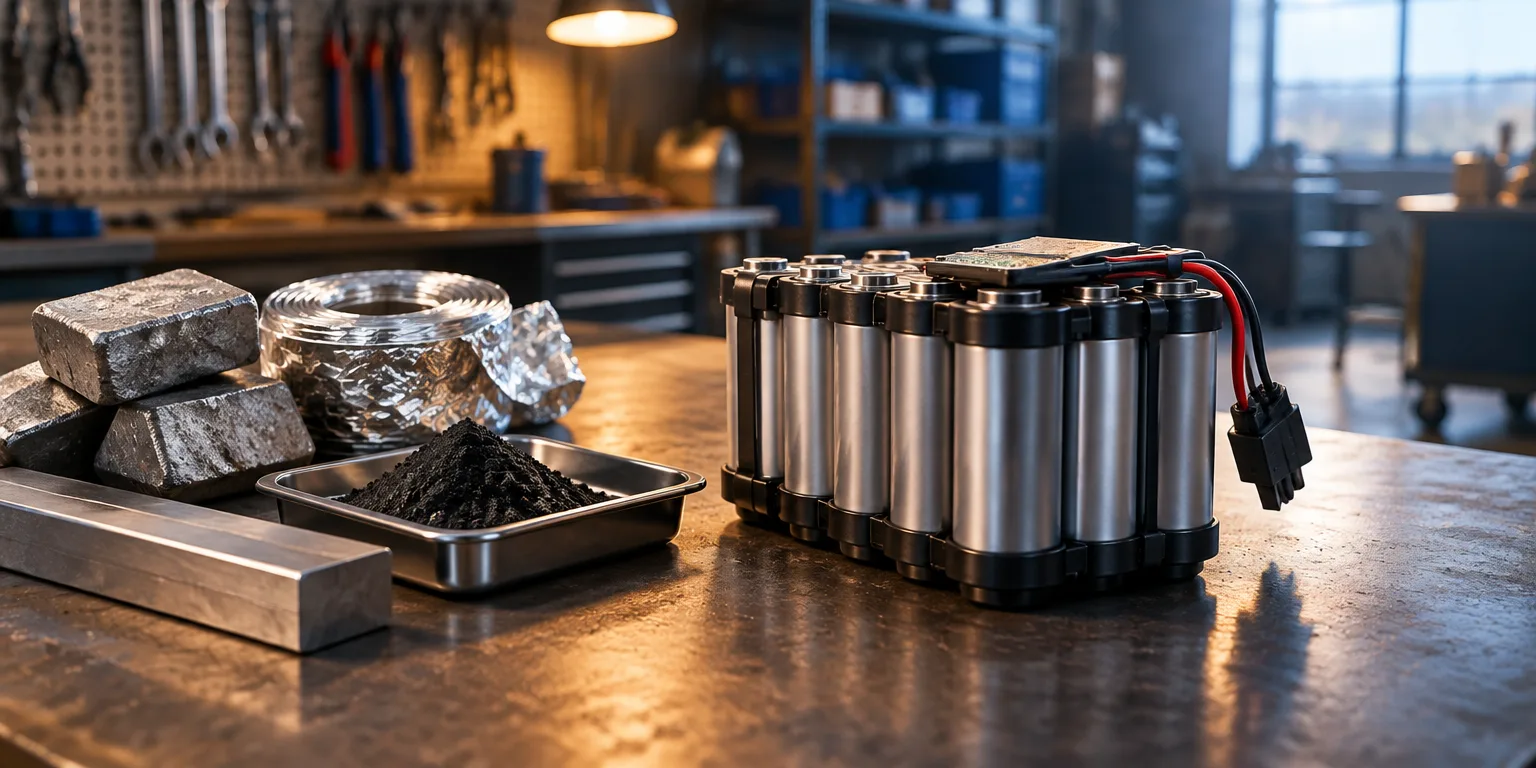
He first used that thinking on Tesla batteries. People thought affordable electric cars were out of reach because batteries had long cost about $600 per kilowatt hour. He listed what batteries are made of, cobalt, nickel, aluminum, carbon, polymers, and steel, and priced those ingredients using the London Metal Exchange. The total was only $80 per kilowatt hour. As he put it, the job was then to find clever ways to turn those ingredients into a working battery.
At SpaceX, he said, "If the ratio is high, you're an idiot." He expects his engineers to know which components score highest and lowest on that measure at all times. He contrasted that with reasoning by comparison, or judging what is possible from what other rocket companies paid in the past.
For a part with a high ratio, he said the cost could be cut with more efficient manufacturing. He starts from the theoretically perfect version of the product and works backward, asking, "What tools, methods, or materials do we need to create to get the atoms in that shape?" When his team says the cheaper way is impossible, he asks, "What would it take?" to prompt them to consider other answers.
To try it, pick one part and divide its price by the value of its materials.
Questions people ask
How do you actually figure out the raw materials cost?
Add up the weight of each main material in the part and multiply by the current commodity price for that material. For electronics or complex assemblies, engineers often use supplier quotes for bare materials or tear down a part to estimate its contents. The number does not need to be perfect to show whether you are paying mostly for atoms or mostly for process.
If a part has a low idiot index, should you just leave it alone?
A low ratio suggests the price is already close to the floor set by physics and markets, so there is less room to save. Musk said a part with a high ratio could have its cost cut with more efficient manufacturing. The comparison helps show which costs come mostly from materials and which come mostly from method.
Does this work outside factories?
The same logic applies to software, services, and office work, though the raw materials are time, computing, or basic inputs rather than metal. The useful question is still how much of the cost comes from the essentials versus the method. If the method dominates, simpler design, deletion of steps, or better tools may lower the cost.