If Fear Is the Only Reason, You Have to Do It
The novelist says fear alone is never enough reason to say no, a rule that carried her through the Soviet Union and China.
 Better in Person with Stephen Dubner · “I Trust Almost Anyone More Than Myself”
Jennifer Egan, the Pulitzer Prize-winning novelist of "A Visit from the Goon Squad," does not describe herself as brave. Asked about her adventurous youth, she said she chased intense experiences while often feeling frightened, drawn to worlds unlike her own.
Her rule came out of that tension. As she put it, "I'm not going to not do something just because it's scary."
Egan traced that impulse to her punk-club years, when she spent time with someone she had known in school who fell into heroin addiction, in a circle where people shared needles at a time before the disease had a public name and before many in that world did not survive. She did not feel superior or in control there, she said. She felt like a wallflower among people she thought were cool, attracted to the electricity.
At the same time, she said, she lived with many phobias and was terrified of flying. Her answer was a bargain that she says shaped many choices in her life. She asks herself why she does not want to do something, and allows that there are often good reasons. But, in her account, if fear is really the only reason, then she has to do it.
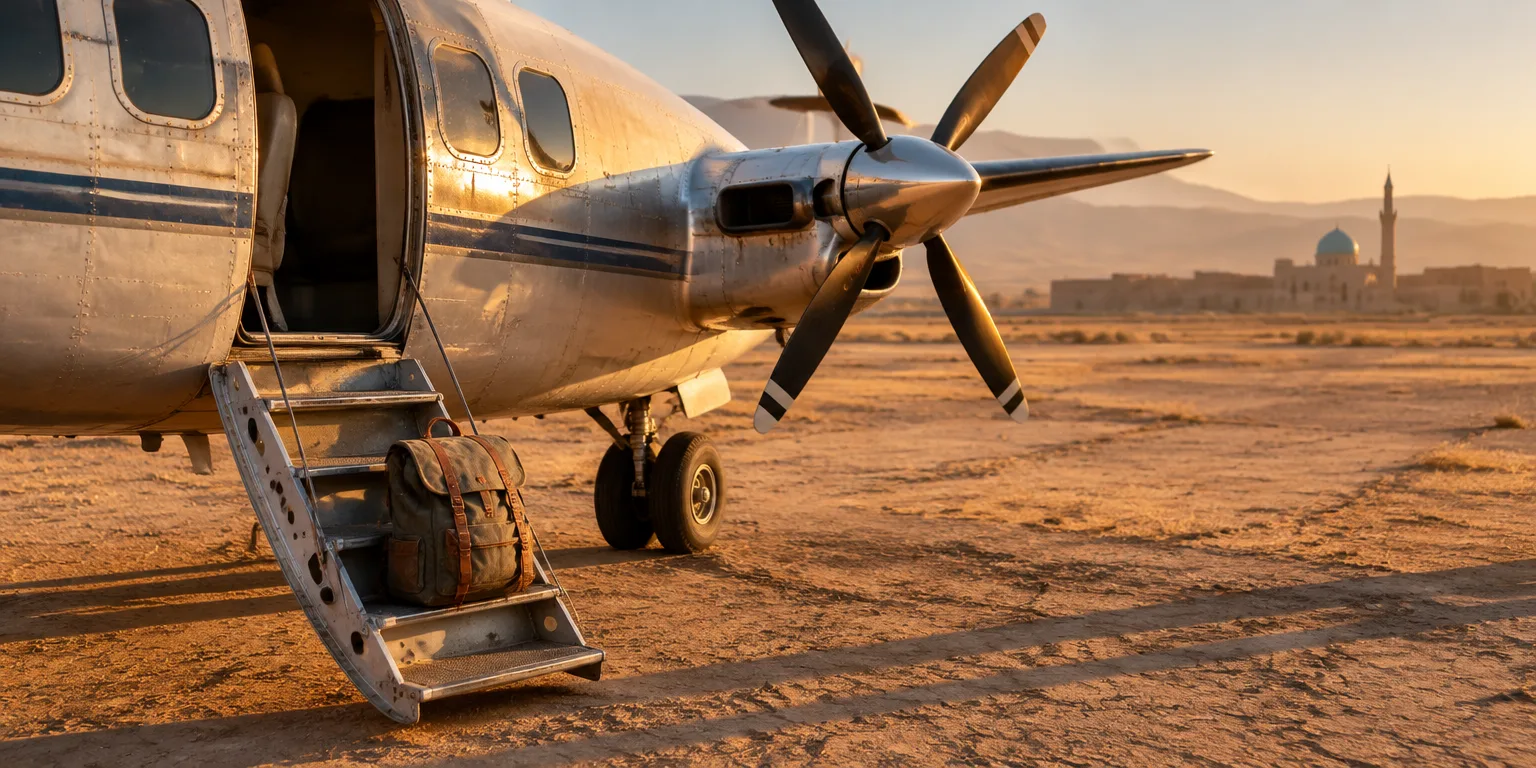
Despite her fear of flying, Egan said, "I took propeller planes to Tashkent and Samarkand" in the former Soviet Union and traveled alone with a backpack through China in the summer of 1986. She described the solo travel as fascinating and intense but also deeply uncomfortable.
She draws a sharp line between herself and the people she writes about. Her characters, she said, are often deeply unafraid. She sees that fearlessness as setting them apart from her, and part of why she enjoys imagining bold people.
Questions people ask
Where are Tashkent and Samarkand?
Tashkent is the capital of Uzbekistan, and Samarkand is its ancient Silk Road city famed for blue-tiled mosques and madrasas. In 1986 both were part of the Soviet Union, five years before Uzbekistan became independent in 1991.
Was solo travel in China unusual in 1986?
Yes. China had only begun reopening to foreign visitors in the late 1970s after the Cultural Revolution, and independent backpacking was rare and logistically difficult. A young American woman traveling alone there in 1986 would have faced limited transport, few hotels cleared for foreigners, and constant curiosity.