In 1939, America's Army Was Smaller Than Portugal's
Historians cite the turnaround as evidence that renewal is possible, but not automatic.
 Uncommon Knowledge · Niall Ferguson, Victor Davis Hanson, and Stephen Kotkin: Three Historians Debate the Era of Trump
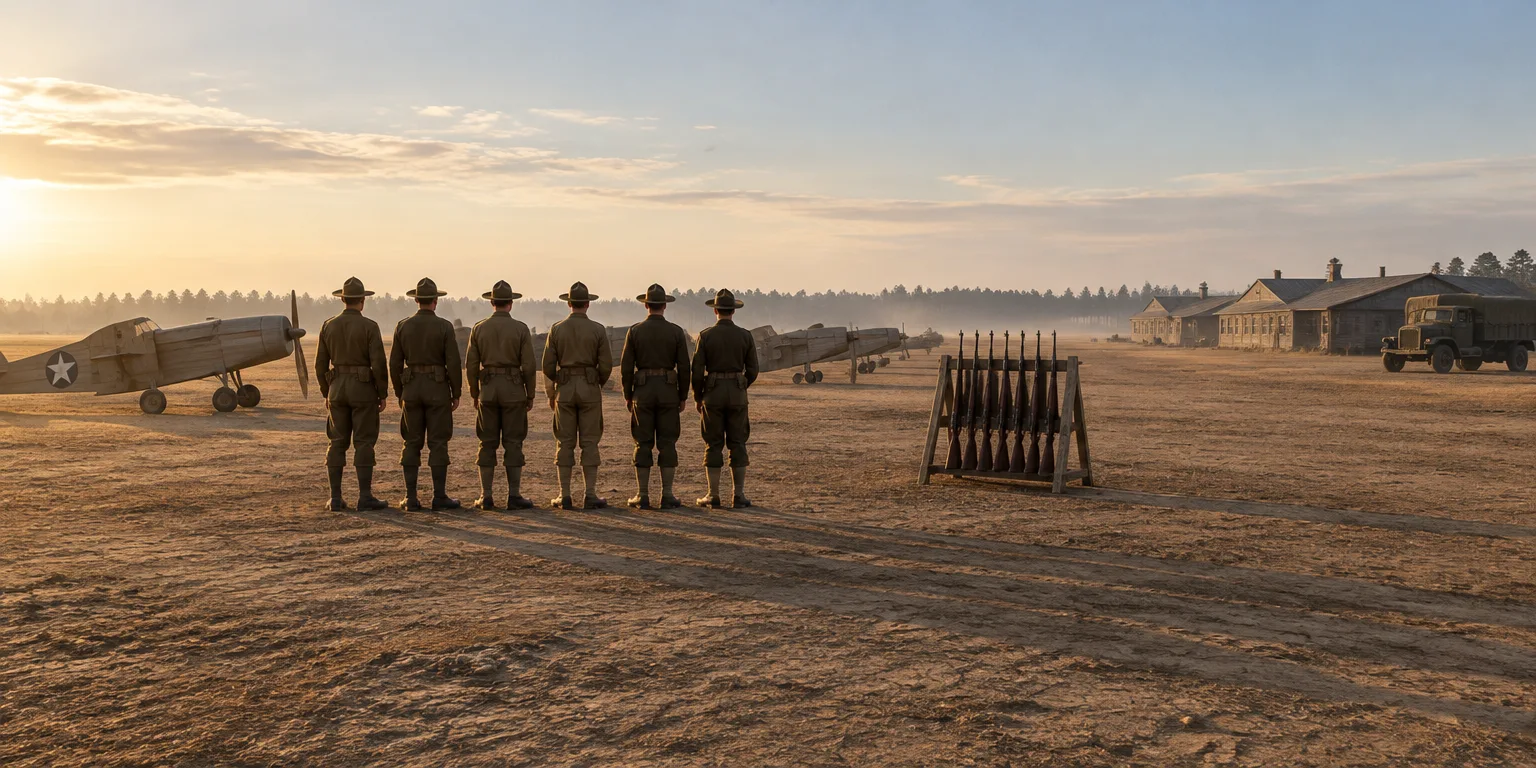
In 1939, as war began in Europe, America had the 17th largest army in the world, smaller than Portugal's.
The regular Army had fewer than 200,000 soldiers. Isolationism and Depression era budgets had kept military spending low, and large scale mobilization did not start until 1940 and 1941. Portugal kept a larger standing army in part to guard its empire in Africa and Asia, though it was far less powerful than the force America would soon build.
The comparison came from historian Victor Davis Hanson, who argued that America was in a bad stretch and recovering. He pointed to earlier recoveries after 1861, 1932, and 1939, noting that five years after starting with that tiny army, the United States finished World War II with a navy larger than any other in the world.
Historian Stephen Kotkin agreed that America has plenty of potential for renewal, but added, in his words, that "renewal is not an automatic thing that's going to happen. It's a matter of citizenship."
Questions people ask
What were the crises in 1861 and 1932 that Hanson mentioned?
Hanson was pointing to the Civil War, which began in 1861, and the Great Depression, which brought Franklin Roosevelt to office in 1932. Both were moments when American institutions seemed close to breaking and then adapted under severe pressure.
How large was the U.S. Navy by the end of the war?
By 1945 the United States had more than 6,000 ships, including over 100 aircraft carriers and escort carriers, plus thousands of destroyers, submarines, and landing craft. It was larger than all other navies combined, and it supported fighting in both the Atlantic and the Pacific.
What did Kotkin mean by saying renewal is a matter of citizenship?
He meant that recovery does not happen on its own through leaders or technology. It happens when ordinary people vote, serve, pay attention to public life, and hold institutions accountable.