In Asheville, Evictions Returned Before the Water Did
After Hurricane Helene, courts stayed open for landlords while police blocked residents from food and diapers in a closed grocery store.
 Behind the Bastards · It Could Happen Here Weekly 258
David Forbes walked into the courthouse after Hurricane Helene and saw the signs taped up inside: the restrooms were closed because the water supply was still unreliable.
Down the hall, eviction hearings were still going ahead. Landlords could press their cases even though tenants could not reliably drink, wash, or flush at home.
That contrast captures what recovery looked like in Asheville, North Carolina, where Forbes has covered local government for more than 20 years. The courts treated collecting rent as essential, and running water as something residents could live without.
Local groups pressed for a moratorium, but none was granted. Forbes said city leaders could have asked county officials, who handle evictions in North Carolina, to pause them, and said the governor, a Democrat, could have declared a moratorium.
Weeks after Helene, in fall 2024, he described the result as two cities. In one, neighbors organized food, water, and aid, while in the other, expensive rents and thousands of short term rentals set the terms for who could stay.
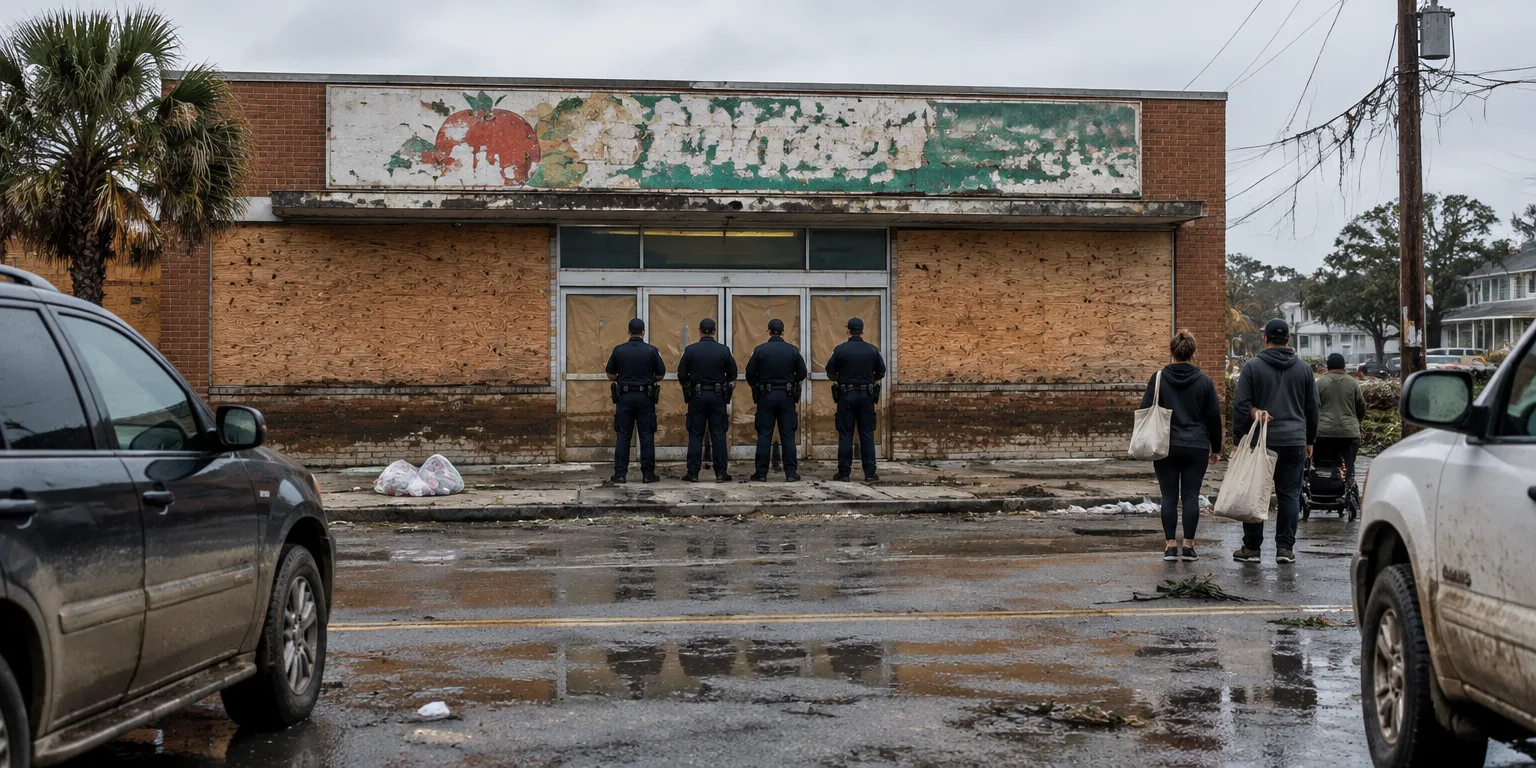
Outside an abandoned grocery store, he saw the second city in uniform. A line of police officers stood guard to keep people from taking food for themselves, along with diapers and other supplies families needed without running water.
He called it a searing example of what police were deployed to protect, the ability to write off the loss rather than let residents use what was inside. Forbes said covering Asheville local government for more than 20 years "is one of the things that made me an anarchist."
The water failure was not only the storm. A few years earlier, a cold snap had cut service to much of Asheville plus parts of the county, and the city had no plan for handing out water in a major outage.
When Helene arrived, there was still no major disruption plan. The mayor said distribution was the county's job, Forbes said, but the county had placed its emergency supply across a river that forecasters had warned would flood badly.
Volunteers organized to keep people housed, but Forbes said the wave of evictions was devastating. He said it was only about a month before he spoke that state and local governments started talking about a relief plan, once businesses complained that displaced residents had left and shops were short staffed.
Questions people ask
How bad was Hurricane Helene in Asheville?
Helene struck western North Carolina in late September 2024, bringing record flooding to the Asheville area. Rivers overtopped their banks, roads and bridges washed out, homes were destroyed, and the city's water system was badly damaged, leaving many residents without running water for weeks.
Could the city have stopped the evictions?
Eviction cases are usually heard in county court, and a city cannot directly stop them. But a city council can publicly ask county judges to pause cases, and a governor can order a statewide moratorium, as several states did during the pandemic and after major disasters.
Was it legal to stop people from taking food from the store?
In general, food in a closed store still belongs to the company, even after a disaster, and police can enforce trespassing and theft laws. During emergencies, governments sometimes order stores to share supplies or suspend those rules, but that requires an official emergency order.