In France, an Unequal School Feels Like a Broken Promise
A teacher shortage at one run down suburban high school spread nationwide because it challenged France's core promise of equal opportunity.
 Up First from NPR · Threats On US Bases Overseas, France Student Protest, German Spy Arrest
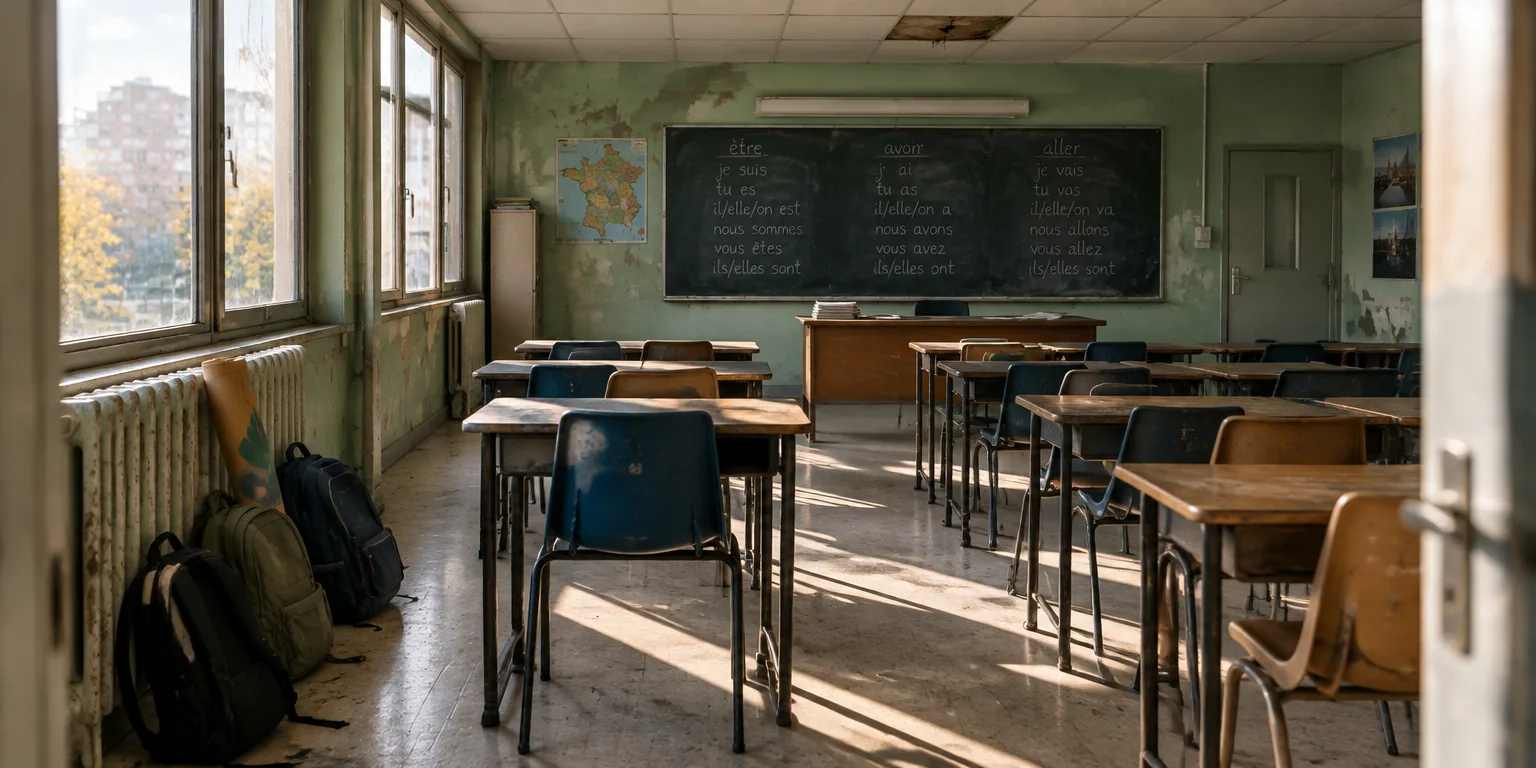
It started at a single secondary school in a working-class area outside central Paris, where there were not enough teachers. That kind of shortage is a common problem in schools in poorer areas.
Yesterday, that local complaint became a national protest. Marches in cities across the country drew what NPR correspondent Eleanor Beardsley described as "hundreds of thousands of young people," along with teachers, parents, and labor union members.
To understand why it spread so fast, it helps to understand what school means in France. Children grow up hearing that they can become anything if they apply themselves in l'ecole de la Republique, the School of the Republic. Public school is supposed to be the great leveler, the place where family background matters less than effort, and where democracy and equality get their start.
The movement hit a nerve because, as NPR correspondent Eleanor Beardsley put it, "it's also about inequalities in the French education system." Schools are not equal. Even elite public schools in central Paris have joined the protest and blockaded their own schools.
The protest came at a bad time for many households. Many families feel squeezed by rapidly rising fuel prices and cuts to social programs, under a deeply unpopular president, and six months before a presidential election in which far right candidate Marine Le Pen leads in the polls.
The government had been finalizing a budget that would cut teaching posts. For now, it has put up a platform for students to write their complaints and said schools may pause classes Friday for what the government called "internal democracy and reflection," while students wait for the prime minister to address the nation.
Questions people ask
How are public schools funded in France?
Mostly through national government funding, which pays teachers and sets a common curriculum. In theory that should make schools more uniform than in the United States, where local property taxes create large gaps, which is why visible inequality feels like a particular betrayal in France.
What specifically are the protesters asking for?
They want enough teachers to fill vacant posts, repairs to deteriorating buildings, and concrete steps to close the gap between schools in poor suburbs and those in wealthy city centers. The broader demand, echoed by parents and unions, is that the government protect school budgets rather than cut teaching jobs.
Are student protests common in France?
France has a long tradition of large student and labor demonstrations that can force governments to retreat on education and employment reforms. Past movements in 1968, 1986, and 2006 all began with students and grew when parents and unions joined, much as is happening now.