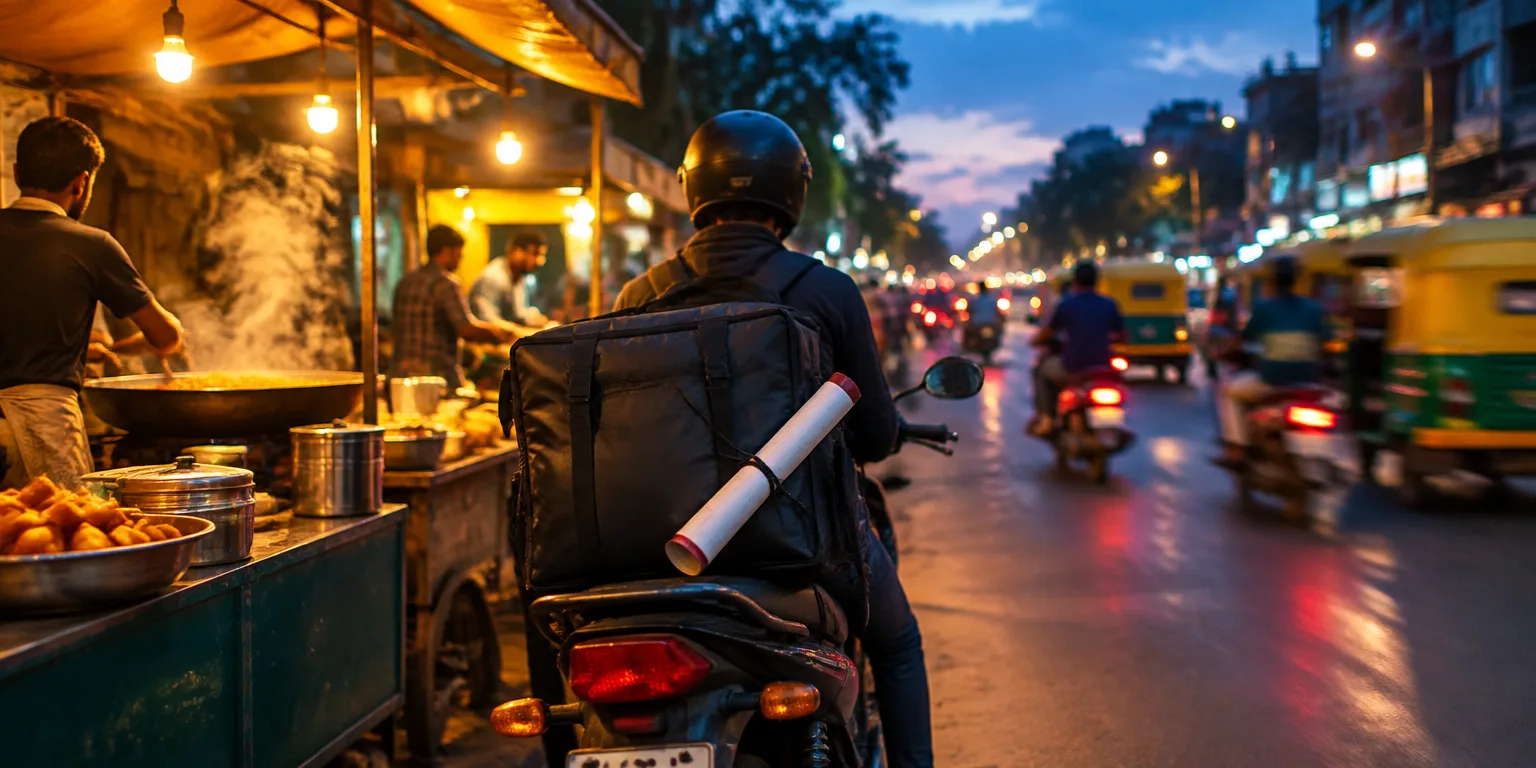
In India, an engineering degree can end with delivering takeout.
Bhagat says families sold farmland for engineering degrees, then graduates rode for food apps while the entry pay he knew barely moved since 1995.
 Tomorrow, Today · India's Gig Economy, Education & The Future of Work | Chetan Bhagat | Tomorrow Today
In India, an engineering degree can end with delivering takeout, and the entry level tech pay author Chetan Bhagat remembers from 1995 has barely moved, in his telling.
Bhagat, who started in information technology that year, repeats a figure he says he was given: Tamil Nadu alone produces 600,000 engineers a year. The parents he described there took loans and sold farmland to make their sons engineers, but he says that without a China-style manufacturing boom, there are not enough engineering jobs.
So some graduates ride for Zomato and Swiggy, the country's big food delivery apps, work that, in Bhagat's words, "is not what they set out to be." People leaving college with him earned 150,000 to 200,000 rupees a year, he says, and newcomers still do. If you are lucky, a job at technology services firm Cognizant paying 15,000 to 20,000 rupees a month, about $200, counts as a major win, or less than what one 10-hour shift at about $28 an hour at a New York McDonald's can pay.
Questions people ask
Why do so many Indian families push their sons to become engineers?
For decades engineering, along with medicine, has been seen as the safest ticket to a stable, respected job. With limited seats at elite schools, families often pay for private colleges of uneven quality, which leaves many graduates with a degree but without the skills employers want.
What are Zomato and Swiggy?
Zomato and Swiggy are India's dominant food delivery apps, similar to DoorDash in the United States. They employ vast fleets of motorcycle and bicycle riders to ferry restaurant meals and groceries to customers in crowded cities.
How far does $200 a month go in India?
About $200 a month is roughly 17,500 rupees, which can cover basic food and rent in a smaller city but is tight in Mumbai, Delhi, or Bangalore. It is far below U.S. minimum wages, yet in India a regular, salaried tech services job still carries security and status that gig work does not.