In Medieval Europe, the Plate Was Stale Bread
The slab held the meat, soaked up the juices, and then became part of dinner.
 Eating History · Season 2 (Episode 1): Who Really Invented the Sandwich?
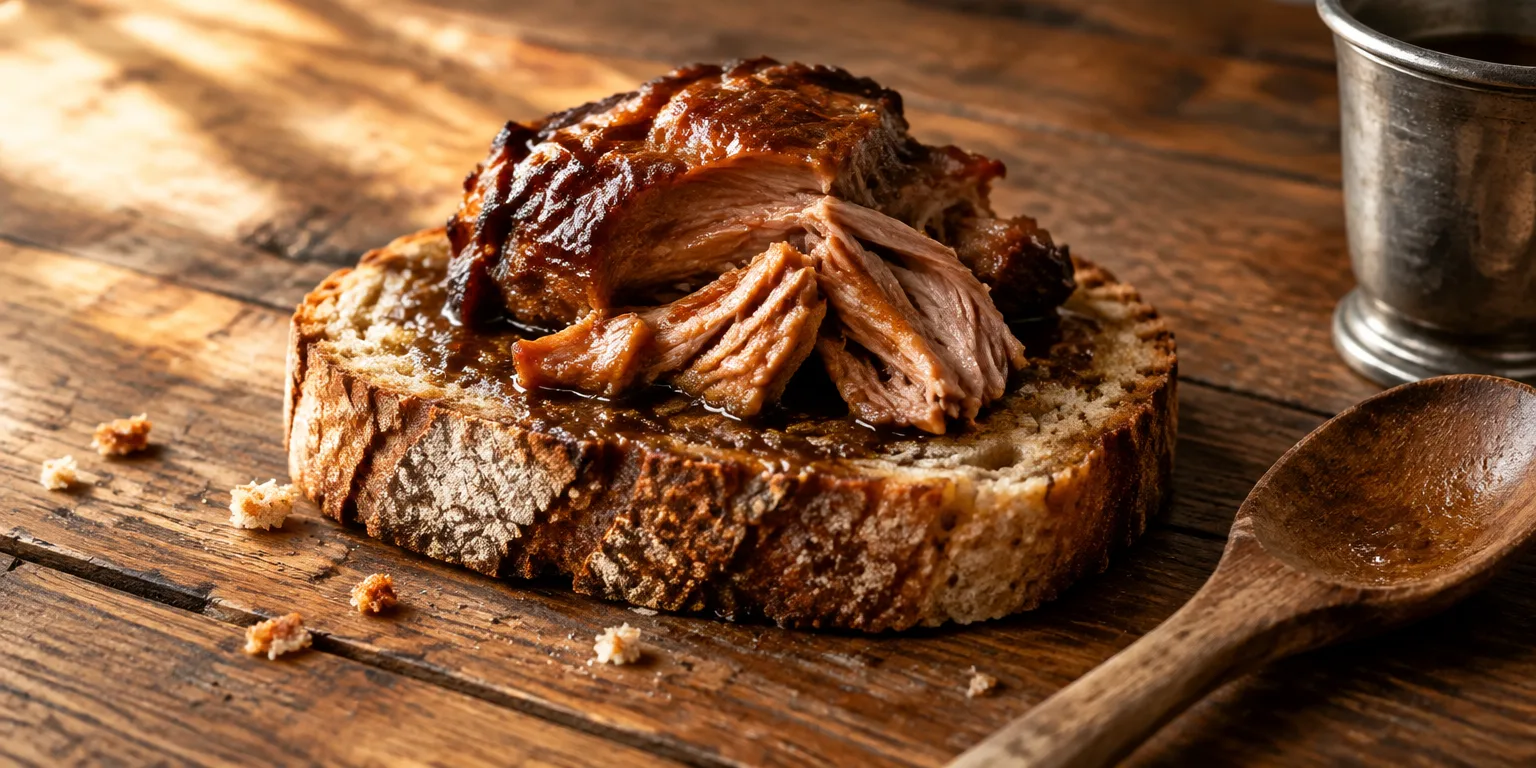
In medieval Europe, the plate was a thick slice of stale bread. Before factory-made plates were widespread, people ate meat off these slabs, known as trenchers.
The trencher worked like a plate, a spoon, and a wrapper at once. It held the meat in place and caught the juices running off it.
Adrienne Cheatham, a chef, says cooks still think about bread that way. She describes "a thick slice of rustic bread" set under a slow-braised roast soaking up the juices until it tastes as rich as the meat itself, not as a garnish but as part of the meal.
After dinner, the sodden trencher was sometimes eaten. Sometimes it was given to the poor.
Questions people ask
Why did it have to be stale bread?
Stale bread is firm and dry, so it holds its shape under hot meat and gravy instead of falling apart. A fresh, soft loaf would turn to mush too quickly to work as a plate. The staleness was the point.
Did rich people really eat off bread?
Yes, trenchers were common across medieval Europe before inexpensive ceramic and then pewter plates spread. Wealthier households later switched to wooden boards, metal, and pottery, while bread trenchers remained longer among poorer households. Even at grand tables, the gravy-soaked bread was valued, not just tolerated.
What happened to the trencher after the meal?
It depended on the household. It could be eaten by the diner, shared with others in the house, or handed out as charity to the poor. In any case, little went to waste, because the juice-soaked bread often tasted like the roast itself.