In Mexico, $20,000 Chinese EVs Feel Like Luxury Cars Americans Can't Buy
Chinese brands hold 90% of Mexico's electric market, with $20,000 models offering features missing from some rivals costing up to twice as much.
 Marketplace · Spooked investors sink Big Tech stocks
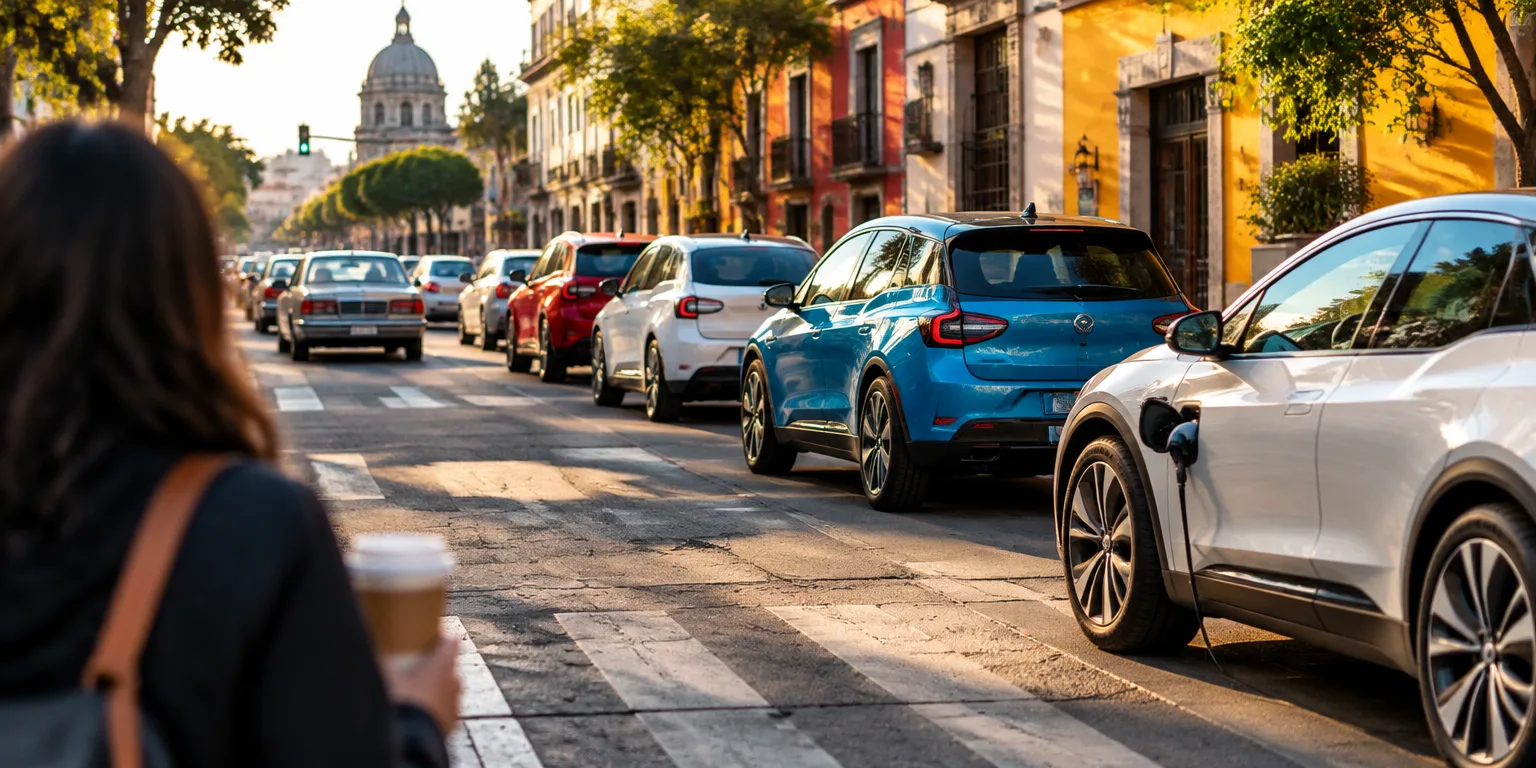
Michael Coren stood on a street corner in Mexico City and counted. American and European cars still filled the street, but within five or 10 minutes, Coren said, he spotted "five, 10, 15 or more Chinese vehicles" going by.
Coren, a columnist for the Washington Post, had come to test-drive the future. He had thought about going to Tijuana, the closest option, but chose Mexico City instead. It is the epicenter, he said, where Chinese cars have entered the country and "taken over in a matter of years."
Mexico has become a natural experiment in what happens when Chinese electric vehicles, cars that run on batteries instead of gasoline, compete directly with American cars. About 15% of cars now sold in Mexico are Chinese brands, and those brands hold about 90% of the electric vehicle market there. American automakers, Coren found, are not really making the electric cars Mexicans are buying.
What surprised him behind the wheel was value, not novelty. Chinese models are on sale at every price, starting around $20,000, and what they sell is affordable luxury. Even at the lowest price, he said, drivers get features and quality missing from cars that "might cost a third more, sometimes twice as much." As Coren put it, "It's not that they have magic cars. It's just that they're delivering so much value."
The Big Three Detroit automakers, General Motors, Ford, and Stellantis, saw the shift coming but pulled back when incentives and policy support for the transition evaporated, writing off more than $50 billion in electric vehicle investments. That leaves American automakers trying to serve two markets at once, a quickly electrifying world and a United States that hit 6% or 10% electric share and then declined, and is now recovering, but with no fast recovery expected soon.
Chinese automakers can now develop a new model in 18 months, compared with several years for most American brands. If the United States shuts them out entirely over national security and industry concerns, it would be unprecedented for the world's largest economy to be unable to buy from the world's largest car companies. For now, American buyers can only look south.
Questions people ask
Why can't I just buy one of these Chinese EVs in the United States?
A combination of tariffs and security rules keeps them out. The United States now adds a tariff of more than 100% to Chinese-built electric vehicles, which would turn a $20,000 car into a $40,000-plus car overnight. Washington has also moved to restrict Chinese software and sensors in connected cars, citing fears that driving and location data could be accessed from China.
Are these cheap Chinese EVs safe and reliable?
Many of the leading models score well in European and Australian crash tests, which are stricter than Mexico's standards. Brands like BYD and MG have built a reputation for solid batteries and generous warranties, though long-term repair networks outside China are still developing. As with any low-priced car, fit, finish, and dealer support vary by model and market.
Will American automakers ever match that price and speed?
They are trying, mainly by building cheaper batteries and simpler, more software-driven designs. Ford, General Motors, and Tesla have all talked about $25,000 to $30,000 models, but cost pressures and the recent pullback in U.S. EV investment have delayed several programs. Closing the gap with China's 18-month development cycle remains the industry's hardest challenge.