In Most Trials, No Crow Touches the Dead Bird
When contact happens, crows may peck the body forcefully or try to mate with it, a pattern also seen in primates and dolphins.
 TED Talks Daily · What crows teach us about death | Kaeli Swift (re-release)
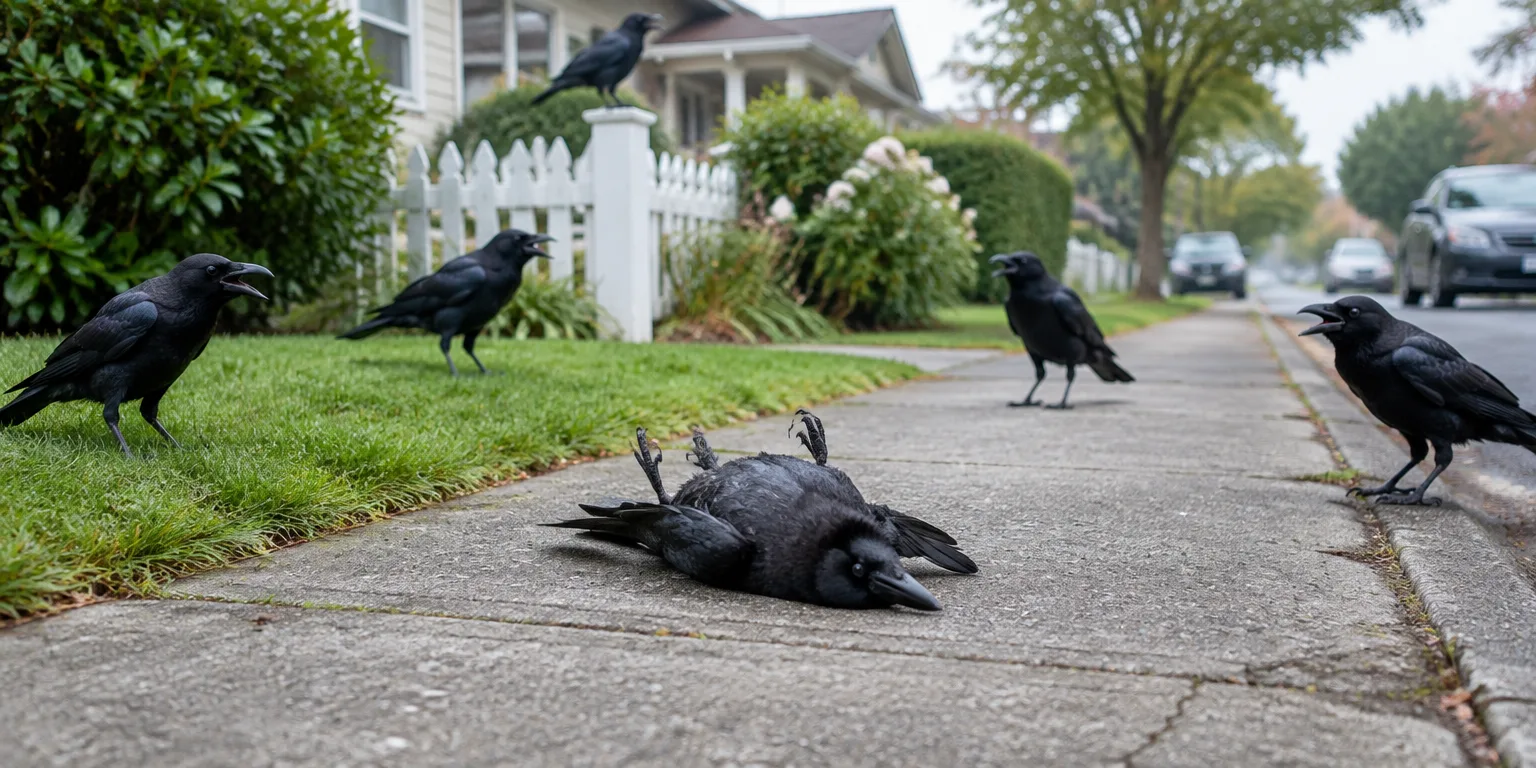
In most trials, no crow touches the dead bird. Animal behaviorist Kaeli Swift placed dead crows on sidewalks in the territories of hundreds of crow pairs, and contact of any kind, whether sexual, aggressive, or exploratory, occurred only 30 percent of the time.
When contact did happen, it was strange. Alongside alarm calling, Swift saw very forceful pecking by mating birds and excited bystanders, plus sexual arousal. No predator was present; only the body was.
That messiness is not limited to crows. Biting, beating, and even sex around bodies have also been seen in many primates and dolphins, though the popular story about animals and death tends to focus on gentle behaviors like grooming or guarding. For crows, Swift suggests the interest may be practical, a way to learn about danger.
Questions people ask
Why would a crow try to mate with a dead crow?
Scientists do not think the crow mistakes the corpse for a live mate. A dead crow can be highly arousing because it signals both social opportunity and threat, and that excitement can spill over into mating behavior. Similar misdirected sexual behavior around corpses has been reported in dolphins, sea lions, and some primates.
Does the 30 percent mean crows ignore the dead bird?
No, many crows still pay close attention without touching. A common response is to give alarm calls and gather in a noisy group around the body, which can teach other crows that a person or place is dangerous. Touching is only one measure, and looking and calling from a distance still counts as a response.