In one informal test, pairing words with pictures raised recall by half
Unlike learning styles, which show no such benefit, pairing narration with images helps everyone.
 Veritasium · The Biggest Myth In Education
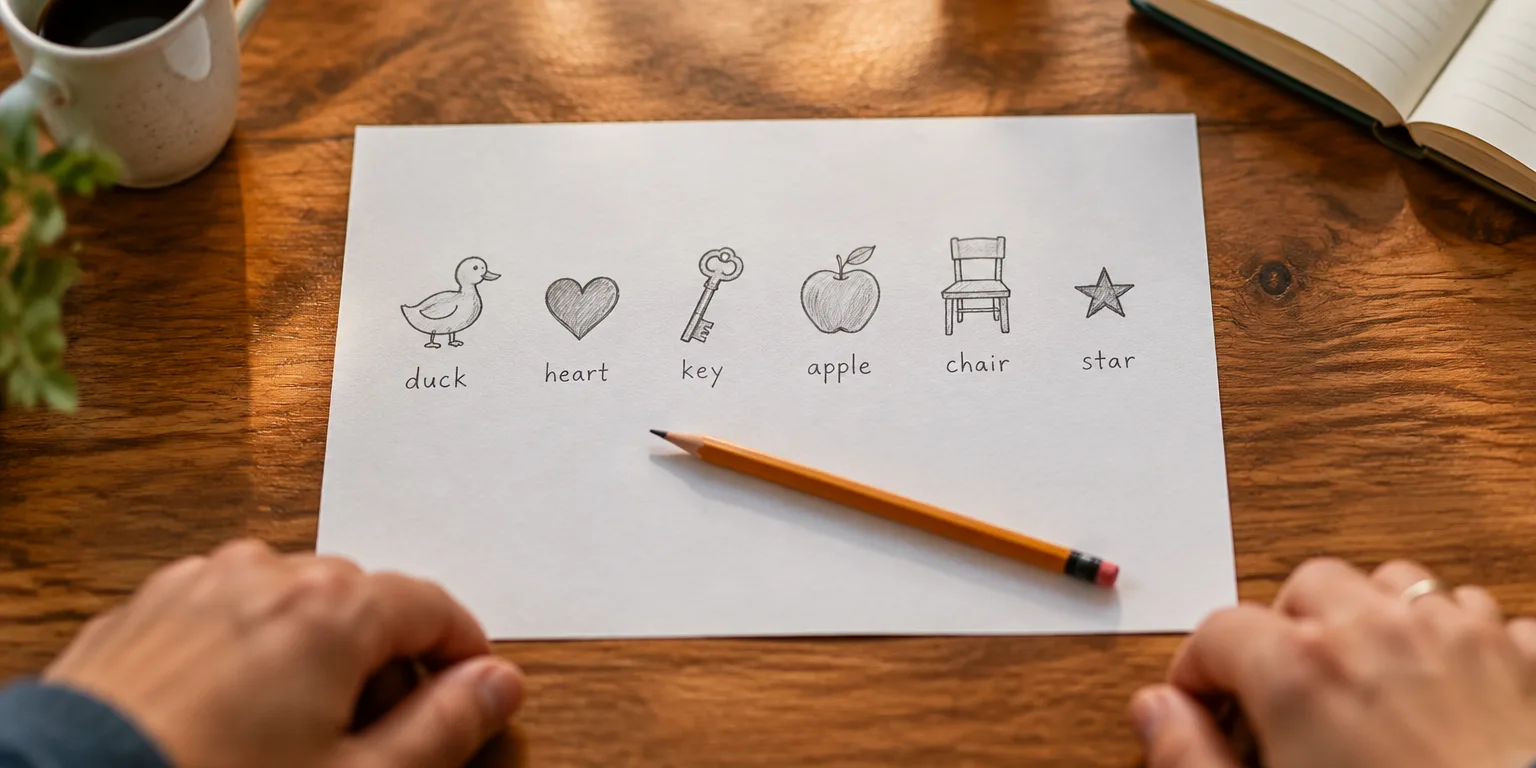
In one informal test, Derek, who ran the test, showed a participant pictures paired with their spoken names, like duck and heart. The participant recalled six items, which Derek described as a whole 50% better by his own comparison. Asked if it was easier, the participant said yes, 100%, with the words.
The pairing followed an earlier round meant to test the popular belief in visual, auditory, reading, and kinesthetic learning styles, in which people were shown 10 pictures in silence and asked to recall them.
A large body of research finds that everyone learns better when words and pictures go together than with either alone. The effect has a name: the multimedia effect. It helps explain in part why video can be such a powerful tool for learning when narration complements the visuals.
Questions people ask
Does this mean I am a visual learner?
No. Reviews of the research conclude there is no credible evidence that people learn better when teaching matches their preferred style. The multimedia benefit is different because it applies to everyone, not only to self-described visual learners.
Why does combining words and pictures help?
Seeing and hearing give the brain two linked cues to the same meaning, so there is more than one path to recall it. The key is processing the meaning, not whether the information arrives through the eyes or the ears.
How can I use this when I study?
Pair labels with diagrams, narrate what a chart shows, or say steps aloud while you look at them. It helps most when the words and pictures describe the same idea at the same time, and when you actively think, solve problems, or imagine what changes.