In Several Lab Tests, AI-Predicted Materials Turned Into Known Compounds
Computers can predict promising structures that turn into familiar compounds during synthesis, so researchers favor shortlists over single bets.
 case-studies.ai · Scientific discovery and design reference architecture
In the lab cases reported so far, most AI-predicted candidates emerged from laboratory synthesis as familiar compounds rather than the intended structures.
When research teams sent small batches of candidates for physical synthesis, most yielded something different from the intended design. The computer can be right about the desired properties on paper, and still miss whether the design can actually be manufactured.
Those synthesis failures were not anticipated by the pipeline's earlier steps. The fast model's error never falls to zero, so researchers recompute its picks with higher-accuracy checks before acting.
The fix is not to bet on one perfect design. Advancing a shortlist of related candidates the team knows how to make survives that failure better than carrying a single winner forward.
Questions people ask
Why does a predicted crystal turn into a different material?
A prediction often describes the lowest-energy arrangement at zero temperature, while synthesis follows heat, pressure, starting chemicals, and speed. A nearby familiar structure can form faster or survive better, so the reaction settles there instead.
Does that mean the prediction was useless?
No. A near miss can still point to a useful chemical family or property trend, and testing several related candidates preserves that value. Labs treat the model as a way to narrow the search, not as a final blueprint.
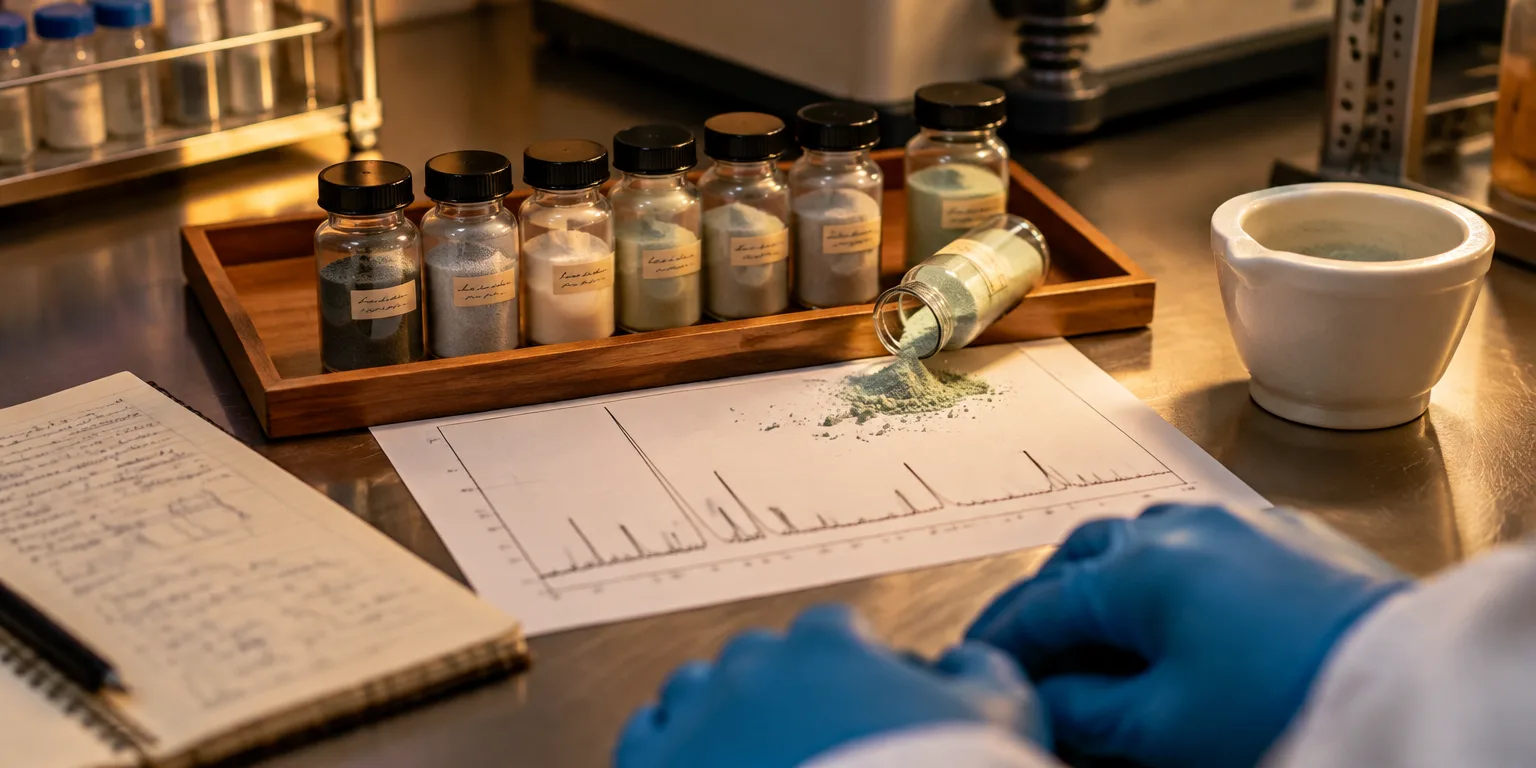
How do labs know what they actually made?
Chemists usually use X-ray diffraction to read the atomic arrangement, plus chemical analysis to check composition. If the pattern matches a known material rather than the predicted one, they know the synthesis wandered.