India blew up its own satellite without telling the U.S., and one officer had to protect American spy satellites
He spent the shift calling the embassy, asking analysts to map the debris, and running to the director's office out of breath.
 The Joe Rogan Experience · #2560 - David Grusch
David Grusch was in uniform and on duty in the operations center that watches over America's spy satellites when the phones started lighting up.
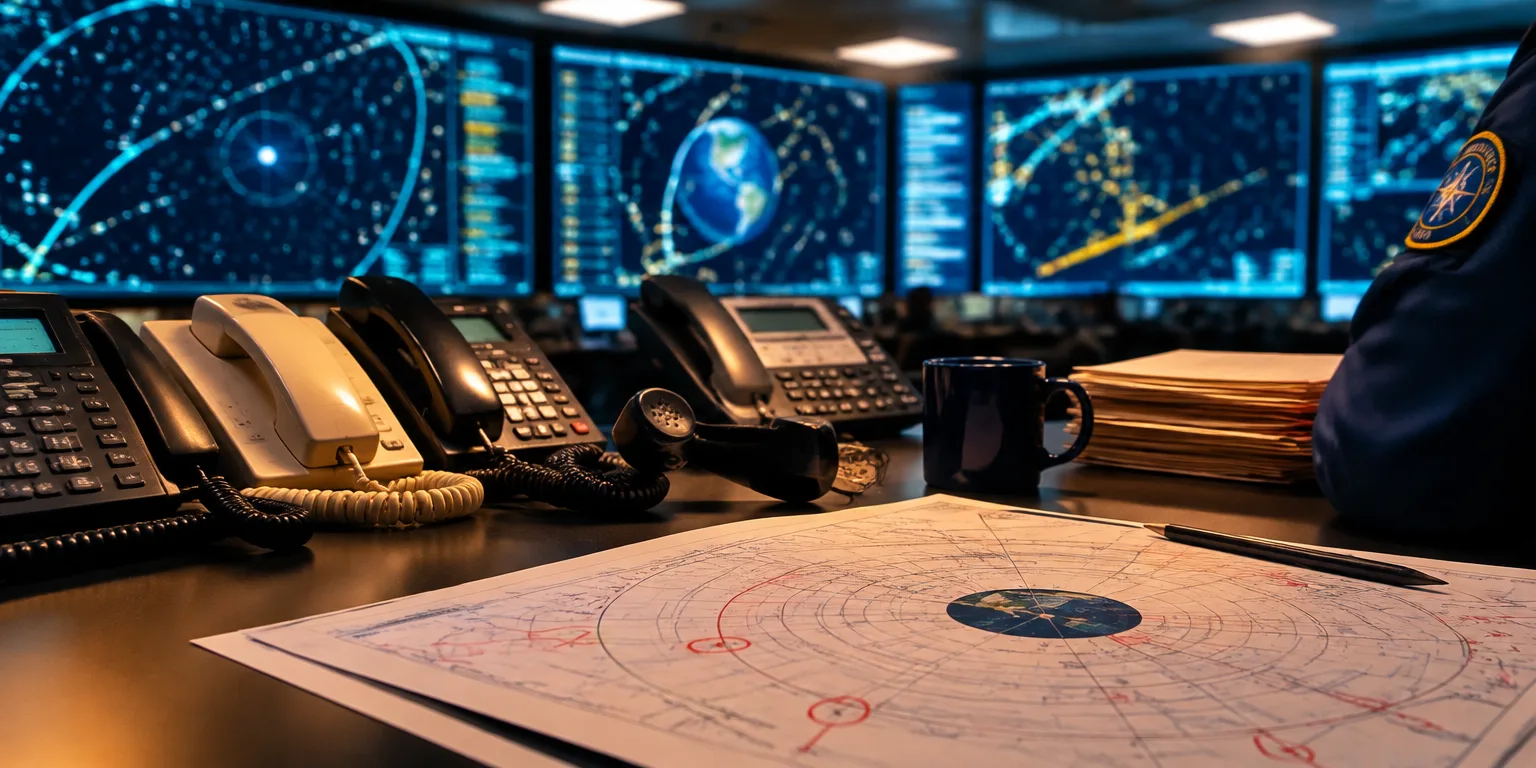
Grusch, an Air Force reservist then serving as backup director of intelligence at the National Reconnaissance Office, keeps a row of different phones at his desk. The National Reconnaissance Office is the agency that builds, launches, and flies the satellites that take pictures and collect signals for the United States. That day in March 2019, he started grabbing receivers and calling the embassy. An Indian missile had just hit one of India's own dead weather satellites, on purpose, and New Delhi had not told Washington it was coming.
It is the kind of surprise that puts the people who defend American satellites in a scramble, because the first question is not politics but physics. An explosion in orbit creates a spreading cloud of fast moving fragments, and any fragment can cripple a working spacecraft. Grusch said his worry was immediate: where was the debris going, and would American satellites have to be moved out of the way.
He walked onto the watch floor, past the wall of glowing screens, to the orbital analysts who track what is circling the Earth. He asked them to calculate the debris field and tell him whether any American satellite needed to maneuver. Then he ran upstairs to the director's office, still in uniform and out of breath, to report what he knew and what was still unknown.
The rush captured a larger problem. The United States and Russia built Cold War agreements to notify each other about missile and space launches, but Washington has never had the same kind of standing warning pact with China. That means when a rival, or even a friendly country, fires a missile or destroys a satellite without notice, American commands including NORAD, the Missile Warning Center, and intelligence centers have to work fast to figure out whether what they are seeing is a test, an attack, or an accident.
For Grusch, the India shot was a vivid lesson in that blindness. He said he later cleared the story with security so he could tell it publicly, and noted that the test itself is now public and can be looked up. In the room that day, though, it was not history. It was ringing phones, fresh debris, and a run down the hall.
Questions people ask
What exactly did India do in March 2019?
India conducted Mission Shakti on March 27, 2019, using a ground launched interceptor to destroy its own Microsat-R satellite at about 300 kilometers altitude. New Delhi publicly announced the test as a demonstration of anti-satellite capability. U.S. tracking networks and NASA later said the impact created hundreds of pieces of debris, some of which were thrown into higher orbits.
What is the National Reconnaissance Office?
The National Reconnaissance Office, or NRO, designs, builds, launches, and operates U.S. intelligence satellites. Those spacecraft collect imagery, signals, and other data for the president, the Pentagon, and intelligence agencies. It works closely with the Space Force, the National Security Agency, and military warning centers.
Can debris from one destroyed satellite really threaten others?
Yes. Fragments in low Earth orbit travel at roughly 17,000 miles per hour, so even a paint fleck can damage a spacecraft and a larger shard can destroy one. Operators use radar and telescope tracking to predict close approaches and can order a working satellite to fire thrusters and dodge. After major breakups, that watch can last for months or years.
Does the U.S. get advance warning of foreign missile and space tests?
Sometimes. The United States and Russia have long standing agreements, including a 1988 missile launch notification deal and earlier space and accident prevention pacts, that require notice of certain launches. The United States has no equivalent broad advance notice agreement with China or India, so U.S. warning and intelligence units often must detect and characterize those events on their own.