India Removed 130 Million Names by Deleting First and Asking Later
Some living people were listed as dead, evidence points to Muslims being disproportionately targeted, and citizens must now prove they belong on the rolls.
 The Headlines · A Wall Street Record, and Why India Cut 130 Million Names From Its Voter Roll
In India, staying on the voter list used to be the government's job to verify. Now it is the voter's job to prove.
The list, the official register of roughly a billion voters, lost more than 130 million names in the past year or so. The government says computer programs that scan for anomalies were used to clean up duplicates and errors, a kind of routine update.
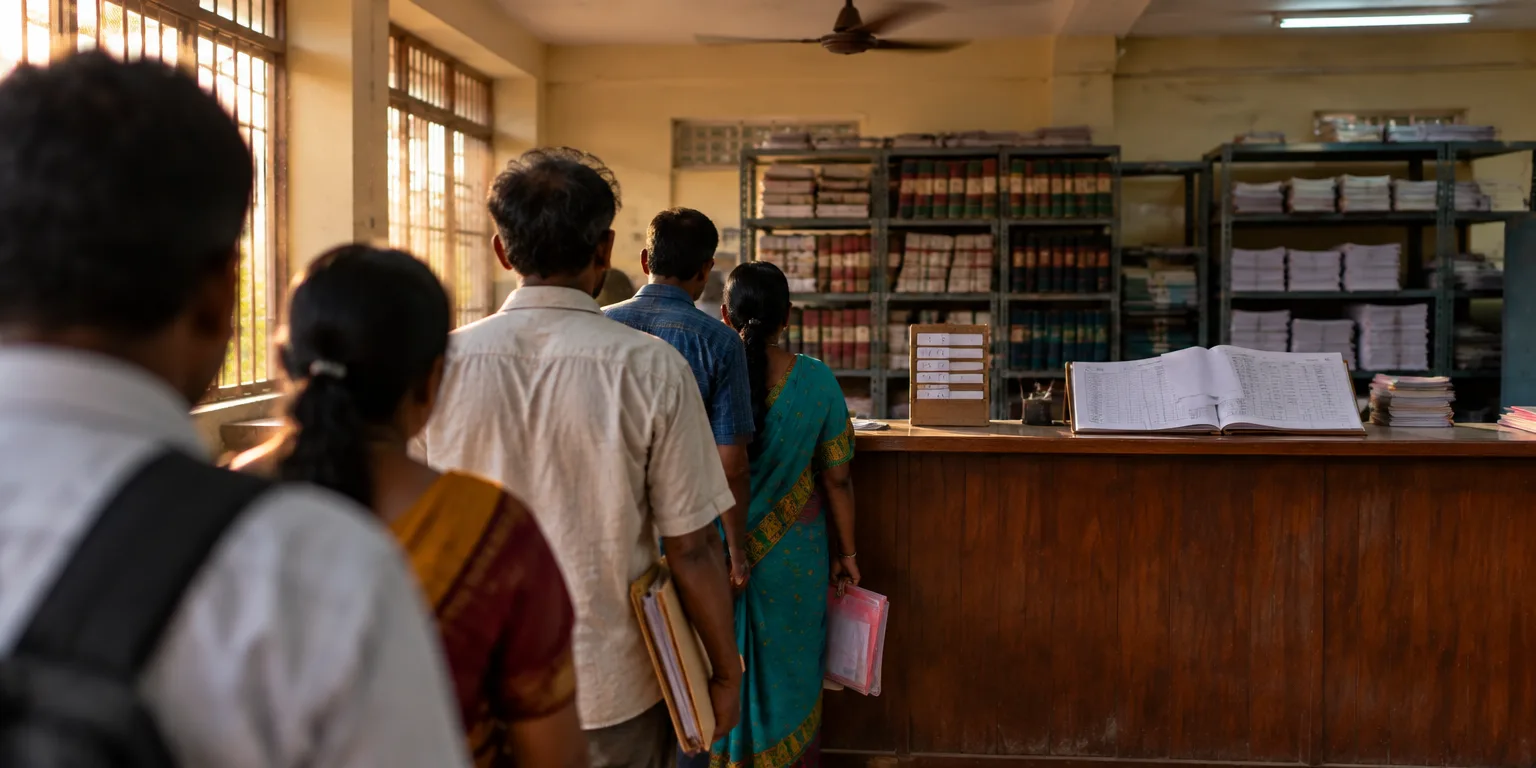
The method is what changed. In the past, election workers went door to door to cross-check names before removing anyone. This time, the system flagged a possible problem, deleted the name first, and left the person to appeal to get back on. That reversal shifted the work from officials to ordinary Indians, forcing many to decide between holding a job to make a living or visiting election offices to prove they are eligible to vote.
The errors have been stark. About 20 million names were struck after being listed as deceased, though some of those voters are living. Protests have spread in recent weeks as anger over the removals has grown.
The burden has also fallen unevenly. Evidence has been mounting that the push disproportionately targeted Muslims, India's large religious minority, viewed as less inclined to back the ruling Hindu nationalist party. Two senior officials in that ruling party, speaking anonymously, said the process was designed to bolster the party's electoral advantage. Party leaders have publicly described the revision as an attempt to weed out "infiltrators," a term that has been used to describe Muslims. India's election authorities gave no reply when asked about the changes.
Questions people ask
How big is 130 million names, really?
It is about 13% of India's roughly one billion registered voters, and it is larger than the entire voting population of almost every other country. In the United States, for example, about 155 million people voted in the 2024 presidential election. So India removed nearly as many names as America counts as voters.
Why do voter rolls need cleaning in the first place?
Lists go stale quickly. People move, die, turn 18, or get registered twice under slightly different spellings. Most democracies periodically remove the dead and duplicates, and add new voters, to keep elections workable and trusted. The dispute in India is not over whether to update the list, but over doing it by deleting first and verifying later.
What did the old door-to-door system actually involve?
Under that older system, an election worker came to the home and checked identity documents and residency before a name was changed or dropped. That put the time and cost on the state, and it gave voters a chance to fix mistakes on the spot. The new approach saves the state that upfront work, but it means a mistaken deletion stands until the voter notices and travels to contest it.