Indonesia's wildfires burn underground, so they are hard to put out
They can smolder out of reach for months and flare back into open flames, and officials can do little but hope for rain.
 Global News Podcast · France halts protests with curfew crackdown
In Palangkaraya, a city in Central Kalimantan among the hardest-hit places in Indonesia's most severe fire season in ten years, the toughest fires to fight are the ones you cannot see.
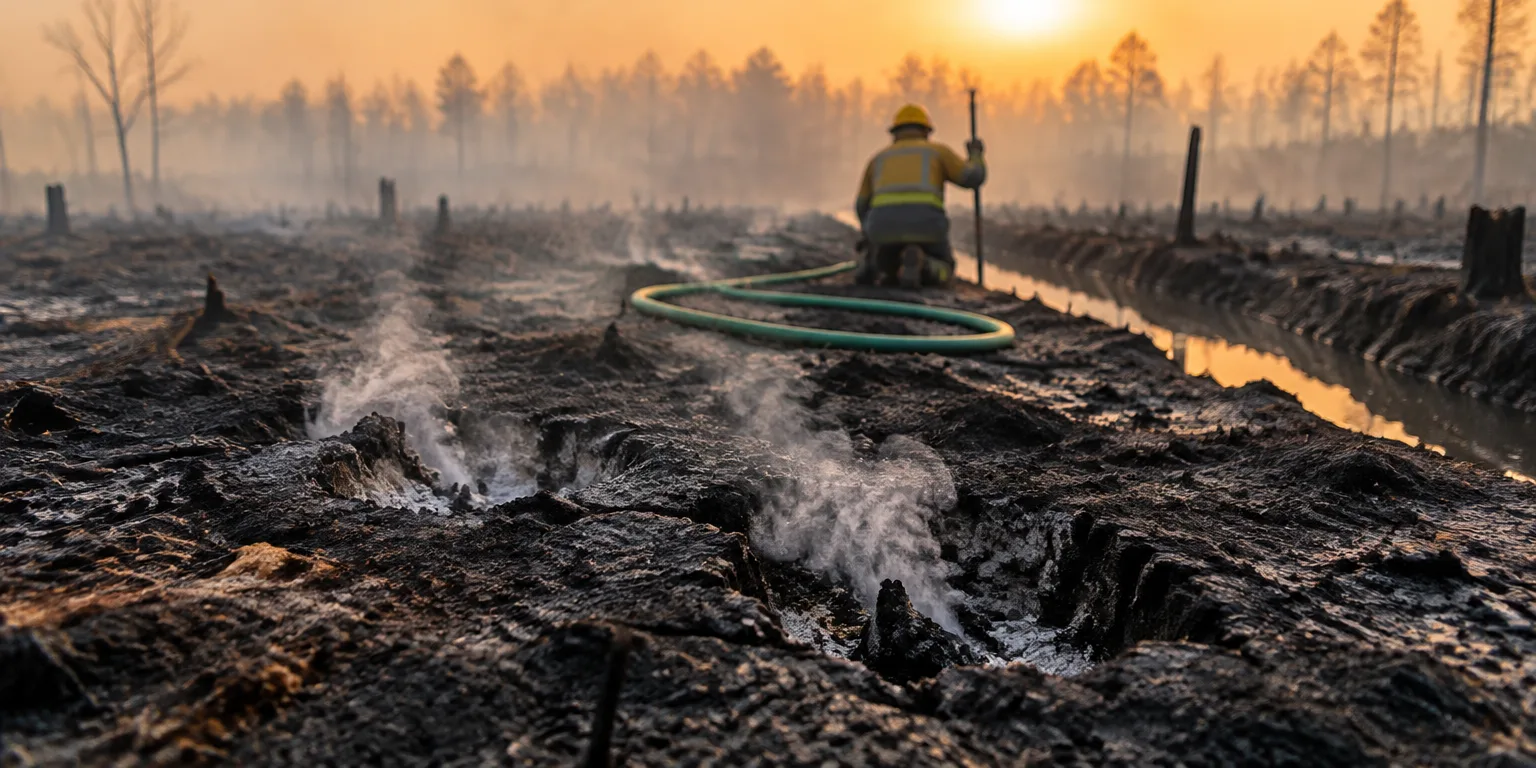
The flames move below the surface, into peat. Firefighters in the area told Liza Tambunan, an Indonesia correspondent reporting from Palangkaraya, that extinguishing these buried peat blazes requires months of work. Even after that effort, firefighters said, a fire might still not be fully out, and it can flare back into open burning.
The monitoring group Nusantara Atlas estimates close to two million hectares have burned this year.
Environmental advocates told Tambunan they point to forest loss, clearing for big plantations, and weak enforcement as causes. Officials promise tougher measures.
For now, residents are inhaling dirty air. In Palangkaraya itself, breathing illnesses have risen by 25 percent, linked to the haze. Local officials told Tambunan they are trying to lessen the harm, but acrid smoke hangs on, leaving little to do except hope for rain.
The smoke has drifted over much of Southeast Asia. To the south, Timor-Leste shut schools after unhealthy smoky air built up in Dili, the capital. Jose Ramos-Horta, the president of Timor-Leste, said the whole country is blanketed, causing breathing trouble, and that it is very dangerous for children.
Questions people ask
What exactly is peat, and why does it burn that way?
Peat is a thick, waterlogged layer of dead plant material that builds up over thousands of years in tropical lowlands. When it is drained for farming or plantations and dries out, it becomes a dense fuel that can burn slowly, like charcoal, with little smoke visible at the surface.
Why can't firefighters just put water on it?
Surface fires burn leaves and trees and can be sprayed directly. A peat fire creeps through the soil itself, sometimes a foot or more below ground, where water cannot easily reach it. Firefighters often have to flood the area for weeks and keep checking for heat because one hot spot can restart the fire.
How big is two million hectares?
Two million hectares is about 7,700 square miles, roughly the size of Slovenia. The haze from the fires reached as far as Timor-Leste, where schools closed after smoky air built up in Dili.