Investor Says AI Will Master Anything Digital, but the Physical World Is Unclear
With enough money, computer tasks can be simulated and practiced until models succeed.
 Invest Like the Best with Patrick O'Shaughnessy · Martin Casado on Frontier Model Economics, AI's Slowdown, and the Cursor Deal - [Invest Like the Best, EP.498]
Investor Martin Casado offers a split prediction. In his view, anything done on a computer is something artificial intelligence will eventually be able to do.
The reason, he says, is practice. If a task happens inside a computer, researchers can simulate it and build a training ground where the model improves through reinforcement learning, which means learning by trying actions and getting rewarded for better ones.
That recipe covers a lot of digital life. Casado points to three-dimensional design work in Blender, a 3D design program, plus ordinary use of a computer and writing software code.
It also changes what limits progress. In the past, he says, a project could die because an engineering team got stuck.
Now, for digital problems, money can remove the block. With enough capital, he argues, you can point funding at the problem, create the simulated environment, train the model, and solve it.
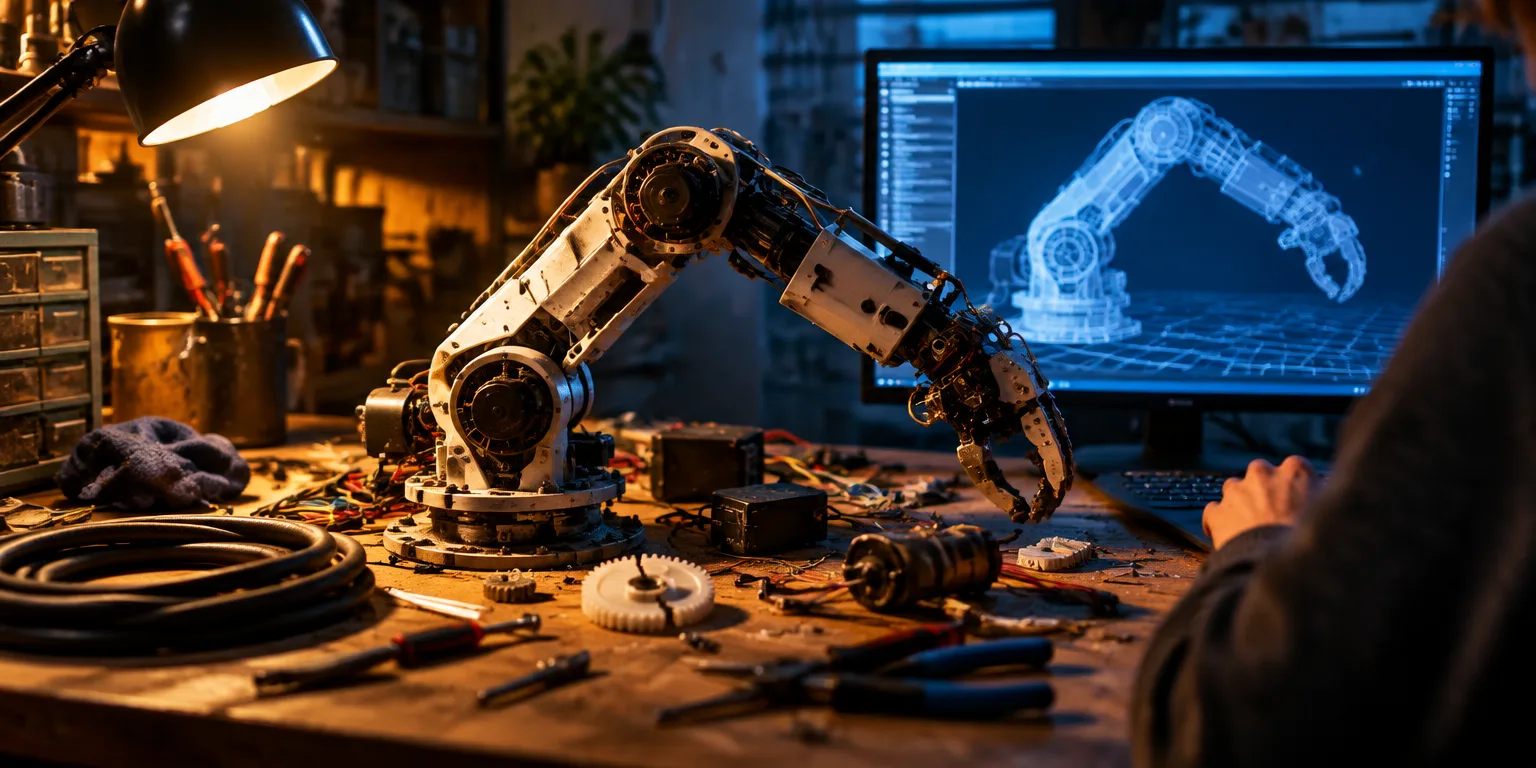
The physical world is different, in his view. For robotics, science, and medicine, Casado says he does not know whether the same patterns hold.
Casado notes you could set up a laboratory to collect physical data, but he leaves the result as an open question.
What he questions is whether getting better with more practice, and the kind of data gathered, work the same way in the lab. So digital work looks like a funding problem with a visible path, while physical work remains an open question.
Questions people ask
What is reinforcement learning?
Reinforcement learning is training by trial and error. The model tries actions in an environment, gets a score or reward, and adjusts to earn higher scores over time. It is the same basic loop used to train game playing programs and some chatbots.
Why is the physical world harder for AI to learn in?
A simulator lets AI practice millions of times quickly, safely, and cheaply. A robot, lab experiment, or patient cannot be reset with one click, and each real trial costs time, materials, and sometimes risk. That makes data slower and more expensive to collect.
Can robots be trained entirely in simulation?
No. Simulation helps, but robots still face friction, wear, imperfect sensors, and unpredictable surroundings. Researchers often use simulation first and then finish training on physical machines, because the gap between the model and reality remains meaningful.