Israel Has Leveled Most of 60 Villages in Southern Lebanon Since the Ceasefire
Satellite images show green towns turned gray, and legal experts say the destruction may not meet the test for lawful demolition under occupation.
 The Headlines · Musk Pours $276 Million Into the Midterms, and Federal Agents Raid Home of Rep. Ilhan Omar
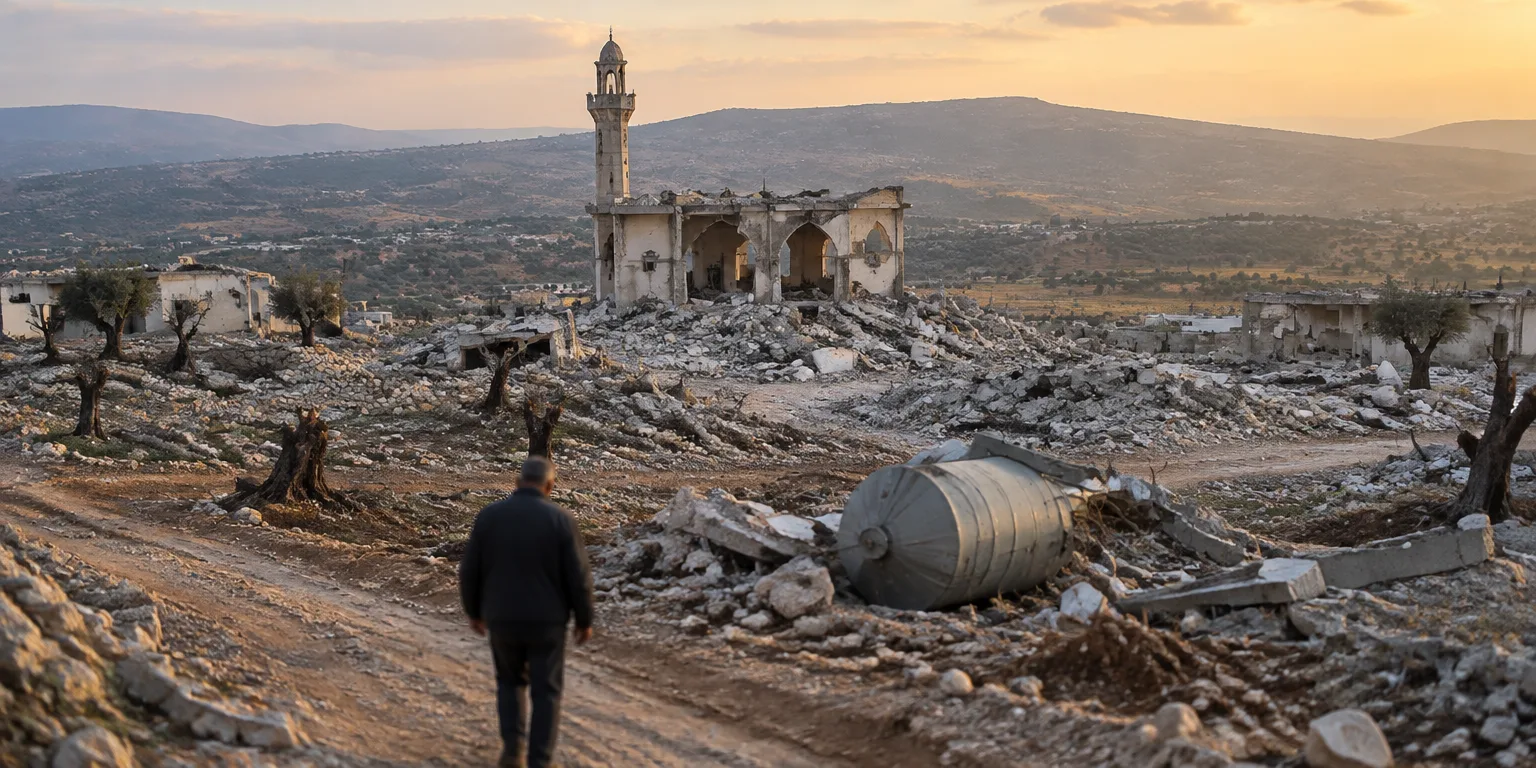
The mayor of one town in southern Lebanon went back to see what was left.
The town mosque had been destroyed and its water storage tanks had disappeared. The burial ground had been damaged so badly that he could not locate his relatives' burial places.
His account comes from a region changed since April, when a ceasefire halted the heaviest clashes between Israel and Hezbollah. The fighting paused, but the demolition continued.
The broader evidence comes from satellite imagery. An examination showed that after the truce began, the majority of about 60 communities in the part of southern Lebanon held by Israel had been flattened. Israel says the clearance was meant to counter Hezbollah threats. Those communities were populated largely by Shiite Muslims, the group that gives Hezbollah much of its backing.
Christina Goldbaum, the Times bureau chief in Beirut, said the change is visible from above. Describing the satellite imagery, Goldbaum said, "what we see is an area that used to be very green, villages that had schools, a lot of houses, and all of that has basically turned gray."
She added, "Scrolling through, you see that roads that once existed are now gone. Buildings are gone. Farmland, olive trees that used to be there, it's just incredibly widespread devastation across the south."
That scale of demolition after the fighting stopped is what has drawn legal scrutiny. Goldbaum explained the rule for occupied territory this way: "in an occupied area, a military has to have a specific and immediate military goal in order to lawfully destroy property." She said the many legal experts consulted said that "it's very unlikely that what the Israeli military is doing meets that threshold." Goldbaum said some of this destruction "has raised questions about whether what the Israeli military is doing could constitute a war crime."
The Israeli military stated it was "operating in accordance with international law."
What the mayor described was a mosque destroyed, tanks gone, and relatives' burial places he could not find.
Questions people ask
When is an army legally allowed to destroy property in territory it occupies?
Under the laws of war, an occupying power is supposed to administer territory temporarily and protect civilians and their property. Destroying homes, farms, and public buildings is allowed only when it is urgently required by military necessity, not for general security or to prevent future threats.
What is Hezbollah and why does it operate from southern Lebanon?
Hezbollah is a Lebanese Shiite political and armed group formed after Israel's 1982 invasion of Lebanon. Southern Lebanon borders northern Israel, so the area became a front line, and its large Shiite population provided recruits and social support. That geography and history explain why the group has long operated there.
Can people live in these villages now?
The reporting cited here does not give a count of where former residents are living. The mayor's account describes a visit to inspect damage, not a move back, and with houses, water tanks, and farmland destroyed, the villages lack basic necessities for daily life.