Israel Knew an Attack Was Coming and Chose to Take the Hit
A secret in-person warning from Jordan's king was not enough to overcome a warning from Washington not to fire first.
 nationalinterest.org · Israel Nearly Went Nuclear to Win the 1973 Yom Kippur War
The meeting began at 8 a.m. on October 6. Israeli Prime Minister Golda Meir and her advisers considered a preemptive strike, or waiting to absorb the first blow.
Waiting went against instinct and recent history. In the Six Day War in 1967, Israel had survived by hitting first, before Arab armies could move. By the start of October 1973, Israeli leaders knew another assault was being prepared.
Part of that understanding came from an extraordinary visit, when King Hussein of Jordan, ruler of the neighboring Arab kingdom, traveled in secret to pass along word of the coming attack. This is the story of a leader who had warning of an invasion and chose to take the hit anyway, under pressure from the United States, which had warned her not to strike first.
That pressure came from Washington. U.S. Secretary of State Henry Kissinger had told Israel it must not shoot first if it wanted to keep American backing. At that morning session, Meir weighed hitting first and chose to hold back.
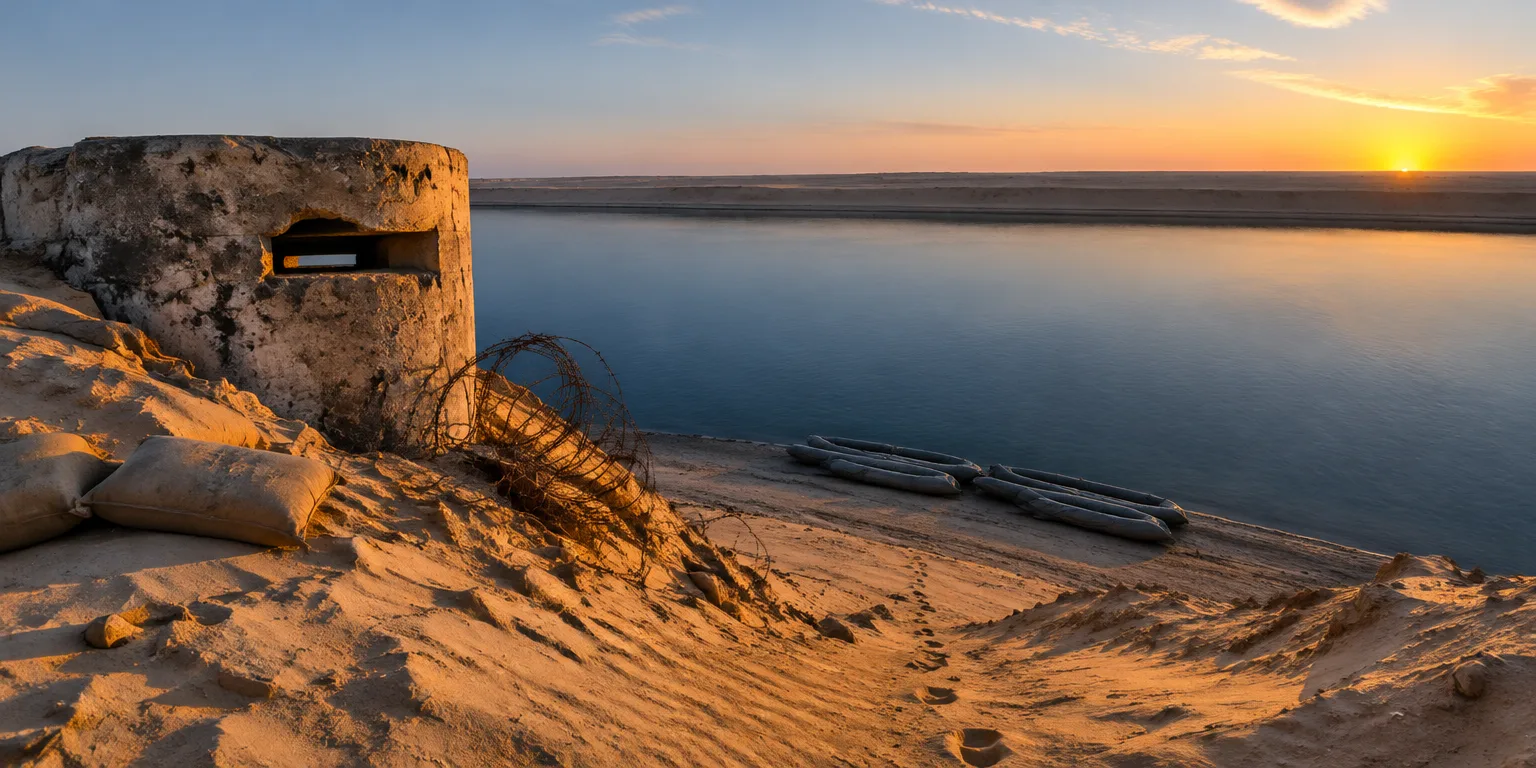
Six hours later, the cost of that restraint arrived all at once. More than 2,000 Egyptian artillery pieces opened fire on the Israeli defenses of the Bar Lev Line, a chain of Israeli forts and sand walls on the east bank of the Suez Canal built after 1967.
Above them, 200 Soviet-built MiG and Sukhoi fighter jets flew across the front to bomb Israeli airfields, gun positions, and headquarters. On the water below, an initial wave of 4,000 Egyptian foot soldiers crossed the canal in inflatable boats in Operation Badr, the Egyptian code name for the canal crossing.
It was exactly the kind of surprise attack Israel had built its doctrine to prevent. Meir had traded the advantage of surprise for protection against losing American backing, and as the guns thundered along the canal, Israel was about to learn what that trade would cost.
Questions people ask
Why would Jordan's king warn Israel, his country's former enemy?
Hussein ruled the neighboring Arab kingdom of Jordan, which had fought Israel in 1948 and 1967 but stayed out of the 1973 attack. He had secret channels to Israeli leaders and an interest in avoiding a war that could destabilize his own throne.
Why did the United States care so much about who shot first?
Washington wanted to avoid being seen as backing aggression, especially while trying to manage Cold War tensions with the Soviet Union, which supplied Egypt and Syria. Kissinger also wanted to preserve America's ability to negotiate with Arab states after the fighting stopped.
What was the Bar Lev Line?
It was a chain of Israeli forts and sand embankments built along the east bank of the Suez Canal after Israel captured the Sinai Peninsula in 1967. It was meant to stop or slow any Egyptian crossing, but it was overwhelmed within hours by the size of the 1973 barrage.