It is cheaper to catch carbon from a tailpipe than from the sky
Outside air holds almost no CO2, so freight exhaust offers a richer and cheaper target.
 Y Combinator · This Startup Is Trying To Delete 29% Of All CO2 Emissions
To picture how thin carbon dioxide is in the open air, imagine sorting 10,000 marbles and finding only four blue ones. That marble game is just an illustration, but the underlying figure is real: outside air holds only 0.04 percent CO2.
That thinness is why a method called direct air capture struggles. To collect much CO2, machines must process huge volumes of air, which takes a lot more energy, costs far more, and can even create more emissions in the process.
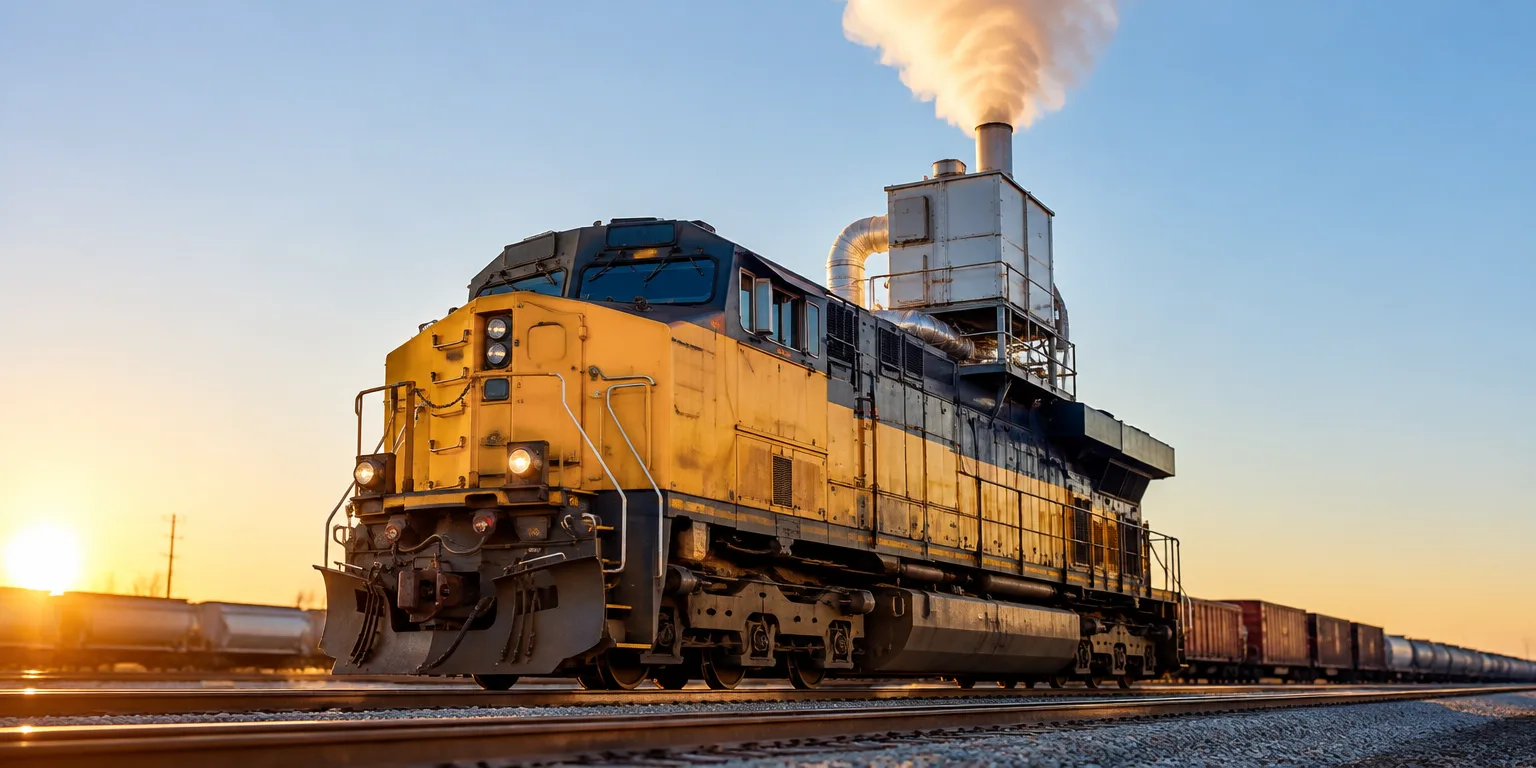
The alternative is called point source capture, which means catching the gas before it disperses. Paul Gross is the founder of Remora, a company building capture devices for diesel trucks and trains. The company's reasoning is that exhaust offers a richer target than the sky, and that catching CO2 at the source is more efficient because it avoids the extra energy needed to filter thin air.
That is why Remora is focused on freight rather than family cars. Passenger cars vastly outnumber freight vehicles, but trucks and locomotives are used so intensely that locomotives burn billions of gallons of diesel every year in the United States. Gross says that intense fuel use is "the biggest source of CO2 and the biggest source of emissions," which is why the company starts there.
Exhaust holds far more CO2 in each volume than open air does, so each unit of capture equipment has more to work with when it starts at the tailpipe.
Questions people ask
How concentrated is CO2 in diesel exhaust compared with air?
For general context beyond what the company reports, diesel exhaust is typically a few percent CO2, roughly one hundred times the level in outside air, though the exact share varies with the engine, fuel, and load. The gas also comes out hot and flowing from a single pipe, which makes it easier to route through a capture device.