Japan Is Flying to the Mars Moon Phobos to Bring Pieces Home
The mission aims to return the first samples from Phobos and show what Japan's main rocket can do.
 WSJ What's News · Are Americans’ Finances Better or Worse Under Trump?
A Japanese spacecraft has launched for Mars, three decades after the country's last attempt to send a probe to the red planet failed.
The new spacecraft comes from Japan's JAXA space agency. Its target is not Mars itself, but Phobos, a small and mysterious moon that circles Mars.
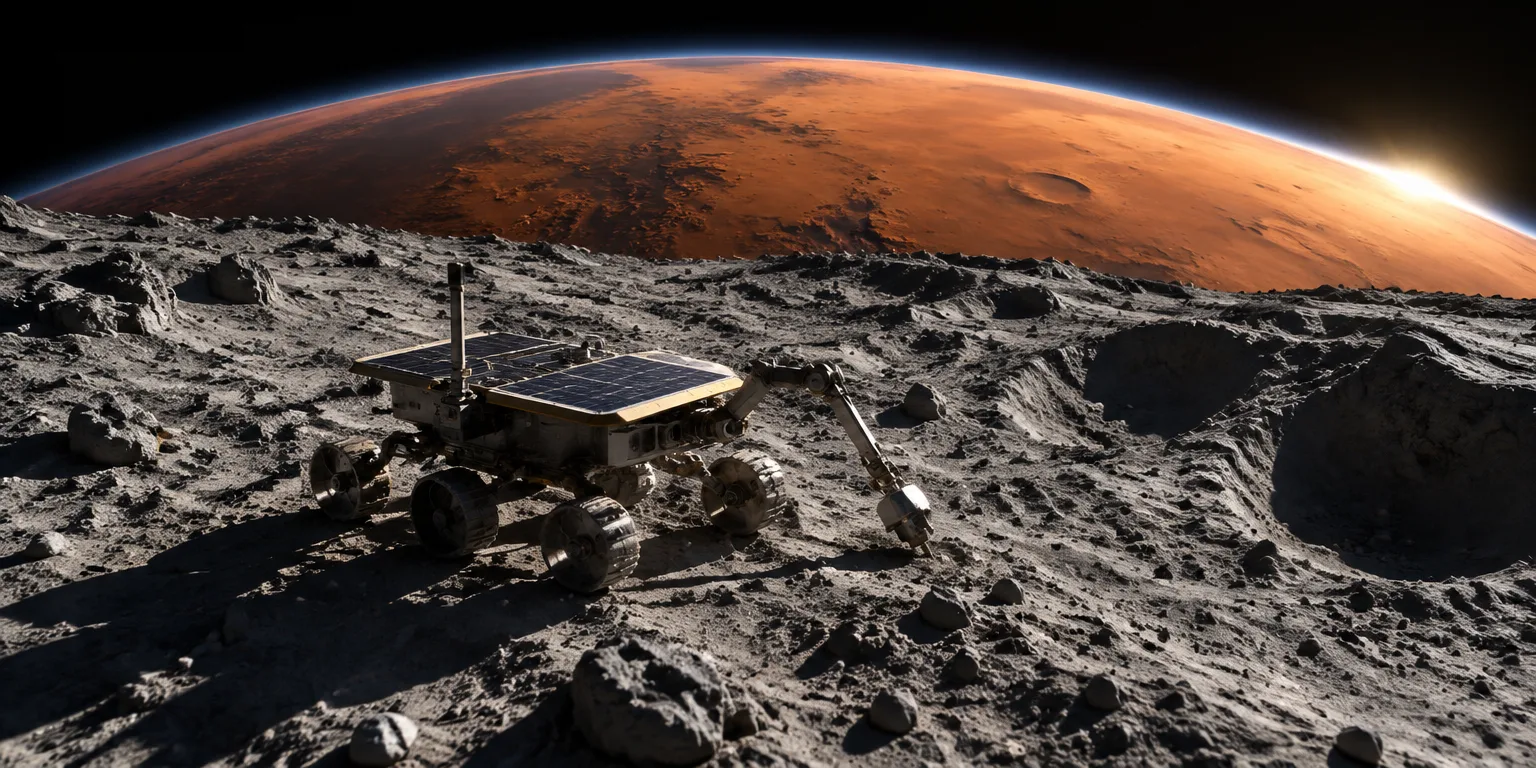
The mission would be the first to bring pieces of Phobos back to Earth. Should the plan succeed, a rover supplied from France and Germany will move across the surface, gather dust and rock, and carry that material home.
The mission aims to find out more about how the moons around Mars formed and where they came from. It also hopes those samples will reveal more about our solar system and its origins.
Studying the returned dust and rock could show how the moon took shape and what that story says about the early solar system.
The flight is also a showcase for Japan's H-3 rocket, the country's main large rocket for carrying satellites and spacecraft into space. The rocket was built by JAXA with Mitsubishi Heavy Industries, the Japanese industrial company.
Japan hopes the long trip will show what the rocket can do. A successful mission could help make the country a much bigger player in commercial spaceflight.
There is a long wait before any payoff arrives. The spacecraft faces a long cruise through deep space before it can meet up with Mars and its moon. Arrival at Phobos is not expected until late 2028 or early 2029.
Only then can the rover start its survey and collection work, and only after that can the samples begin the long trip back to Earth.
Questions people ask
What is Phobos like?
Phobos is the larger of the two small moons that orbit Mars. It is lumpy, cratered, and only about 14 miles across, and it circles Mars so closely and quickly that it rises and sets twice each Martian day.
Has any moon dust been brought to Earth before?
Yes. The United States has returned rocks from the Moon and dust from asteroids, and Japan itself brought asteroid samples home on its Hayabusa and Hayabusa2 missions. No country has yet returned material from Phobos, or from Mars and its moons.
Why does it take until 2028 or 2029 to land?
Mars is distant, and spacecraft cannot fly straight there. They must wait for Earth and Mars to line up, then cruise for months using little fuel, then slow down and enter orbit. Phobos has almost no gravity, so landing and collecting samples there is especially delicate.