Jet-Powered Drones Are Faster, Hit Harder, and Cost a Fortune to Stop
Russia's new versions fly at up to 370 miles an hour, carry bigger warheads, and require a costly missile for each interception.
 The Headlines · Inflation Data Undercuts Trump’s Economic Claims, and the Danger of New Jet-Powered Drones
For years, Ukraine had largely learned how to handle Russia's attack drones. The older models, known as Shaheds, are propeller-driven aircraft based on an Iranian design and flown by Russian forces, and they make a loud, steady humming noise that is easy to hear coming. After years of attacks, the Ukrainian military had learned to track and destroy them.
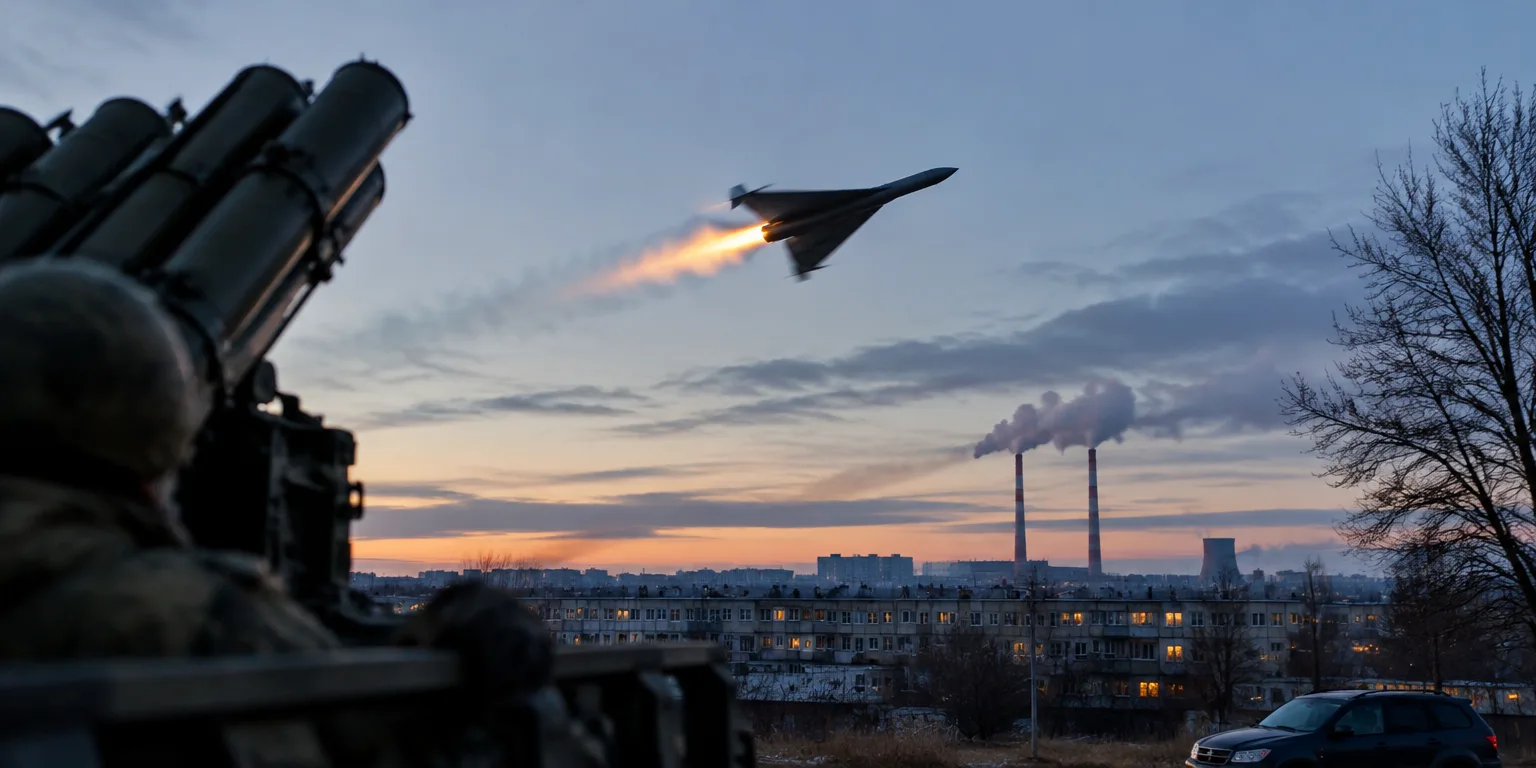
Russia has now changed the equation by fitting those drones with jet engines. Last month alone, Russia fired 3,000 of the new versions toward Ukraine, a count provided by the Ukrainian air force. Those officials report the aircraft approach at speeds up to 370 miles an hour, about triple the pace of the earlier propeller models.
Speed is the whole problem. The new drones cross the sky so quickly that air defenses have far less time to spot them, lock on, and fire. People on the ground have almost no time to flee to shelter before the drones have struck gas stations, bridges, power plants, and civilian sites including a passenger train, a school, and a shopping mall.
The jets also hit harder. Because a jet engine produces much more thrust than a small propeller, the redesigned drones can carry heavier explosive payloads, so each strike can do more damage when it gets through.
Ukraine can still shoot them down, but the math is punishing. The interceptor missiles it uses cost almost 1 million dollars apiece. With 3,000 of the new drones launched in a single month, defending against large numbers of them means spending that sum again and again for each interception.
Questions people ask
Why does flying three times faster make a drone so much harder to shoot down?
Air defense is a sequence: radar must detect the target, software must track it, and a weapon must reach it before it hits. A drone moving at 370 miles an hour covers more than six miles every minute, so each of those steps has one-third the time it had against the older propeller drones. That shorter window means more drones slip past before a missile or gun can engage them.
Why use a nearly $1 million missile against a much cheaper drone?
Defenders often have no cheaper option that can reliably hit a fast, high-flying target, so they use radar-guided surface-to-air missiles built for aircraft and cruise missiles. Machine guns and short-range cannons are cheaper per shot but have short range and struggle against something moving that fast. The result is a cost mismatch that favors the attacker, even if the defense wins the individual duel.
How does a jet engine let a drone carry a heavier bomb?
A propeller pulls a small aircraft forward, while a jet engine burns fuel to blast hot exhaust backward and generate much greater thrust. Greater thrust lets the aircraft push more weight through the air at higher speed. In a military drone, that extra lifting and pushing power can be traded for a larger explosive payload instead of just more fuel or speed.