Judge an Espresso Machine by Its Engineering, Not Its Badge
A modest dual boiler can beat a prestigious flagship, Clive Coffee argues.
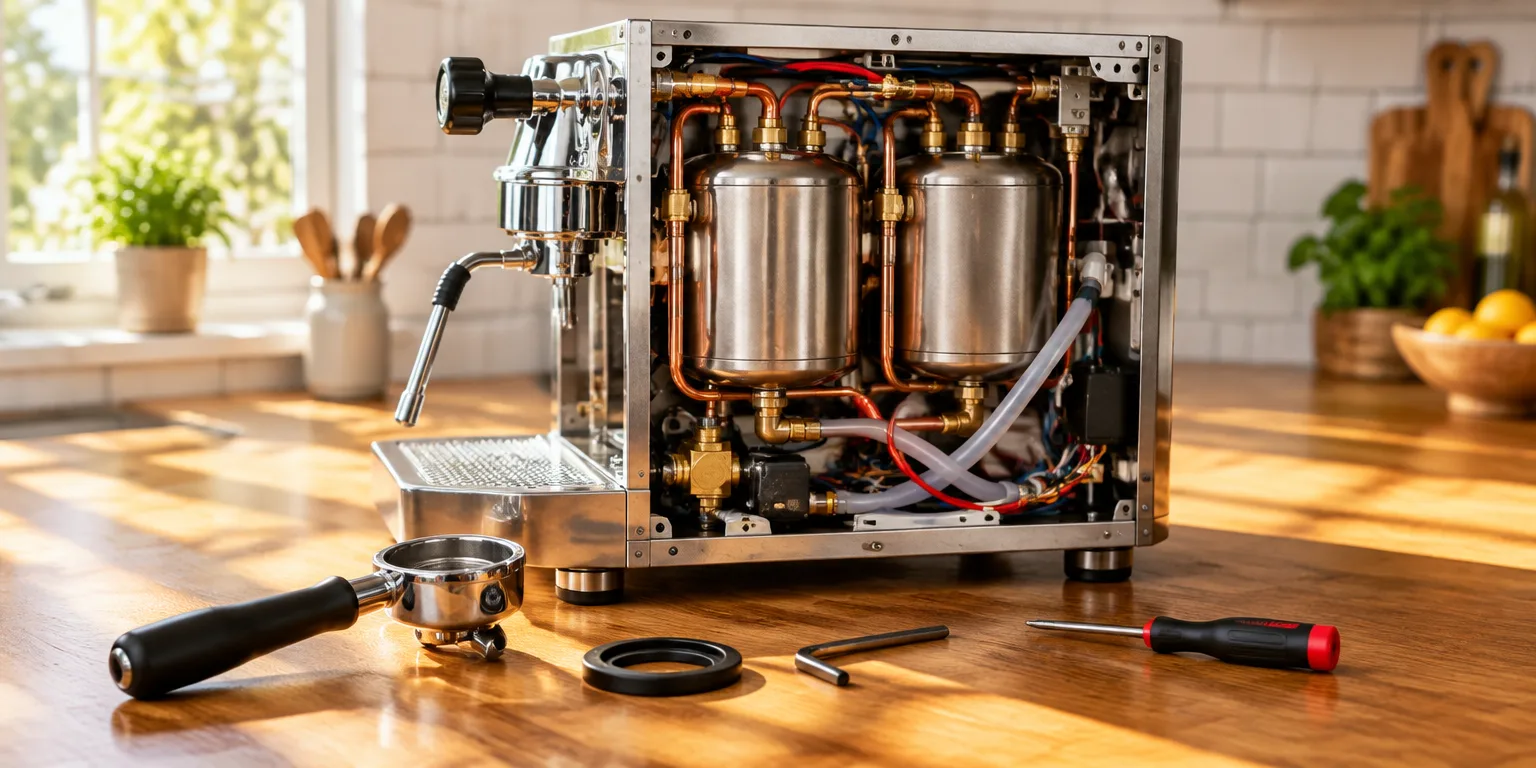
Clive Coffee, a retailer that sells espresso machines to home baristas, had just run through the brands its experienced customers ask for by name. Then it paused the ranking to warn against trusting it.
As Clive puts it, “The home baristas we respect most aren't loyal to a badge; they're loyal to thermal stability, build quality, and repairability.”
By thermal stability, Clive means water that hits the coffee at nearly the same temperature every time. By build quality and repairability, it means solid parts that can be fixed years later, not replaced.
The distinction matters because machines from one maker can differ widely in how they heat water and hold temperature, Clive argues. A heat exchanger uses one hot steam boiler and heats brew water as it is needed by running it through that boiler, while a dual boiler gives brewing and steaming their own separate boilers.
That is why the company calls “treating brand reputation as a fixed hierarchy” the biggest mistake in “best espresso machine brand” articles. Every maker it admires, it says, also sells some strong models and some weaker ones shaped by poor tradeoffs or older thinking kept out of habit.
Its test is blunt: a modest machine with separate boilers for brewing and steaming can brew far better than a pricier top model with an older heating design, even when the pricier one has the fancier reputation. Shop the engineering inside the box, not the badge on the front.
Questions people ask
What is the practical difference between a dual boiler and a heat exchanger?
A dual boiler has one boiler for brewing and a separate one for steam, so each can stay at its own temperature. A heat exchanger has one large steam boiler and heats brew water in a tube running through it, which usually requires a cooling flush and careful timing to avoid overheating the shot.
Why does thermal stability matter so much for espresso?
Stable temperature makes shots repeatable. Espresso is sensitive to changes of just a degree or two, so if the water temperature swings, you cannot tell whether a sour or bitter taste came from the beans, the grind, or the machine.
How can I tell if a machine will be repairable?
Look for standard parts such as group gaskets and solenoid valves that any service shop can order, plus stainless steel boilers and accessible construction. Machines built around common Italian parts are often easier to maintain for 10 to 15 years.