K2 Bets Bigger Satellites Will Be the Better Deal
Falling launch prices let a California company use simpler materials and pack more power into each spacecraft.
 Marketplace · Why raise money in euros?
The thinking in satellite design was simple: keep spacecraft small and light, because mass costs money. K2 Space argues that rule no longer fits.
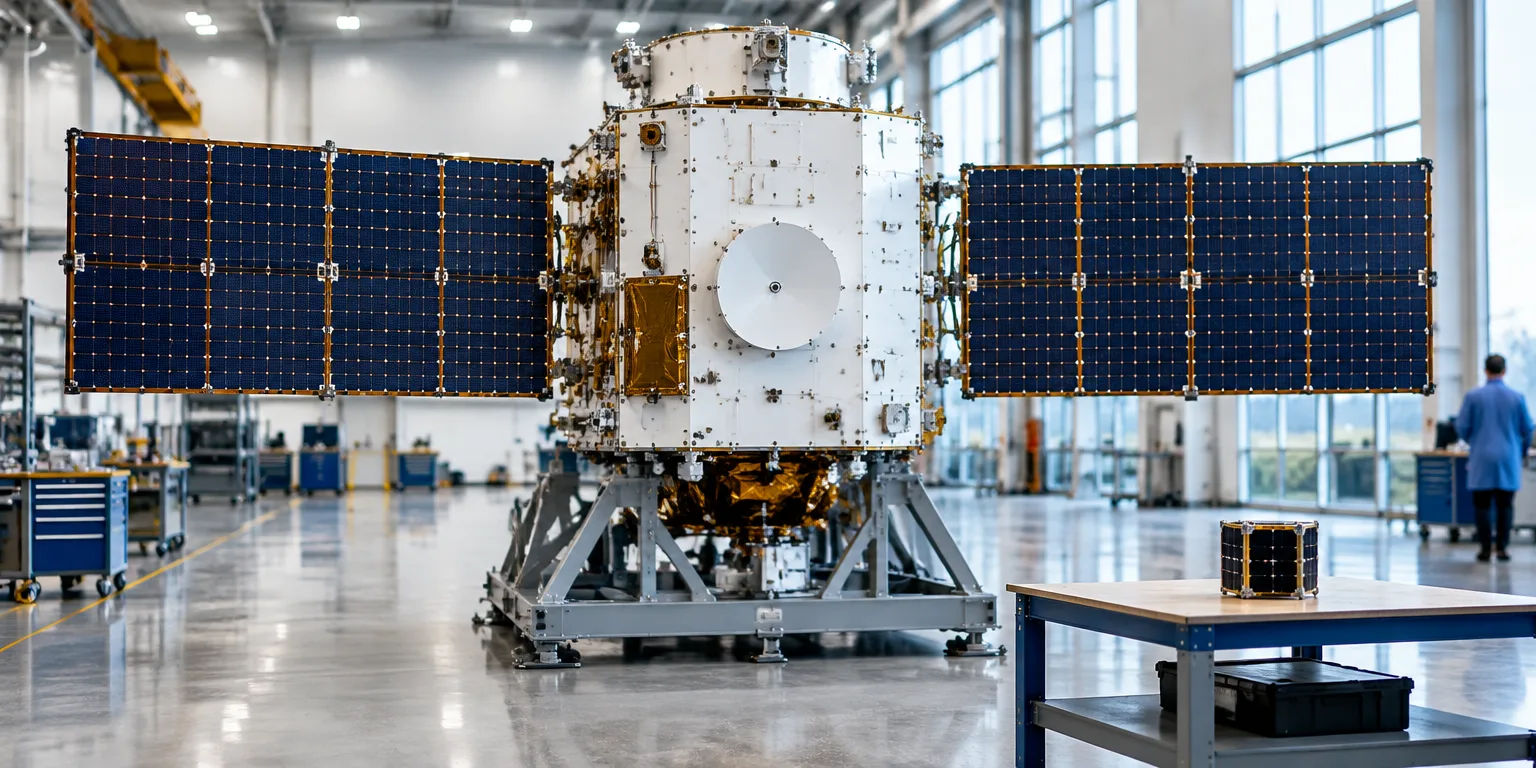
In a 180,000-square-foot factory in Torrance, California, brothers Karan Kunjur and Neil Kunjur are building deliberately large, high-power satellites. Karan, the chief executive, describes them as infrastructure, while Neil, the chief technology officer, is an engineer who previously worked at SpaceX.
Neil Kunjur says the old approach treated mass as the constraint, so satellite makers tried to make spacecraft as small and light as possible to reduce cost.
Then launch prices fell far enough to rethink satellite design from the ground up. A 50-kilogram satellite, about 110 pounds, can now hitch a ride on a shared SpaceX launch for about $350,000, with the price rising as weight increases.
That change creates a counterintuitive saving, according to the company. Once strict weight limits matter less, engineers no longer have to miniaturize everything, and they can use simpler, cheaper materials in a slightly bigger frame.
K2 Space is betting that bigger now means better value. Instead of small satellites, it is building large spacecraft that can carry more power and capacity per launch.
Questions people ask
Why did it get cheaper to launch things into space?
Mostly through reusable rockets and shared flights. Companies such as SpaceX now land and refly boosters, and they also sell extra room on a launch to several smaller customers at once, spreading the cost.
What does a more powerful satellite actually do?
Power generally means electricity for onboard equipment, produced by solar panels. More power can support stronger communications signals, more sensors, or additional equipment carried for customers.
Does a bigger satellite still cost more to launch?
Yes, a heavier satellite still costs more for its ticket to orbit. The argument is that the total cost can be lower because a larger body avoids expensive miniaturization and can do more work on one launch.