K2 Says Its Smallest Planned Satellite Will Be as Big as the Biggest Ever Built
Its solar wings span 50 meters, and more than 100 meters on its larger model, to supply more power.
 Marketplace · Why raise money in euros?
Co-founder and chief executive Karan Kunjur puts it this way: "the smallest satellite we will ever build is as large as the largest satellites that have ever existed."
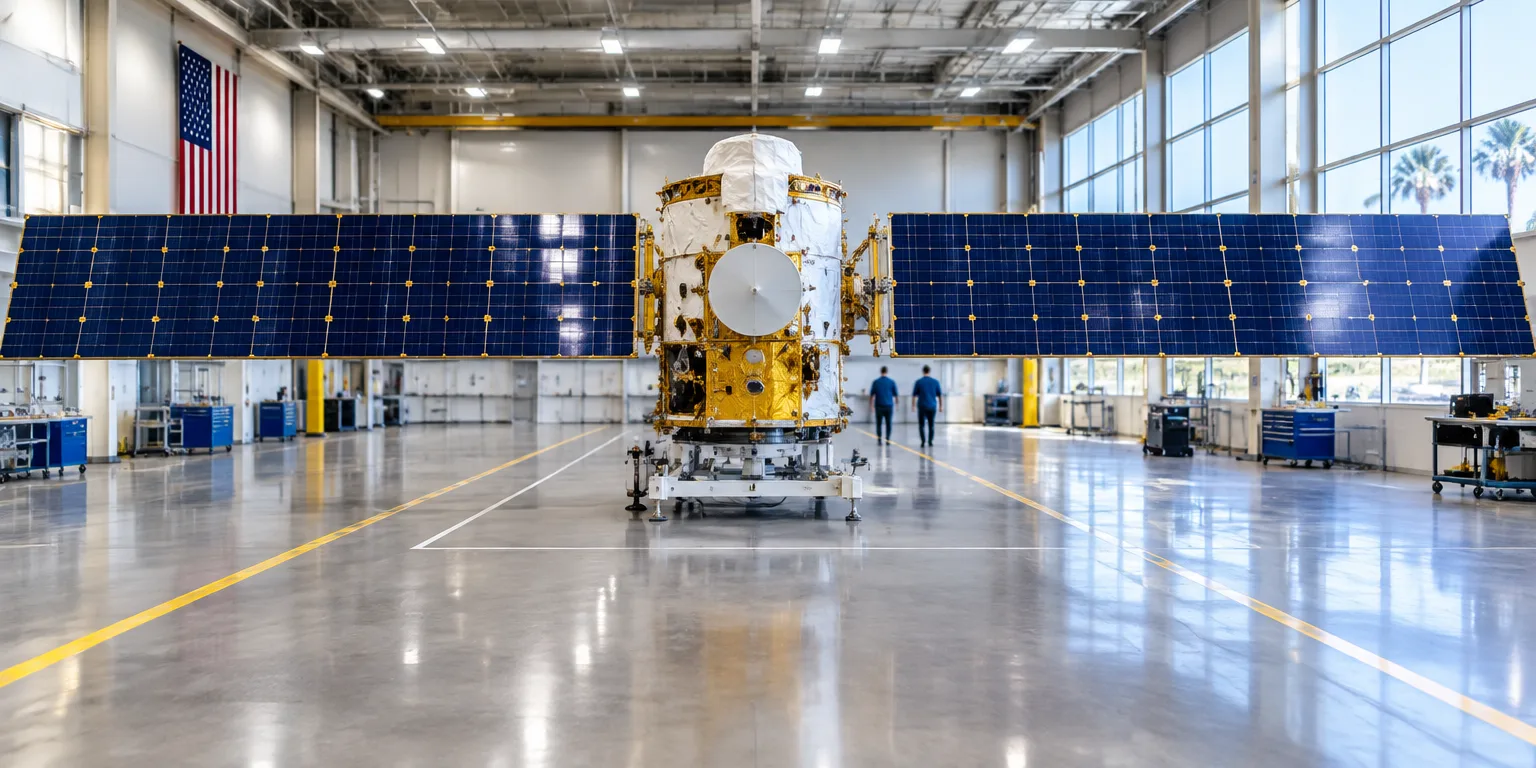
At the company's factory in Torrance, California, the scale is marked out in tape on the floor. The spacecraft sits in the middle, with solar panels extending far out on both sides to power the whole thing.
For K2's 20-kilowatt satellite, those wings span about 50 meters from tip to tip, co-founder Neil Kunjur says. For its 200-kilowatt satellite, they span more than 100 meters.
Karan Kunjur says a planned future model will be bigger still: "And the next one that we build will be effectively 10 times larger."
K2 launched its first satellite, named Gravitas, aboard a SpaceX rocket in March. Its goal is to build 100 satellites a year as roomy platforms where customers can install broadband gear, weather monitors, and other equipment.
Questions people ask
How big is 50 to 100 meters in familiar terms?
A 50-meter span is longer than half an American football field, and 100 meters is longer than the full field. The smaller span is a bit shorter than the 60 to 65 meter wingspan of a large passenger jet, while the larger span stretches well beyond it.
Why build bigger when it costs more to launch heavy things?
Launch costs have fallen enough that designers can rethink the old rule of making satellites as small and light as possible. K2 says letting satellites get bigger allows simpler, cheaper materials and much more onboard power for customers.
What does extra power let a satellite do?
More power supports more demanding payloads, from broadband and Earth observation to national security systems. K2 sells the satellite as a general platform, and buyers add whatever instruments or communications gear they need.