Lab-grown chocolate could replace cocoa grown on trees
With candy prices up more than 70 percent, makers are testing a way around a cocoa crop hurt by weather and mismanagement.
 WSJ What's News · The AI Trade Gets Spooky
The chocolate of the future may never have grown on a tree.
Halloween candy prices have risen more than 70 percent in the past five years. Droughts and floods have hurt cocoa harvests in Africa, along with years of government mismanagement in growing countries. As a result, many subsistence farmers cannot earn enough "to improve their growing practices and expand the crop," as Christopher Mims put it.
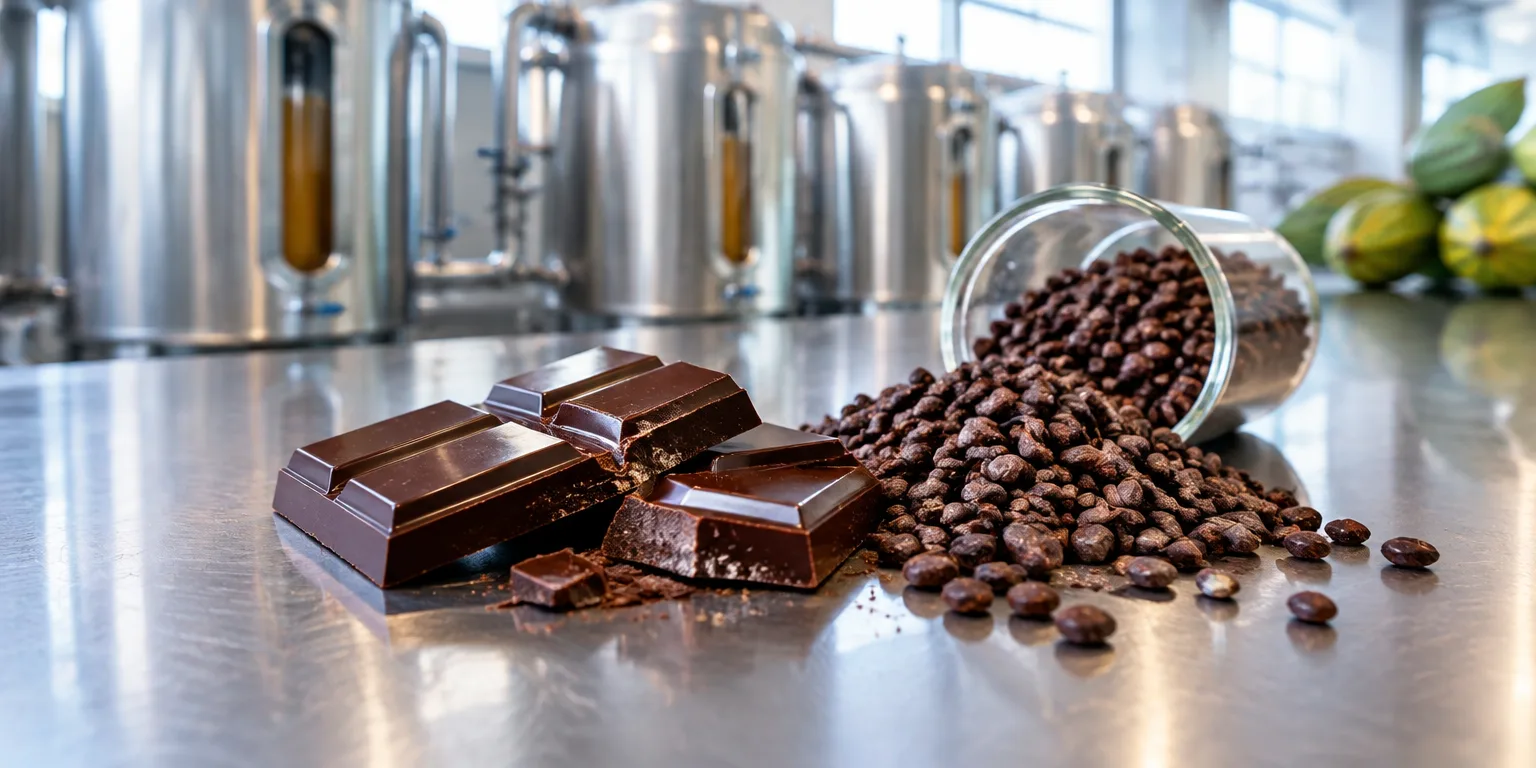
For premium bars, the replacement could come from a vat. Christopher Mims, a columnist, says producers can grow cocoa cells in steel tanks and then process them like harvested beans into chocolate that is bio-identical to the familiar kind, but never grew on a tree.
Mims noticed the pressure at the grocery store, where his favorite dark chocolate bars cost "about twice what they did before the pandemic." On the cheaper end, candy makers could use roasted grape seeds to mimic chocolate flavor in sweets like cookies, where shoppers might not taste the difference.
Questions people ask
Why does weather in Africa matter so much for chocolate?
Most of the world's cocoa comes from West Africa, especially Ivory Coast and Ghana, where the humid climate suits cocoa trees. That concentration means bad weather or plant disease in one region can move world prices.
How do you grow chocolate in a vat?
Researchers take living cells from a cocoa pod and feed them sugars and nutrients in stainless steel tanks so they multiply. The resulting cell mass contains the same fats and flavor compounds, which can then be fermented, dried, and processed much like harvested beans.
What are roasted grape seeds like as chocolate?
They are a dry, leftover product from winemaking that is rich in fats and polyphenols. Roasted and ground, they can turn brown and bitter in a way that resembles cocoa, which makes them more convincing when mixed with sugar and fat in a cookie or filling than eaten straight.