Labs crush carbon at 800,000 psi to grow in minutes the diamonds nature took billions of years to make
The high-pressure, high-temperature method melts carbon and metal around a tiny seed to make diamonds tough enough to cut rock and shape phone glass.
 The Wall Street Journal · The Complex Tech Behind Growing Diamonds in Minutes | WSJ Tech Behind
Nature needed extreme heat and crushing weight, deep underground, and then billions of years to turn carbon into diamond. A lab just south of Oxford, England, does the same job in minutes or weeks.
The shortcut is a machine called a high-pressure, high-temperature reactor, or HPHT. A scientist at the lab described the pressure as "taking a Coke can and putting the Eiffel Tower on top of it."
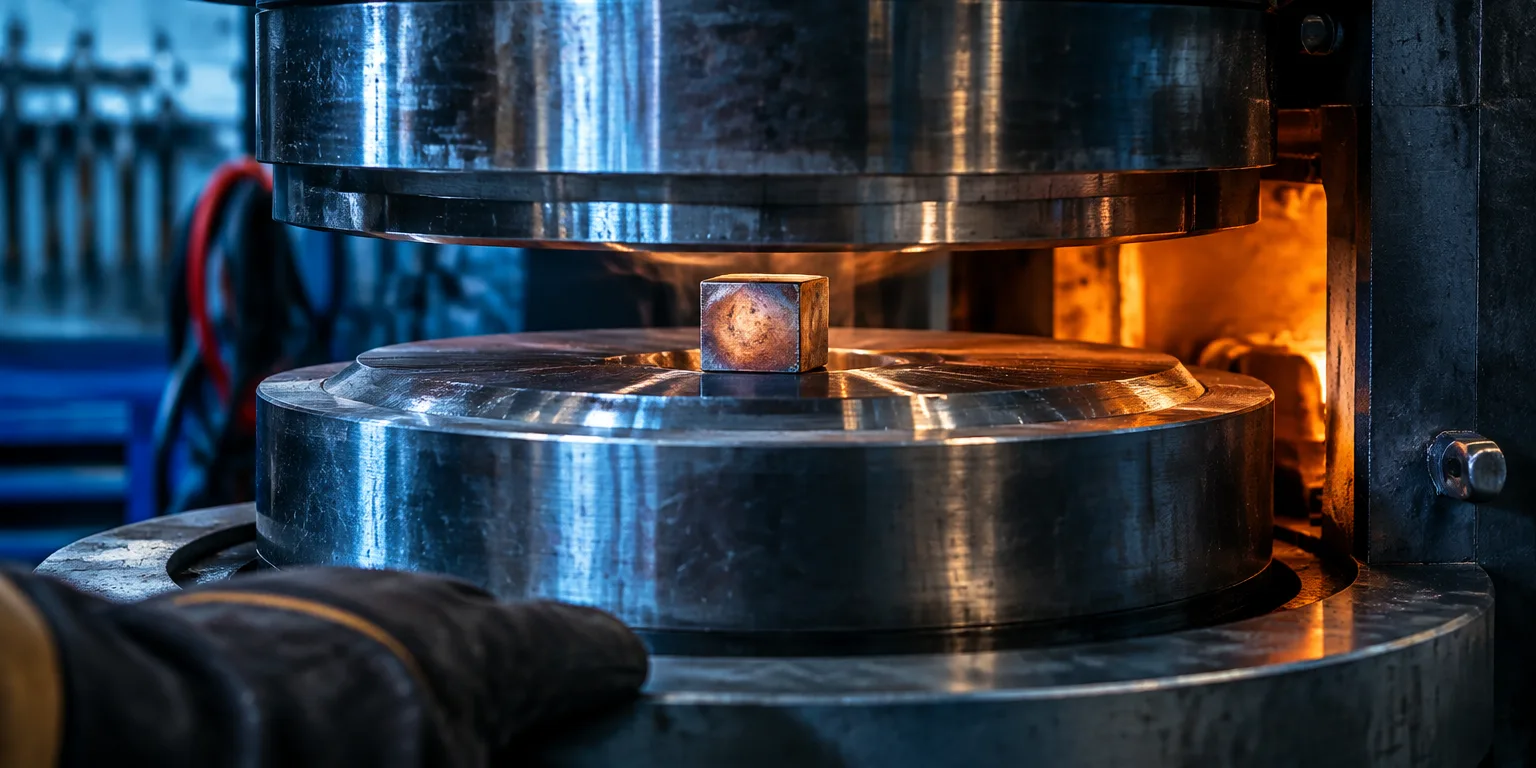
It starts with a small capsule. Inside are three things: a source of carbon, some metals, and a tiny piece of diamond, called a seed, that gives new carbon atoms something to latch onto.
The capsule goes into the reactor, where it is baked hotter than 2,500 degrees Fahrenheit and squeezed with force topping 800,000 pounds on every square inch. To put that in perspective, fracking to crack rock and release oil runs at about 2,000 to 15,000 pounds per square inch.
In that extreme heat and pressure, the carbon and metals melt together into a hot liquid, called a flux, and the freed carbon atoms crystallize on the seed, layer by layer. What comes out is a rough composite that is later refined into a usable lab-made diamond.
A scientist at the lab said, "These machines are mimicking what mother nature does to grow her diamonds, but just in a very short time scale."
Speed is the point. These HPHT diamonds are not made to sparkle. Because diamond is so hard, they are mainly used to cut, grind, and shape other materials, in drills, in mining equipment, and in the tools that shape the glass on smartphones.
Questions people ask
How does nature make diamonds on its own?
Most natural diamonds formed more than a billion years ago, about 90 to 150 miles underground, where heat exceeds 2,000 degrees Fahrenheit and pressure is immense. Carbon crystallized there over long periods, and volcanic eruptions later carried the diamonds closer to the surface.
Are these lab-grown diamonds real diamonds?
Yes, chemically and physically. Both natural and HPHT diamonds are crystal structures made almost entirely of carbon atoms locked in the same rigid arrangement. Labs can make them purer or tougher for industry, but a jeweler would need specialized instruments to tell some lab diamonds from mined ones.
Why aren't these super-pressured diamonds used for jewelry?
They can be, but the HPHT diamonds described here are optimized for toughness and volume, not clarity or size. Industrial buyers value hardness and consistency for cutting and drilling, while jewelry buyers pay for large, clear, colorless stones that require different growing and sorting.