Learning is not just memorizing anymore, a 9-year-old says
Berton Yang says the world needs creative problem-solvers with a maker’s mindset.
 TEDx Talks · Innovate for the Future by Developing a Makers Mindset | Berton Yang | TEDxYouth@GrandviewHeights
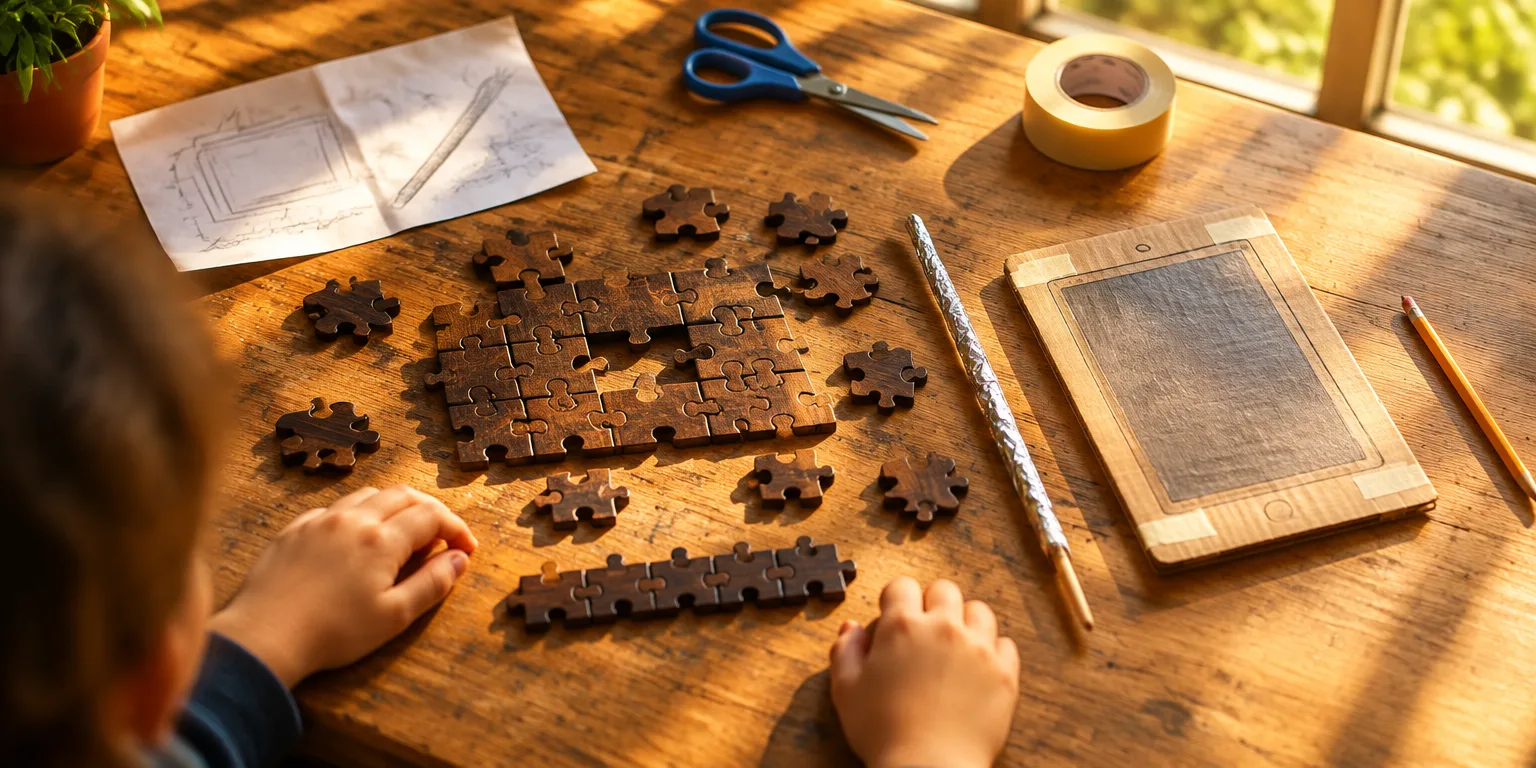
Nine-year-old Berton Yang took the stage to challenge how the audience thought about learning. He had tinkered with homemade projects, including a wand built from foil and a chopstick and a tablet made from cardboard, and he had reached a conclusion.
Learning, he argued, "is not just memorizing a bunch of information anymore." He asked, "isn't that why we have Google."
He said the world needs creative, imaginative people who can solve problems, people with what he called a maker's mindset.
That mindset, in his description, includes curiosity, finding out how things work, and analyzing a problem to try out solutions, while accepting failure, taking chances, and sticking with hard work.
At its core, he said, it means practicing learning, unlearning, and relearning. In plain terms, unlearning is letting go of an old approach when it stops working in order to try a better one. He pointed to his grandfather's puzzle, which he took apart and rebuilt over and over to practice that cycle.
Berton argued that cycle pays off in school, when students meet new equations or need fresh approaches for science projects, and beyond school, by giving them confidence for unfamiliar challenges.
His larger point was about the future. The world faces many unsolved problems, he said, and answering them will take deep thinkers willing to fail, take risks, and build what no one has built before. Only such makers, he argued, can produce the unusual answers required.
He ended with family and an invitation to develop the mindset. "My grandpa's a maker," he said. "I'm a maker. We are all makers." Today that might mean simple homemade toys, he said, but it is a start toward becoming "makers of a better and brighter future."
Questions people ask
What does it actually mean to unlearn and relearn?
Unlearning usually means noticing when an old habit or idea no longer works and setting it aside. Relearning means replacing it through practice and feedback, the way a student might drop a faulty math method and learn a clearer one. It is not forgetting on purpose, but updating.
Is memorizing really useless if we have search engines?
No. Memory still helps with reading, math, and quick judgment, and research shows that background knowledge makes it easier to understand new ideas. The difference is that recall alone is often not enough for unfamiliar problems. Schools increasingly pair facts with applying, explaining, and making.
How can a child practice embracing failure safely?
A practical way is to work in small drafts or prototypes and review what went wrong before trying again. Teachers often use short reflections, such as what worked, what failed, and what to change next. Keeping the stakes low and the feedback specific helps persistence feel normal.