Legora Founder Says U.S. Case Law Got Online by Being Retyped Twice in India
The founder says the work required shipping books overseas and comparing two separate entries, because a tool missing cases will not be trusted.
 All-In with Chamath, Jason, Sacks & Friedberg · The Trillion-Dollar Industries AI Is Disrupting: Voice, Law & the End of the Billable Hour
If you look up an American court decision on a computer, the founder of Legora says you are probably reading something that traveled to India as a physical book and was then typed out twice, by two different people.
That account comes from the founder of Legora, a company that builds artificial intelligence tools for lawyers. His company competes with the longtime leaders in legal research, Westlaw and LexisNexis, and he was describing how they assembled their collections of old cases.
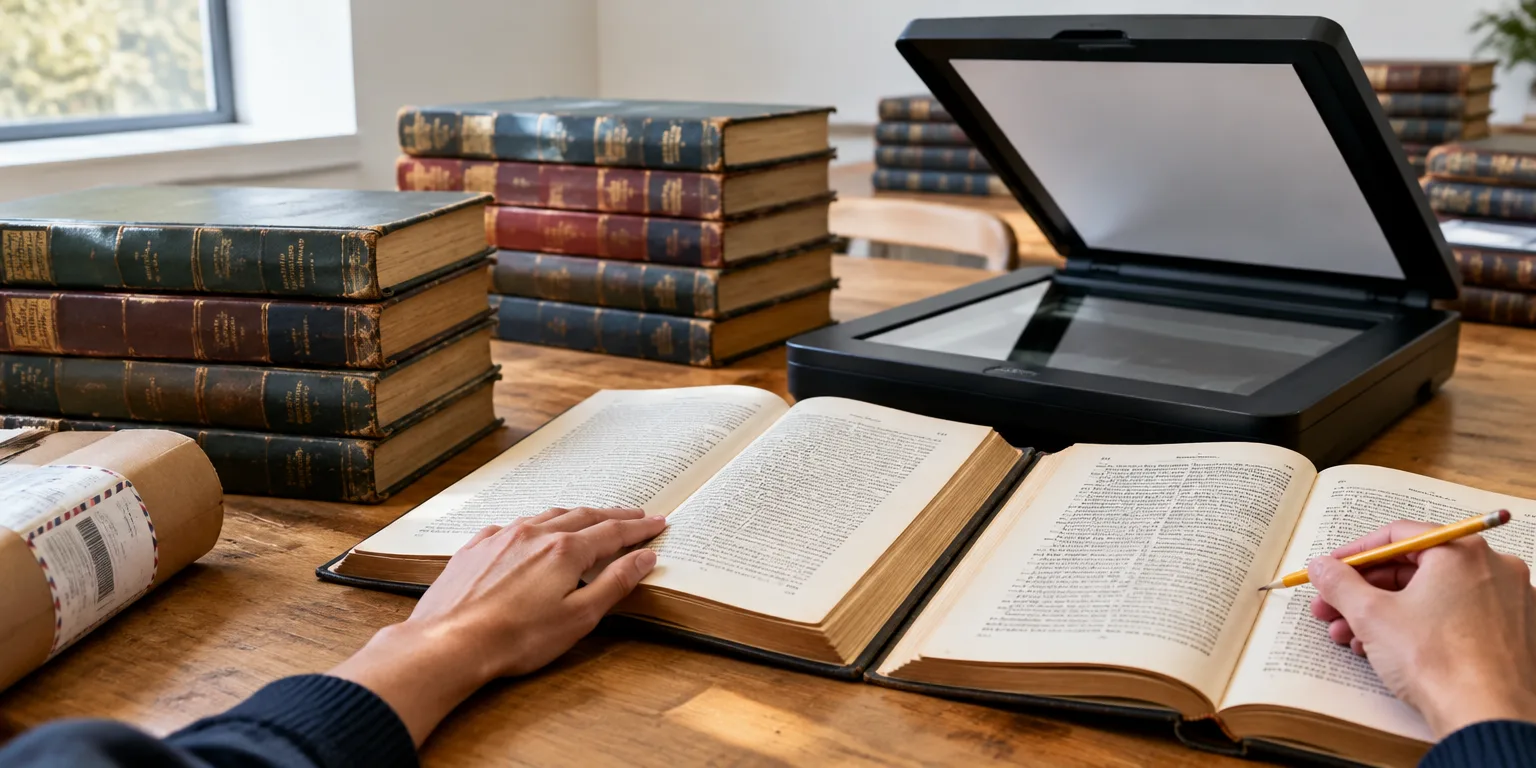
The process started on paper. Workers went to courthouses to get copies, sometimes paying courts 10 cents a page for printouts, and gathered bound volumes of decisions. Then, the founder said, they shipped the books because they had to physically scan them.
In India, two different people would type in each case, or run it through scanning software, and then compare the two versions to look for differences. The double work was deliberate, because, in his words, "you can't get it wrong."
Lawyers need exact text plus what the industry calls page citations. To explain the term, page citations are the page numbers of the printed volume where a case starts and where each passage falls.
The reason for all that labor, in his view, is completeness. He contrasted law with a power law, by which he meant the familiar idea that most value comes from a small share of cases, so covering the top 80 percent might seem enough. He says law works the other way, because a litigator preparing a billion dollar case must be sure the tool has every case, not just the famous ones. That is why, in his view, other efforts have not been enough, including a Harvard project and CourtListener, which for context is a free, nonprofit case archive.
He also said that in the United States, Westlaw effectively has a monopoly arrangement with the government to report cases, so the published record is not held by the public in the way people might expect. Separately, he said a newcomer must recreate the entire archive because a tool that might be missing cases is useless to lawyers.
Artificial intelligence can now do much of the typing and checking work that people once did by hand, the founder said. But the physical part remains, because companies still have to get the books, open them, and scan them to capture those page citations.
Questions people ask
Why do lawyers still cite printed page numbers when everything is digital?
American courts and law journals still expect citations to a fixed, stable page, so everyone is referring to the same passage. The printed volume provides that fixed reference, even if the lawyer found it online. Without page citations, it would be harder to verify quotes and compare arguments.
What are Westlaw and LexisNexis?
They are the two dominant paid research services for American lawyers, holding vast collections of cases, laws, and legal commentary. They add summaries, subject headings, and citation tools on top of the raw opinions. Most large firms pay for one or both because lawyers treat them as the complete record.
Could AI scan old courthouse books without shipping them?
Modern scanning and text recognition are far better than older methods, but someone must still handle fragile volumes and check for errors. Libraries and courts are gradually scanning more records where they sit. For a commercial database that promises completeness, the founder says the work still starts with physically obtaining and opening the books.