Lifting Heavy Builds Bone Better Than Running Does
Muscles tug on bone through tendons and switch on bone-building cells, and it takes a few very heavy repetitions, not the light, high-rep work people do to get bigger muscles.
 Andrew Huberman · Exercise, Nutrition, Hormones for Vitality & Longevity | Dr. Peter Attia
Peter Attia, a physician who studies longevity, assumed running would be best for bones. Impact seemed like the obvious medicine, better than swimming or cycling, until he dug into the research with his analysts and found that heavy lifting probably did better.
The reason comes down to how bone feels force. When you strain against a very heavy weight, large muscles pull hard on the tough cords, called tendons, that anchor them to bone. Attia's point is that bone senses that tug from muscle through tendon as a signal to build.
That signal switches on osteoblasts, the cells that lay down new bone.
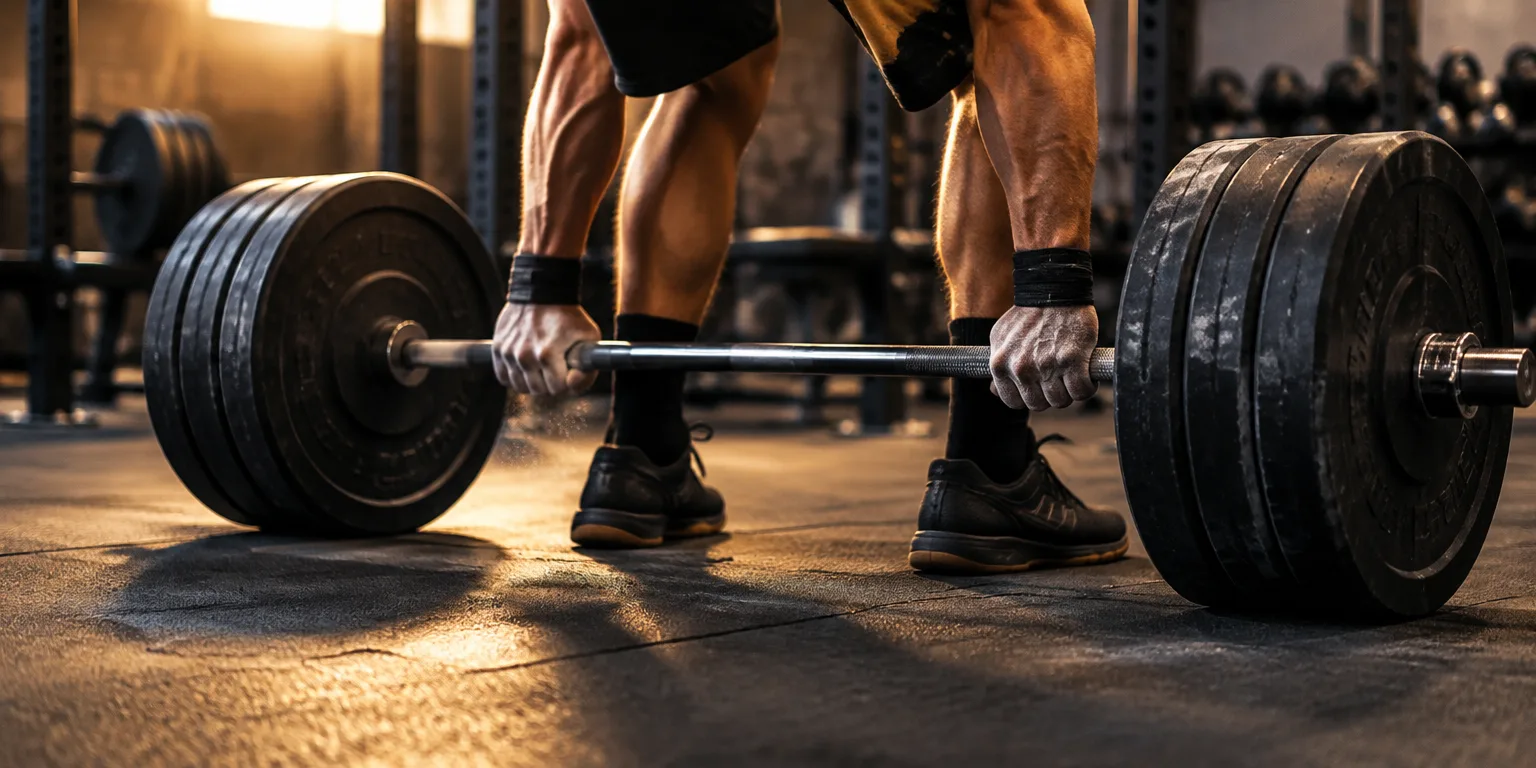
The heavy, low repetition approach is distinct from the lighter, higher repetition work people do to enlarge muscles. Andrew proposed one to six repetitions per set with loads around 80 percent or more of a one repetition maximum, with long rest, two or three sessions per week. Attia agreed in general terms, saying you need to be working against very heavy resistance, and named the deadlift as a favorite example that looks different with experience.
The payoff is largest before about age 20 to 25, when people are still building toward their lifetime peak, and that matters most for girls and young women because that peak sets the trajectory for later life. After about age 50, men decline slowly and women decline sharply as estrogen falls, so Attia says heavy training remains essential at any age to slow the slide.
Questions people ask
Does this mean running and walking are useless for bones?
No. Walking, jogging, and sports that involve jumping can help maintain bone in the legs and hips, and they help balance, fitness, and fall prevention. They just deliver less concentrated muscle pull to the skeleton than straining against a very heavy load.
How heavy does an older beginner need to lift?
Heavy is relative. For a trained lifter it might be a several hundred pound deadlift, while for a frail beginner it might be a leg press or a weighted machine with close supervision. The principle is a load that feels very hard for only a few repetitions, with good form and plenty of rest.
Is it safe to start heavy lifting after 60?
Yes, with care. Bone responds to loading late in life, and strength also protects against falls and fractures. Older adults should get medical clearance, start with supervised machines or body weight, and progress slowly.
Do calcium and vitamin D not matter if I lift?
Calcium, vitamin D, protein, and hormones like estrogen and testosterone all affect bone maintenance, and deficiencies can undermine training gains. Strength provides the mechanical signal, while nutrition and hormones provide the materials and permission to build.