Like Language, DNA Stores Information in Digital Form
Four chemical letters do for cells what about 40 sounds do for English, and computers added a third code.
 On Humans · How Do Humans Fit into the Story of Life? ~ Jonathan Loh
The code that builds your body works like the sentence you just read.
Conservation biologist Jonathan Loh argues that DNA and human language both store information digitally. Digital here does not mean electronic. Loh defines it as meaning "that a limitless amount of information can be encoded using a limited number of symbols," arranged in sequence.
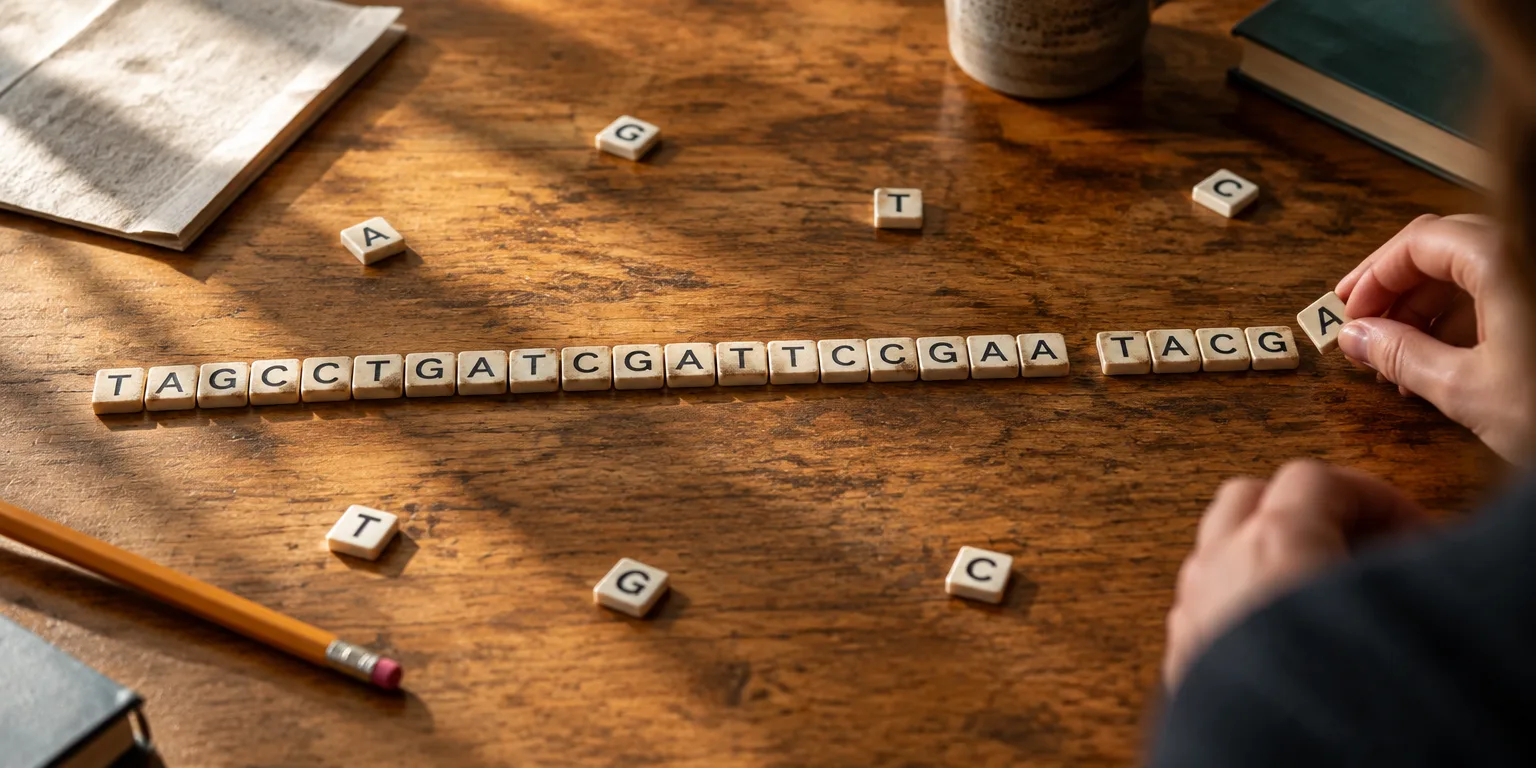
In genetics, there are four symbols, the nucleotide bases known by the letters A, C, G, and T. Strung together in long sequences, they can encode vast amounts of inherited instruction.
Language does the same thing with sound. English uses roughly 40 basic sounds, called phonemes, depending on the dialect. None of them means anything alone. Say the word coffee, and the k, the o, the f, and the i are meaningless by themselves. Strung together, they suddenly carry meaning. By sequencing those small, meaningless units into longer strings, we can convey endless ideas. Loh calls that sequencing "the essence of digitisation."
Computers added a third version of the same trick. Machine code uses a binary system, just ones and zeros, only two symbols. The sequences are extremely long, but they too can hold endless instructions, completely separate from genetic or linguistic encoding.
Loh ranks the emergence of DNA's code first among major events in Earth's history and the emergence of human language second. He argues that adaptation now travels mainly through culture rather than genes, with people surviving cold by producing clothing rather than evolving new biology. We now stand, he says, at the dawn of the third.
Questions people ask
How can only four letters build something as complicated as a person?
Length and combination do the work. Human DNA contains about three billion letters, and cells read them in three-letter groups that specify the building blocks of proteins. Different orders and lengths mean four letters can write an almost endless number of instructions.
Don't other animals have languages too?
Many animals communicate, from bee dances to monkey calls, but their signals are mostly fixed and limited. Human language is open-ended, because meaningless sounds can be recombined into new words and sentences that have never been spoken before.
What makes computer code different from human language?
Machine code is built for processors, not people, using only ones and zeros in very long sequences. It can copy, store, and transmit information outside bodies and brains, which is why Loh treats it as a separate system with its own evolutionary implications.