Listening takes longer than reading, and that is why news apps love audio
Nearly a third of publishers now build audio into their apps, and a simple queue of the day’s top stories is doing the heavy lifting.
 The Publisher Podcast by Media Voices · Why apps are engagement and retention powerhouses: in conversation with Pugpig's Jonny Kaldor
When asked whether people were spending more quality time inside news apps, Jonny Kaldor, chief executive of the mobile publishing platform Pugpig, which powers 440 apps for more than 150 publishers, pointed to sound.
His explanation was disarmingly simple: “we just happen to read faster than people speak.”
Because listening takes longer than reading, he says the time gap makes audio worth building for publishers. Audio has become a basic expectation, he says, with 30% of Pugpig’s publishers offering an experience built around audio as part of their app. Asked about survey data showing longer time spent, he agreed it makes a real difference.
He distinguishes two kinds of listening. One is podcasts, which he calls brilliant for engagement and more differentiated. The other is text-to-speech, software that reads an article aloud, where Kaldor says quality makes the difference.
Done with voice actors, or with strong artificial intelligence like the product from Beyond Words, a company making AI voices, he says it genuinely sounds like the article is being read to you. Done poorly on other platforms, he says, it still "sounds a little Stephen Hawking-like" and is not a fantastic product.
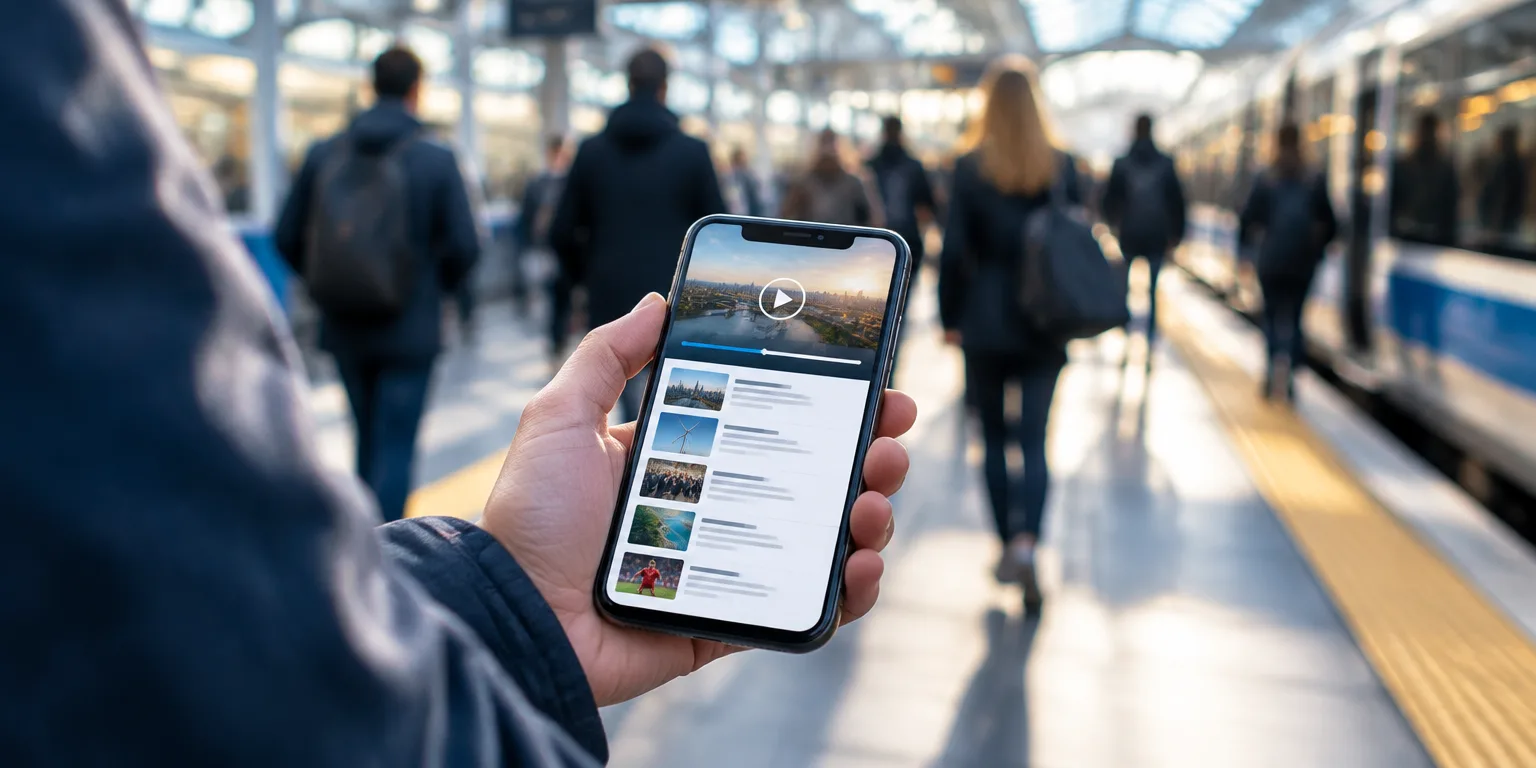
The version Kaldor says is getting real engagement is even simpler. He named Bulletin, Stylist, and, he thinks, Foreign Affairs as publishers that now offer a “read the top five stories to me” button that just queues the day’s headlines and plays them in order.
Kaldor calls it "a nice, simple, time-saving feature." A listener working through five articles, he notes, will by definition stay in the app longer than a reader skimming the same five.
Questions people ask
How much slower is listening than reading, really?
Listening typically takes about 1.5 to 2 times longer than reading. Most adults read 200 to 300 words per minute on a screen, while speech runs about 150 words per minute, so the same 1,000-word article takes about four minutes to read and six to seven minutes to hear. For publishers that sell attention by the minute, that gap adds up across five stories.
What does an audio-centered app experience look like?
Typically it is a play button at the top of an article or home screen, plus a playlist that lines up stories back to back with playback controls and often offline downloads. In many news apps the same software voice can read almost any text article, while some shows use recorded hosts or actors.
Do people remember as much when they listen?
Not necessarily. Studies often find people remember what they read somewhat better than what they hear, especially for dense information, though listening while walking or commuting lets people finish stories they would otherwise skip. Publishers often care less about recall than about finishing and returning.