Living Close Together Makes It Cheaper to Get What You Need
Amazon skips one giant central warehouse for smaller ones near crowds, and cities work the same way.
 Wendover Productions · Why Cities Exist
Imagine there are only ten people in the world, and each one wants to buy the same product. If those ten people spread out evenly, the sensible place for a distribution hub is right in the middle. Some buyers happen to be nearby, but most orders have to travel a long way.
Now move eight of those ten people together into a mini city. The sensible place for the hub moves, too, to right next to the city. Delivery to the two people left in the countryside gets slower and more expensive, but in that example, crowding cut the combined delivery mileage and expense.
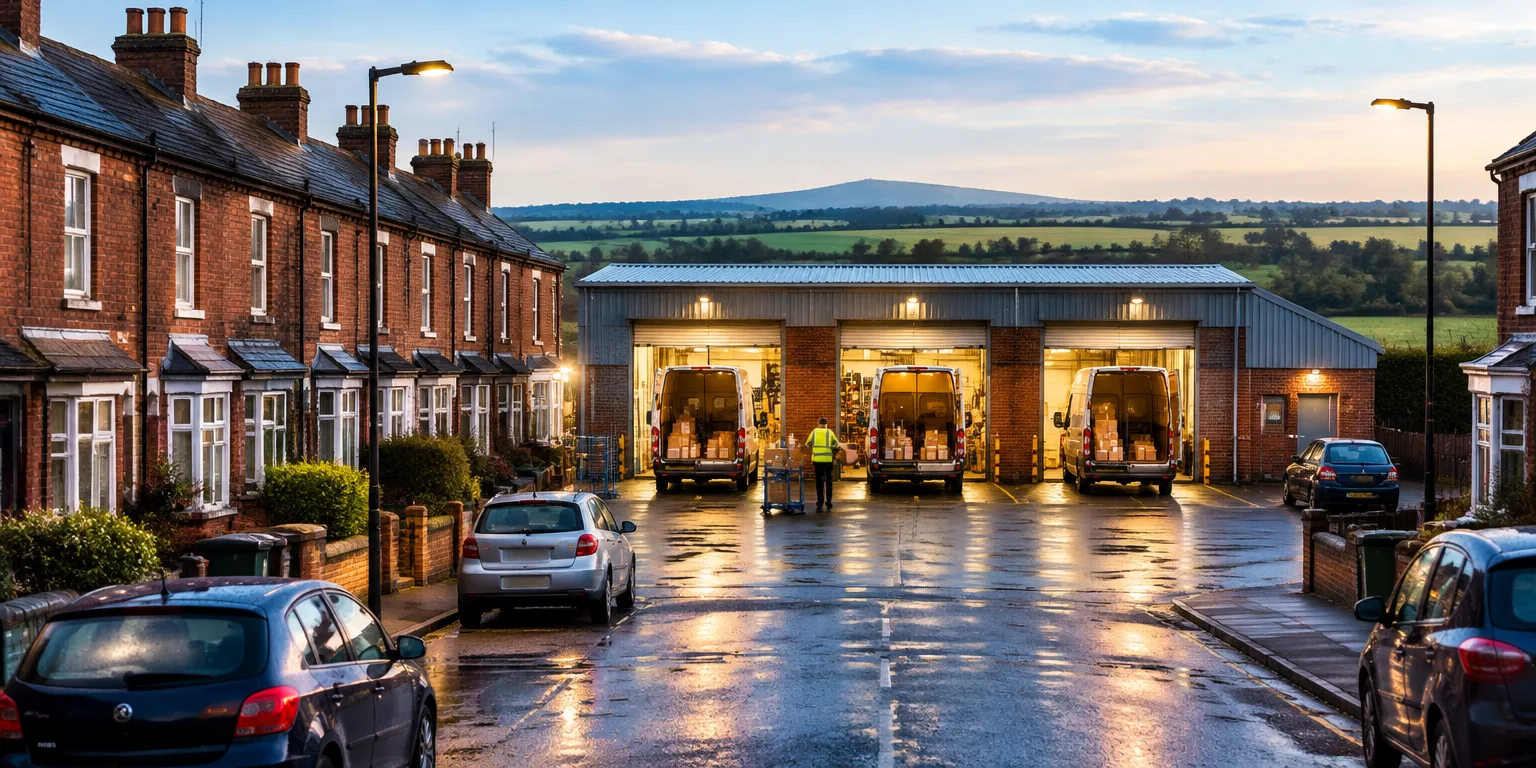
That is how Amazon places its warehouses in Britain. It could build a single giant warehouse in the middle of the country, where a bigger operation costs less per package. Instead, it puts smaller warehouses near major population centers, because shorter trips to dense clusters of customers lower total shipping costs.
Two hundred years ago, the pull was even stronger, when people had to buy almost everything in person at physical marketplaces, and an hour of walking covered only about three miles, compared with about 70 miles of driving today. People tend to choose what takes less effort, and cities make trade easier, so living together becomes the easier choice.
That ease matters because trade rewards specialization. If one person can make paper quickly and another can make pencils quickly, each can focus on what they do best and swap, and both end up with what they need in less working time. Being close does not print money. It trims the effort of swapping goods and services, leaving people with more to build on.
Questions people ask
If density is so efficient, why is city living so expensive?
Housing and land get more expensive because many people and businesses want the same well located space, and landlords charge for it. The efficiency savings on shipping, hiring, and trade can still outweigh those higher rents, which is why people keep paying them. When the rent outweighs the benefit, as with large factories, businesses often leave the city.
What do those extra warehouses near cities cost?
Warehouses near population centers cut shipping miles. That saving can outweigh the cost of operating more buildings, so the total bill comes out lower.
If cities are the most efficient pattern, why does rural life continue?
Food, energy, timber, minerals, and many other inputs need land, so farming, mining, and other rural work cannot all move downtown. Rural communities also support those industries and offer space and lower housing costs that some people prefer. The point is balance: most people cluster, while a smaller rural population supplies what cities cannot make for themselves.