Local Militiamen Firing From Cover Bloodied Britain's Professional Army
A British order to arrest two leaders and seize guns at Concord turned into a deadly running battle all the way back to Boston.
 heathercoxrichardson.substack.com · July 2, 2026
Just before dawn on April 19, 1775, several dozen minutemen stood on the town green at Lexington, Massachusetts, watching British regulars approach through the dark.
The waiting men were local militia, townspeople who had promised to turn out at a moment's warning. For months, a Massachusetts provincial assembly had been gathering guns and stores at nearby Concord and urging each town to organize rapid-response companies. The push followed a gathering of colonial delegates in Philadelphia the prior autumn to weigh a common stand against what they saw as tyranny.
This was the moment that talk turned to shooting, and part-time soldiers showed they could bloody one of the most professional armies in the world. What started as an order to detain leaders and capture guns ended with heavy British losses along a country road.
British authorities had instructed General Thomas Gage, the British commander in Massachusetts, to detain Boston figures Samuel Adams and John Hancock, believed to be around Lexington, and to capture the Concord stockpile. His troops started their march late on April 18.
At Lexington, the assembled colonists started to scatter after being told to go. Then one gunshot split the early morning gloom, and British troops fired into the group. Eight of the Lexington men fell dead, and about a dozen more were hurt.
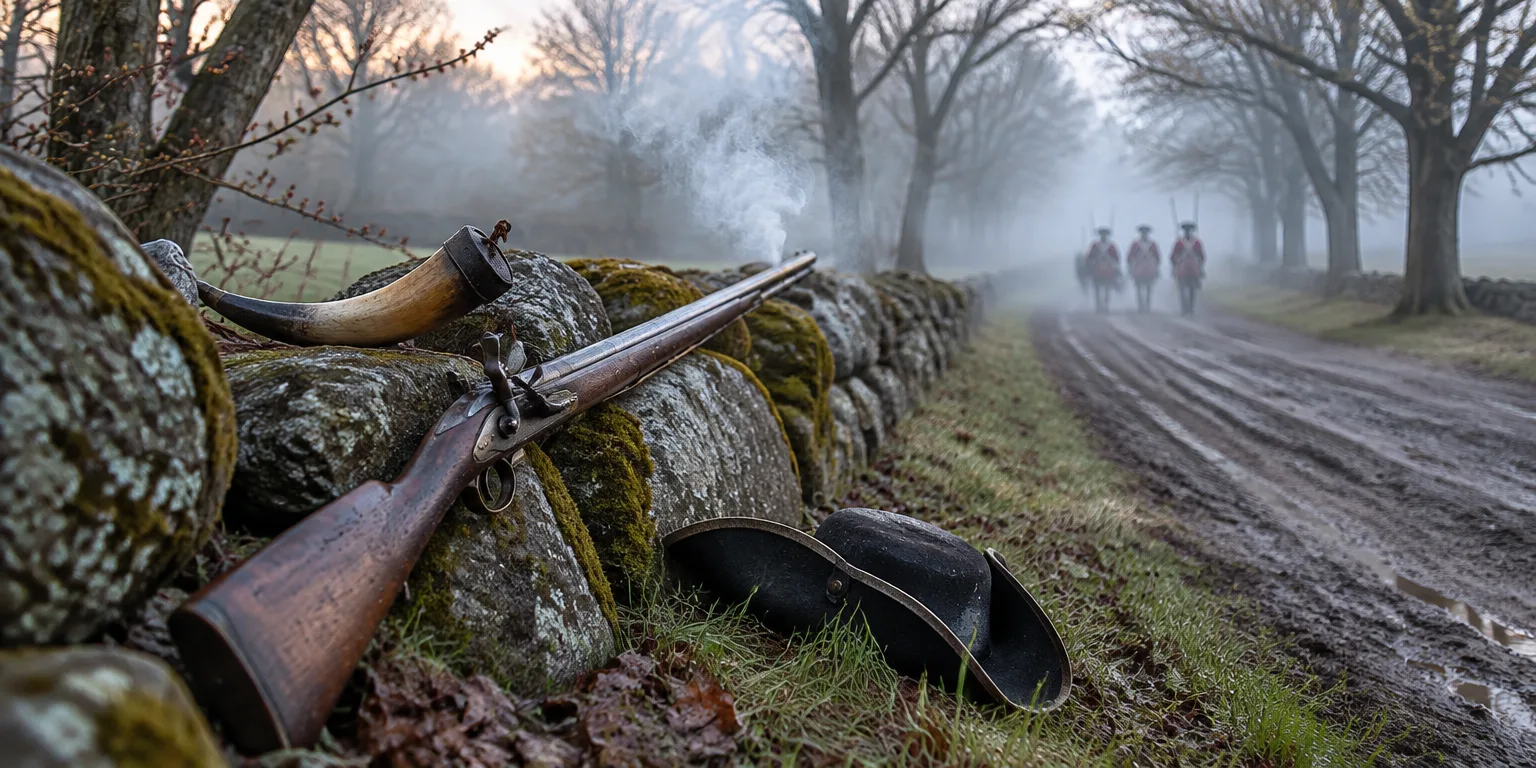
The column pushed forward toward Concord, only to discover the bulk of the arms already carried away. The shock came on the return leg. As the troops headed back toward Boston, colonists lined the route and shot from shelter, using rocks, woodland, and houses for cover.
By day's end, 73 regulars had been killed, with 174 hurt and 26 unaccounted for. Colonial losses totaled 96, with 49 dead, 41 injured, and 5 unaccounted for. A mission meant to end a rebellion had become a running battle, and the rebellion had begun.
Questions people ask
Who were the minutemen?
They were local militia companies in Massachusetts, trained to turn out quickly in an emergency. Many were farmers and tradesmen in their teens to their 40s, and they elected many of their own officers. At Lexington and Concord, they fought in small groups using cover, rather than in the massed lines favored by the British army.
Why did the British want the supplies at Concord?
After months of protests and boycotts, Massachusetts patriots were stockpiling muskets, powder, and food for a possible war. British officials hoped that arresting leaders and seizing those stores would stop the rebellion before it grew. The plan failed because most of the supplies had already been moved when the troops arrived.
What happened right after Lexington and Concord?
Militia from across New England converged on Boston and besieged the British there. The Second Continental Congress met in Philadelphia, created the Continental Army, and put George Washington of Virginia in command. Full-scale war followed at Bunker Hill that June, more than a year before Congress voted for independence.