Loved Customers Can Still Bankrupt an AI Startup
In the old software business, happy paying customers meant a healthy company. Lin Qiao says AI computing costs have broken that link.
 20VC with Harry Stebbings · The Open-Source AI Reality | How Token Costs Will Fall 10X & Usage Will Explode 100X | Lin Qiao
Lin Qiao, the founder and chief executive of Fireworks AI, was asked whether companies built on the most powerful AI models might be overvalued if cheaper, openly available models could do most of the work. She said people are starting to realize it, and recalled a pattern she began describing two years ago that did not exist in the earlier software era.
In her words: “Once they scale they could scale into bankruptcy.”
What she meant, she argued, is that finding customers who want to pay is no longer enough. In the software-as-a-service era, she said, product-market fit, the point when customers want to pay for a product and value it, and a durable business were almost the same thing. The hardest part was finding that fit, and then a company could grow as fast as possible because computing power and the infrastructure underneath were close to commodities.
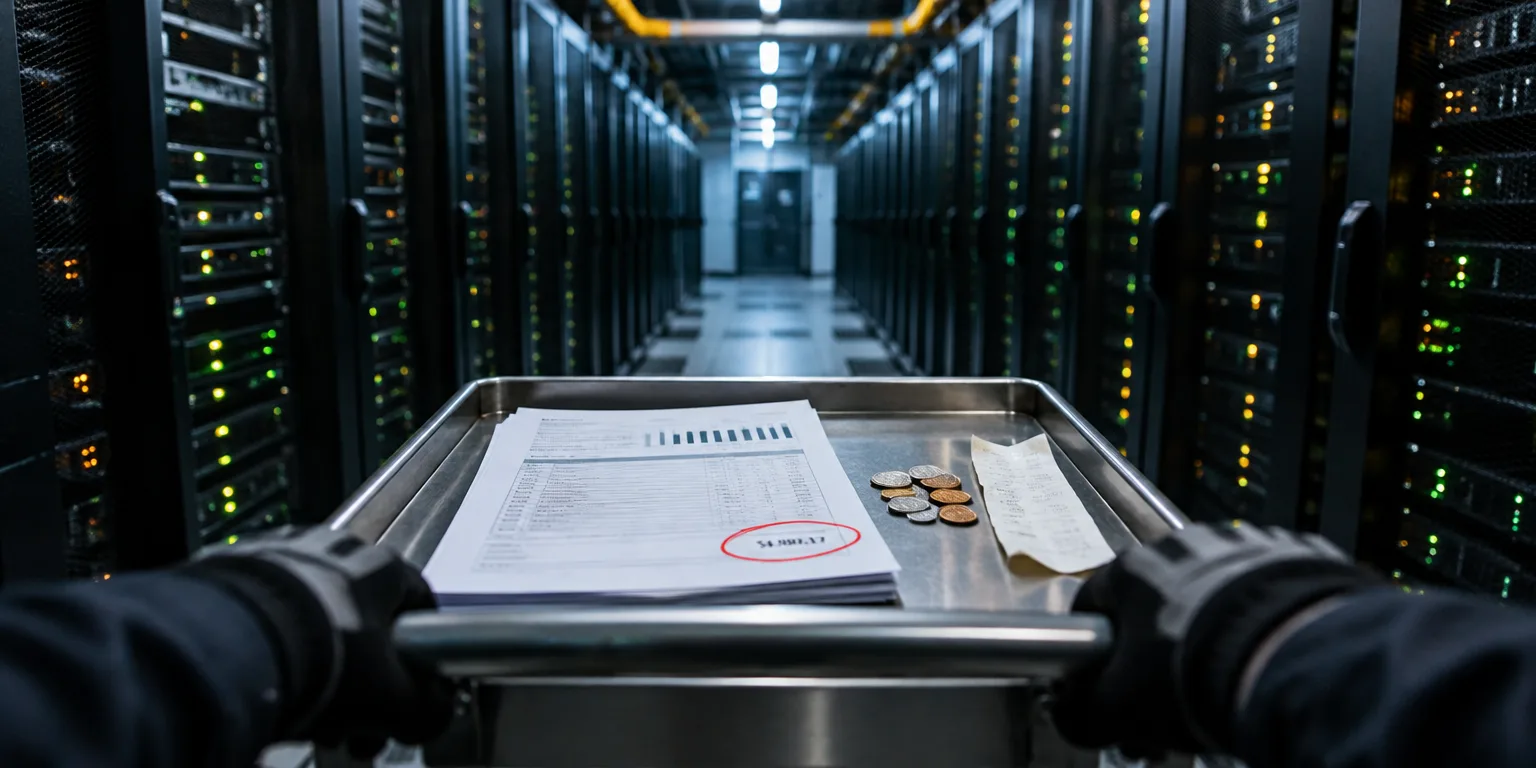
Now, she believes, the two ideas have split apart. She described young companies that have real product-market fit, whose customers want to pay them and truly value the product, but that cannot grow without losing money on every new user because each AI request carries a high computing cost. Growth, in that case, only speeds up the losses.
She said the problem is even bigger for large, established internet companies. They have enormous traffic left over from when they were winning startups a decade ago, so the moment they add an AI feature, it instantly reaches their entire customer base. Their finance chiefs look at the cost forecast, she said, and there is no way to justify it. The result is that innovators who want to plug into a disruptive technology cannot afford to do it, and must find a less expensive way to offer it.
Questions people ask
How does serving more customers actually lose money?
Each time a user asks an AI a question, the company must pay for computing power to run a large model and generate an answer. If that cost is higher than what the user pays, or higher than the advertising or subscription revenue that user brings in, every extra user increases losses. At internet scale, with millions of queries per day, those losses add up fast.
Why is this different from older software companies?
In traditional software, serving one more customer cost almost nothing because the same code could be copied cheaply. With generative AI, each answer requires substantial calculation on expensive chips, often using large data centers and large amounts of electricity. So costs rise almost in lockstep with usage, instead of staying flat while revenue grows.
What is the cheaper alternative she has in mind?
She points to openly available models that companies can copy, run themselves, and adapt with their own private data. Because there is no huge research bill to repay with each query, the cost per request can be much lower. The tradeoff is that a company must do more tuning and safety work itself, rather than relying on a frontier lab to do it.