Loyalists Went Hunting for the IRA and Killed Three Innocent People
In the spring of 1966, Protestant militants declared war on a republican army that was barely active, and murdered a bedridden grandmother, a singer, and a teenager.
 The Rest Is History · 697. The Troubles: Murder in Belfast (Part 1)
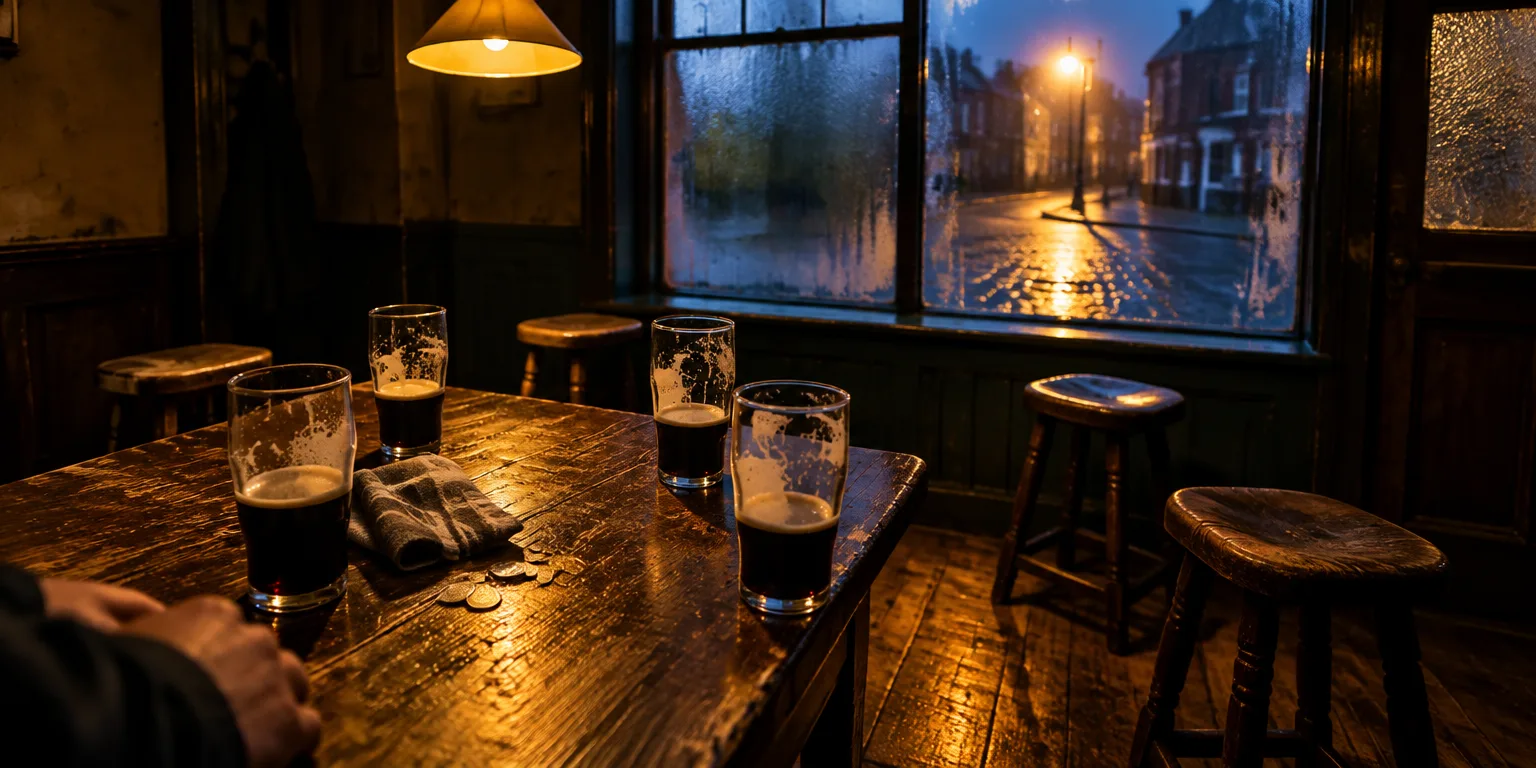
Just after midnight on June 25, 1966, four young Catholic workmen sat with pints in the Malvern Arms, a Protestant pub off the Shankill Road in Belfast. They had worked late in the city center and stopped for one last drink because the pub stayed open after hours, and one of them, Andrew Kelly, said he knew the landlord and there would be no problem.
At the next table, drinking unnoticed, were Gusty Spence and his gang, Protestant militants who called themselves the Ulster Volunteer Force. Spence walked to the counter near the four men for a drink. After rejoining his friends, he said he had been listening to their conversation, that they were four IRA men, and that they would have to go. They were not IRA men at all.
Some accounts treat these killings as the opening deaths in the Troubles. Within seven weeks that spring and summer, Spence's men killed three people while searching for an Irish Republican Army that was then a quiet shadow, not an active army.
The pattern had been set weeks earlier. Spence's group had been firebombing Catholic schools and shops, telling themselves they were deterring IRA vandalism. On May 7, they aimed a gasoline bomb at what they thought was the window of a Catholic-owned pub crowded with republicans. They hit the house next door.
Inside lay Matilda Gould, a 77-year-old Protestant grandmother, bedridden with severe arthritis. She suffered terrible burns and died seven weeks later. Many histories count her as the opening civilian death of this new conflict. The men did not back down.
Two weeks later, in a UVF statement, they said, "From this day, we declare war against the IRA and its splinter groups. Known IRA men will be executed mercilessly and without hesitation." The threat hung over a city where republican militants were barely active.
On May 27, the gang met in a pub and set out to shoot a republican activist named Leo Martin. They went to the Falls Road to find him and could not. On the way back they met John Patrick Scullion, a 28-year-old who had spent the evening drinking and singing republican songs. They decided, in effect, that he would do. They stabbed and shot him, and he died in the hospital two weeks later.
Then came the Malvern Arms. After the four young men finished their pints and walked into the street, the shooting started. Kelly, one of the four men, was shot and survived. He later said Peter Ward, the 18-year-old leading the way out, was dead when he hit the ground, and that the gunmen kept firing without saying anything.
Police arrested Spence and his gang. Spence and two others were sent to prison.
Questions people ask
What was the UVF?
The Ulster Volunteer Force was a Protestant loyalist paramilitary group formed in 1966 and named for the force that opposed Irish Home Rule before World War I. It was outlawed by Northern Ireland's government that same year, but it regrouped and became one of the main loyalist armed groups of the Troubles.
Why was the IRA so quiet in 1966?
The Irish Republican Army had called off its last campaign in 1962 and, under leader Cathal Goulding, had turned toward left-wing politics and sold off weapons. Many Belfast republicans considered it effectively dead, which is why loyalist warnings about an imminent IRA rising seemed paranoid to outsiders.
What happened to Gusty Spence after his arrest?
Spence pleaded guilty to murder and received life imprisonment, serving time in Crumlin Road prison and later the Maze. There he became an influential figure among loyalist prisoners and eventually an advocate for political settlement, a transformation that surprised many who remembered 1966.