Madame Tussauds Made a Wax Doner Kebab as Germany's Sandwich Rivals the Bratwurst
The sandwich, brought by Turkish immigrants in the 1970s, now rivals the bratwurst.
 Global News Podcast · Trump strikes deal with Putin to buy Russian diesel
Berlin now has the first doner kebab ever made in wax, on display at Madame Tussauds alongside Beethoven, Einstein, and Heidi Klum.
The doner began in Turkey as seasoned meat cooked on an upright spit and carved onto a plate. Its reinvention as a sandwich, meat stuffed into flatbread with salad and sauce, is claimed by Germany, where Turkish immigrants brought it in the 1970s. It has since come to rival the bratwurst among quick meals in Germany, and become a popular way to end a night out far beyond the country.
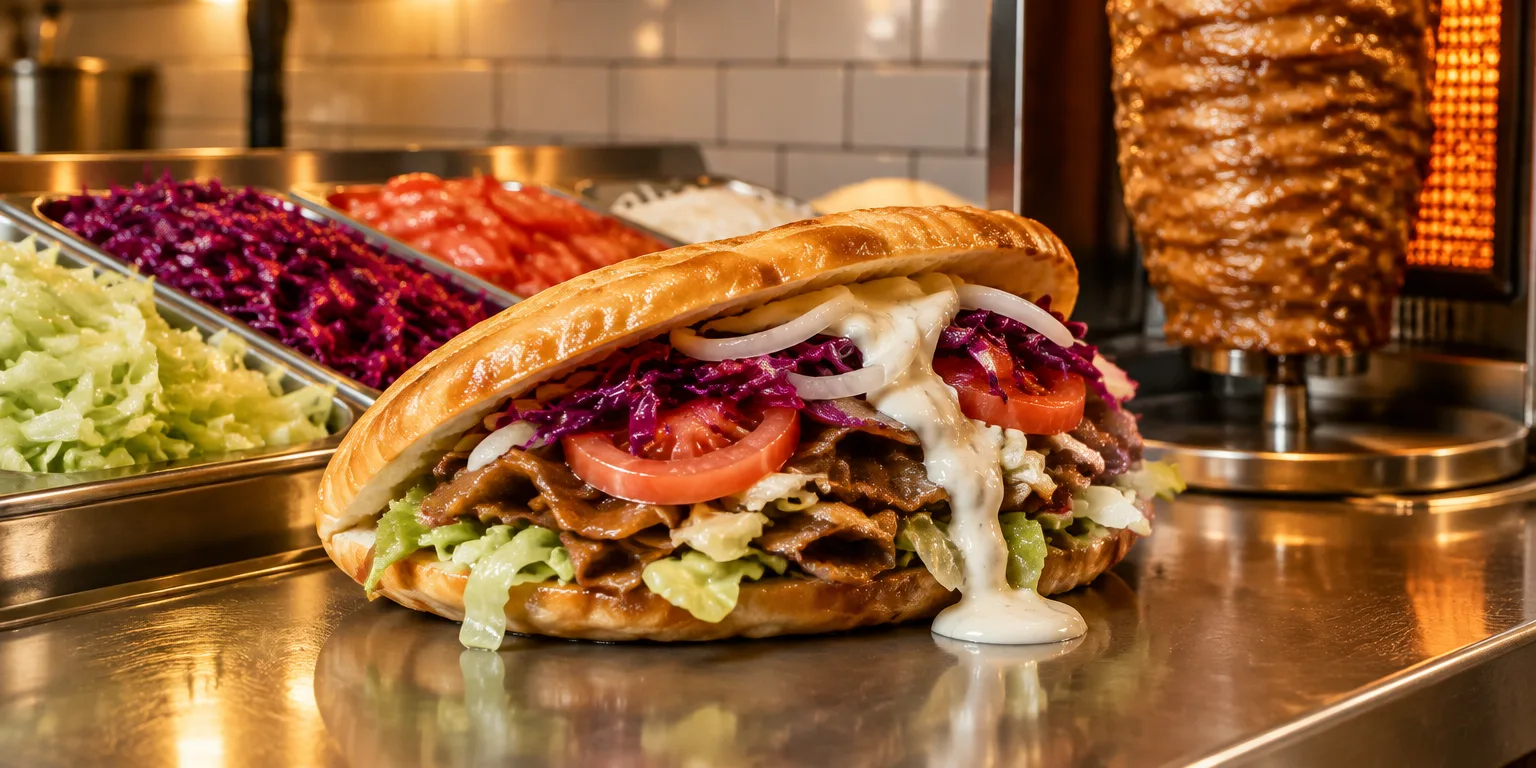
The wax version recreates a popular Berlin restaurant, complete with piles of salads, a turning stack of meat, and a chicken and vegetable doner given pride of place on the counter, piled high with fresh salad and covered in sauce. Tarik Kara, who runs the restaurant the work is based on, said he was excited and gratified by the interest.
A real doner at his shop costs under 10 euros. The wax one cost 10,000 euros to make.
Questions people ask
Why did the doner sandwich take off in Germany?
In the 1960s and 1970s, West Germany recruited Turkish workers, and many settled in Berlin, which still has one of the largest Turkish communities outside Turkey. Food stalls serving the portable sandwich took off there, and the version often credited as the first Berlin doner dates to the early 1970s.
What is actually in a doner kebab?
Usually it is lamb, veal, chicken, or a mix, seasoned, pressed into a large cone, roasted on a vertical spit, and shaved thin. It is served in flatbread or a pita with lettuce, tomatoes, onions, red cabbage, and sauces like yogurt, garlic, or hot chili.