Mail Money Kept U.S. Passenger Trains Alive Until Trucks and Planes Took the Letters
When sorting was mechanized in the 1960s and letters moved to trucks and planes, the onboard post offices closed and carrying passengers stopped paying.
 Wendover Productions · Why Trains Suck in America
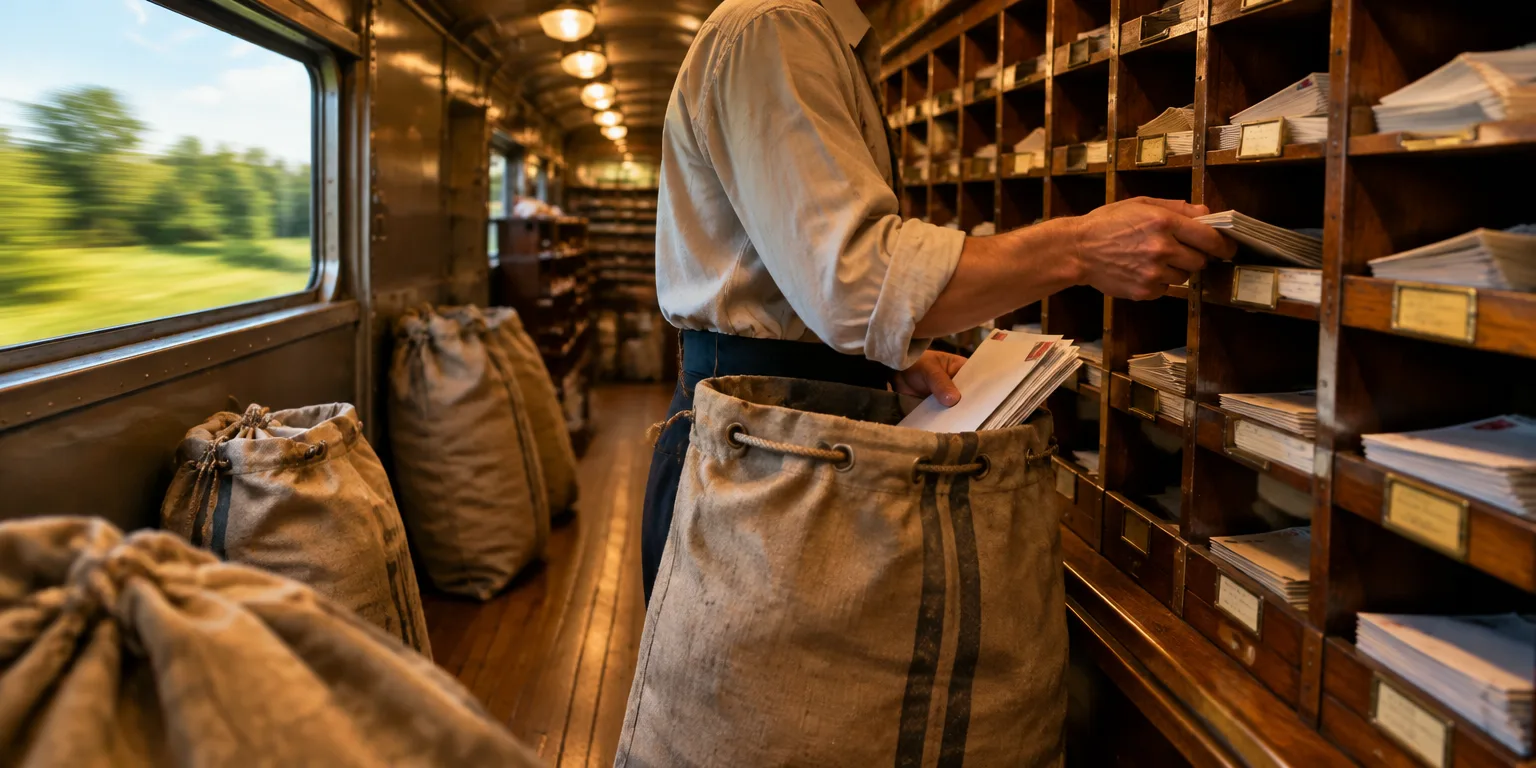
Inside one car of an American passenger train, postal clerks worked standing up, pulling letters from heavy sacks and sorting them into slots while the train kept moving. The car was known as the railway post office, and the idea was simple: handle mail during the ride to save time.
Passenger trains were not what made railroads money; freight was. Most rail companies ran passenger service as a traveling showcase for their cargo business, aimed at the executives who chose which company would haul their goods. Trains were then a stylish and efficient way to travel.
That is why the mail car mattered so much. By mid-century, the few passenger services that still made money did so only because of contracts with the U.S. Postal Service, which paid railroads to carry mail and sort it onboard.
Then the audience for the advertisement left. Once automobiles drew travelers in the 1930s and airplanes drew them in the 1950s, there was little reason to impress executives with a fine passenger train when those executives were choosing the trendier car or plane instead.
The mail money left next. In the 1960s, mail sorting was mechanized, and trucks and planes began to carry letters that once rode the rails. The railway post offices were discontinued, and running passenger trains stopped being a way to earn a profit.
Late in that decade, only a government mandate preserved the handful of routes still operating. The Interstate Commerce Commission, the federal regulator of railroads, required the companies to keep running them even at a loss.
In 1970, President Nixon signed the Rail Passenger Service Act, which created Amtrak to run passenger service with federal money.
Amtrak did not restore passenger travel to its old standing. It operates about 300 train journeys a day, and on average only 72 percent arrive on time. One reason is that Amtrak owns only 730 miles of the 21,300 miles it runs on. On the California Zephyr route from Chicago to San Francisco, for example, Amtrak attributed only 1.4 percent of delays to itself, with the rest attributed to the freight companies that own the track, whose own trains get priority.
Questions people ask
What did clerks actually do inside a railway post office car?
They sorted letters and parcels while the train was moving, facing rows of pigeonholes for different towns and routes. The cars also handled pickup and drop-off at stations, sometimes using a catcher arm to grab hanging mailbags without stopping. It was skilled, fast work done under tight schedules and postal supervision.
Why did machines make sorting on trains unnecessary?
Beginning in the 1960s, the Post Office built large sectional centers with mechanized sorting equipment, helped by the ZIP code introduced in 1963. Machines could sort far more mail, faster and cheaper, in a fixed building than clerks could by hand in a moving car. Once that system worked, paying railroads to carry crews and post office cars no longer made sense.
Does any U.S. mail still move by train?
Very little first-class mail rides passenger trains today. Most mail moves by truck for shorter trips and by plane for longer ones, with some bulk mail moving in containers on freight railroads. Amtrak itself carried mail and express packages for a time, but ended that business in the early 2000s to focus on passengers.