Make a Tuscan Palette From Earth Tones, Hardy Plants, and Small Bright Accents
Deep yellow, terracotta, rust, and warm cream do the heavy lifting, while muted greens and a touch of blue keep it fresh.
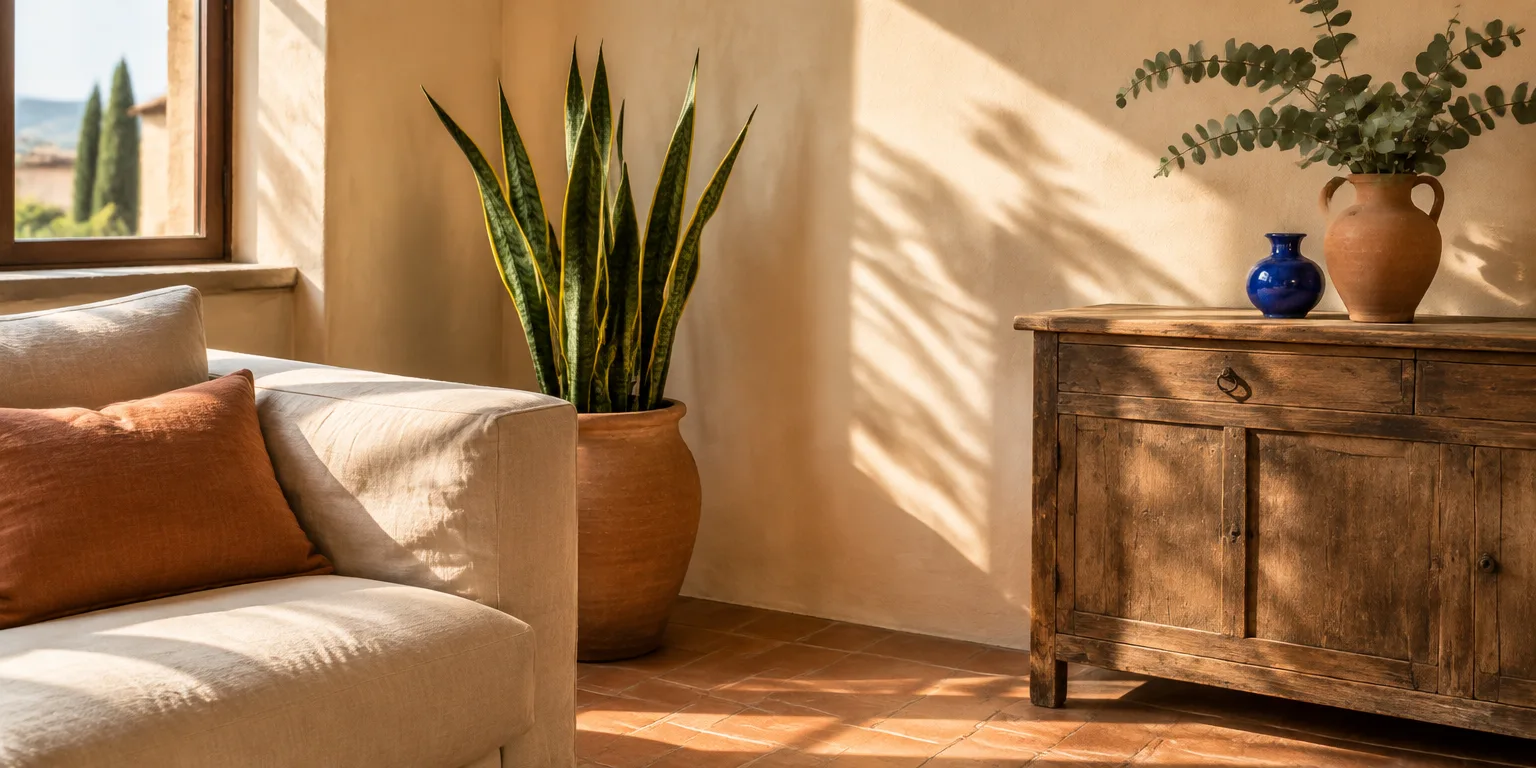
If you want the sun-baked calm of central Italy at home, start with color rather than furniture. The palette does most of the work.
Build the base from deep yellow, terracotta, rusty red, and warm cream. Those are the colors of sun-baked stone, brown earth, and clay roof tiles, and they bring a sense of sunny warmth.
Then add green, but keep it muted. Think olive, sage, and forest green, fresh enough to lift the earth tones, and soft enough to look timeworn rather than bright.
The simplest way to add that green is with houseplants. Try eucalyptus, with its round fragrant leaves, mother-in-law's tongue, also called snake plant, with tall, stiff, pointed leaves, or Swiss cheese plant, with large leaves split with holes. All three have darker tones that suit the scheme, and all are hardy and need little care.
Set them in terracotta or stoneware pots, and the container becomes part of the palette. That one move ties living green to the clay colors around it.
Use stronger colors sparingly. Cobalt blue, deep purple, and cool turquoise can work, but only as accents, perhaps in a vase, a cushion trim, or a piece of glazed crockery.
Use textiles to set the intensity. Cushions and rugs in rust shades, or a sofa in soft mustard, can warm up a cream background and make the look richer. For something quieter, stay with warm creams and pale terracottas for a subtle wash of warmth.
Start with one cream backdrop, add one rust textile, and one green plant in a clay pot. If those three sit happily together, you have your Tuscan base.
Questions people ask
My room does not get much light. Which green should I choose?
Mother-in-law's tongue is the most forgiving in low light, and it tolerates missed waterings. Eucalyptus and Swiss cheese plant prefer brighter, indirect light, so give them a spot near a window and let the soil dry slightly between waterings.
How do I keep terracotta and rust from feeling too dark?
Anchor the room in warm cream on walls, sofa, or bedding, then add terracotta and rust in smaller doses like cushions, throws, or rugs. Natural textures such as linen, cotton, and wood also keep darker shades from feeling flat or heavy.
Can I use faux plants for the green hit?
You can, especially in a dark corner, and good copies now look convincing from a distance. Real plants add scent and varied leaf texture, so many people mix one real, easy plant with faux stems elsewhere.