Mark Twain Bet His Fortune on a Machine That Copied Hands, and Lost to a Simpler Idea
He poured about $10 million into an 18,000-part typesetter that copied human hands, and lost to a simpler machine.
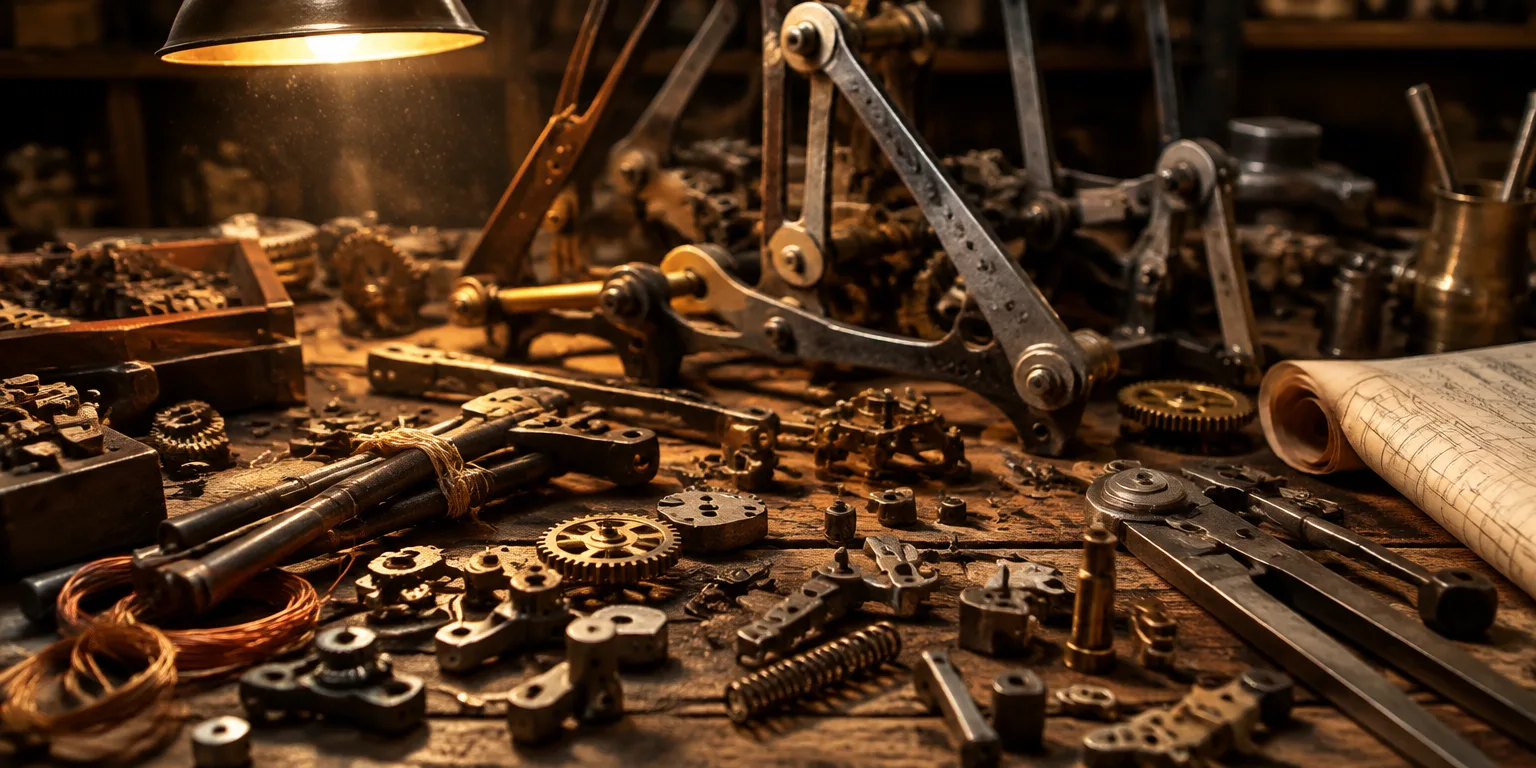
 Res Obscura · The "mechanical miracle" that ruined Mark Twain's life
In 1880, Mark Twain met a "little bright-eyed, alert, smartly dressed inventor" named James W. Paige. Paige had plans for a machine that could pick up tiny pieces of metal type and arrange them into lines to print books and newspapers, work then done slowly by hand.
Twain knew that work. The famous author had started out as a young apprentice doing odd jobs in a print shop, and at first he doubted that Paige could automate so much costly human labor. He was soon persuaded.
This is the story of why that persuasion ruined him. Twain poured the equivalent of roughly $10 million into Paige's machine, including most of the money he had made from his writing and much of his wife's inherited fortune, and lost it all. The writer of this account, reading the biography by Ron Chernow, Twain's most recent biographer, says he was shocked at how much "the Machine" took over Twain's family life in his prime creative years after Huckleberry Finn, and how far its failure explained both his financial ruin and his later depression. Chernow calls the obsession "a full-blown monomania," while another biographer calls the machine "a remorseless Frankenstein monster."
Twain concluded, "I never saw such an inspired bugger of a machine. Anybody can set type with it." He predicted the world would need about 100,000 of them, writing, "I reckon it will take about a hundred thousand machines to supply the world, and I judge the world has got to buy them." A machine that would not get drunk or join a union seemed to offer savings too large to ignore.
Paige's real gift was winning cash from backers with promises that could not be built. "When he is present I always believe him, I cannot help it," Twain admitted. "When he is gone away all the belief evaporates. He is a most daring and majestic liar."
Meanwhile the device swelled to more than eighteen thousand separate components. Paige's patent attorney said Paige "became lost in the wilderness of appalling details." The patent application was known inside the federal patent office as "The Whale," and it took examiners 30 days just to read it. When they asked to see a working machine, none could be found.
The deeper trouble was design. Paige tried to make a machine copy every motion of a human compositor. A cheaper rival, the Linotype, did not copy human motion at all. It made the task simpler by molding entire lines at once, and it was much simpler to build in quantity and to fix.
Twain had been fascinated by the dream of mimicking people. He began to regard the Paige device as almost a living creature that, perfected, would rival in complexity the human mind, which he called "that machine which it ranks next to." His housemaid later recalled, "he was expecting such wonderful things from it... he thought he'd make millions and own the world." Instead Twain went bankrupt, Paige died a complete unknown, and today only one Paige machine survives.
Questions people ask
What is a printer's devil?
A young apprentice in a 19th-century print shop. The job included mixing ink, carrying type, sweeping, and other odd jobs. Twain held the job as a boy in Missouri, so he knew how slow and costly setting type by hand could be.
Is the Linotype still used today?
No. The Linotype dominated newspaper and book printing for most of the 20th century. It was itself later replaced by photographic typesetting and then by digital layout, in which no metal type is used at all.
How did Twain recover from bankruptcy?
Twain declared bankruptcy in 1894. He then went on a worldwide lecture tour and wrote new books to pay his creditors, and he eventually repaid the debts in full.