Mark Twain Said His Typesetting Machine Would Rival the Human Mind
While backing a doomed typesetter, he imagined mechanical creatures that would rival human minds.
 Res Obscura · The "mechanical miracle" that ruined Mark Twain's life
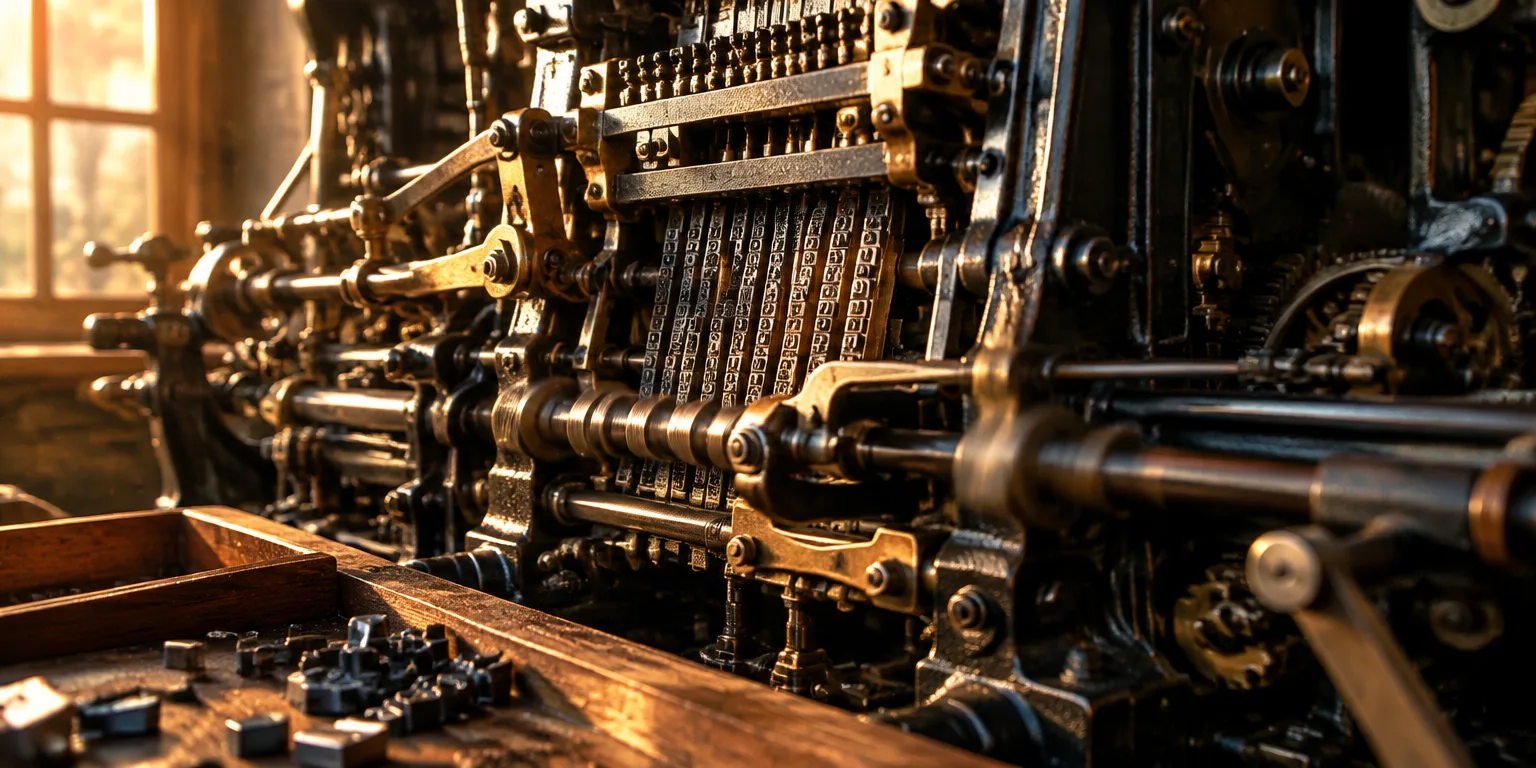
In 1889, Mark Twain, the American author, was writing to his brother Orion, who shared his obsession with invention. Twain had met inventor James W. Paige in 1880 and put his money into Paige's Compositor, a bulky apparatus for lining up metal letters for printing that ranked among the most complex machines yet built. He called it “a cunning devil, knowing more than any man that ever lived.”
He called the machine a “creature” as well as a cunning devil. He had earlier called it an “awful mechanical miracle” beside which, he wrote, “All the other wonderful inventions of the human brain sink pretty nearly into commonplaces.” In his letters, he predicted it would make “telephones, locomotives,” even “Babbage calculators,” early mechanical devices for doing math, seem like “mere toys, simplicities!” Twain called the typesetter an “immense historical birth,” the arrival of a new breed of machines that might one day act like minds.
By the 1880s, Twain was describing the Paige machine as a “creature” in its own right. Perfected, he believed, it would be as “complex as that machine which it ranks next to,” the human mind, and would bring great riches and control to whoever owned it. His housemaid later recalled, “he was expecting such wonderful things from it... he thought he'd make millions and own the world.”
Twain got the direction right and the machine wrong. The Paige device grew to more than 18,000 parts, and proved too hard to mass produce and repair. It lost to the simpler and cheaper Linotype, which did not try to copy every motion of the human compositor but cast complete lines of type instead. His decade-long quest to automate printing basically destroyed his life, his biographers concluded, and he went bankrupt while Paige died largely forgotten. Just a single example of his machine still exists. A line runs from mechanized printing and calculating to computers, the Internet, and AI research. Their mistake, Twain and Paige's, was “assuming that seeing the future was the same thing as knowing how to bring it about.”
Questions people ask
What did a typesetting machine actually do?
It was a machine that automatically selected and arranged tiny pieces of metal type so pages could be printed without a human compositor setting each letter by hand. Paige's version tried to copy the motions of a skilled worker, using thousands of moving parts, and in theory it could work faster and more accurately than people.
What were Babbage calculators?
Charles Babbage, an English mathematician, designed mechanical calculators in the 1800s to compute mathematical tables automatically. None were fully built in his lifetime, but they used gears and punched instructions to process numbers, and they are often described as forerunners of modern computers.
Did Twain really go broke over the machine?
Yes. Twain poured his book earnings and much of his wife's inherited money into the Paige project over about a decade. When the machine failed to reach the market, he lost the investment and had to declare bankruptcy in 1894, then went on a worldwide lecture tour to pay his debts.