Mary Queen of Scots Trusted a Beer Barrel to Smuggle Her Letters. Spies Read Every One.
The brewer, the courier, and the codebreaker all worked for Elizabeth's spy chief, and Mary's approval of a plot to kill Elizabeth gave him the proof he needed.
 The Rest Is History · 696. Elizabeth I vs The Catholics: Killing the Queen of Scots (Part 6)
Three days before she doomed herself, Mary Queen of Scots went out for air. She could not ride, so she took the carriage out from Chartley Manor, her prison. Looking from the coach window, she saw a youngish man by the road, whom she later described as "of low stature, slender every way," with dark yellow hair and a clear yellow beard. She smiled at him, and the coach rumbled on.
Mary was desperate for contact with the outside world. Her jailer had cut off her letters, searched her rooms, and watched anyone who left. Then a solution arrived in April 1586. Gilbert Gifford, an English Catholic seminarian and kinsman of a man caught in an earlier plot, offered to be her secret courier.
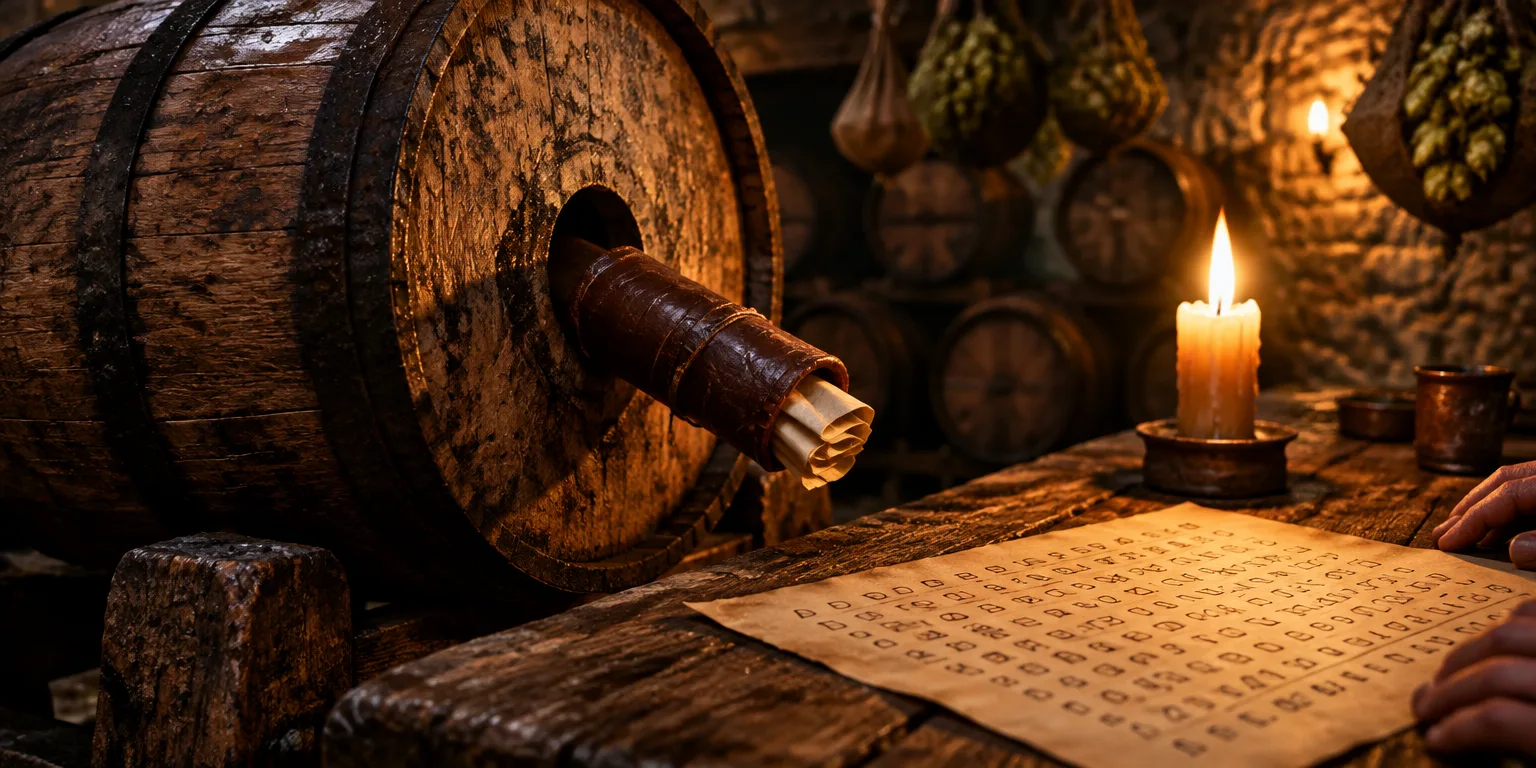
His plan sounded like a children's adventure. The local brewer supplied Chartley Manor with beer. Gifford would hide Mary's letters in a waterproof container, slip it through the bunghole of a barrel, and let the brewer deliver it. Inside, Mary's butler would fish it out and carry it to her secretaries. Replies would go out the same way in reverse. It sounded mad, and it worked.
In fact, Elizabeth's spies were running the barrel route as a trap, reading everything she sent while they waited for her to approve a murder.
Through that barrel came a letter from Anthony Babington, a fellow Catholic, with a plot to free Mary and set six gentlemen to kill Elizabeth. Mary knew the risk. Her secretaries warned her not to reply, that spies were everywhere. She spent days turning it over, because this was her one realistic chance to escape prison and perhaps become queen of England.
Five days after she smiled from her coach, her reply went into the barrel. She hoped it was on its way to Babington, then on to French contacts in London, and then to Paris, but it did not go straight to him.
The letter went first to the yellow haired man from the road. He was Thomas Phillips, a linguist, mathematician, and the most gifted codebreaker working for Sir Francis Walsingham, Elizabeth's spy chief. Stephen Alford, author of The Watchers, a history of that spy network, describes Phillips as secretive and mysterious, and as the ablest of Walsingham's spies.
Phillips was running the whole operation. He had turned Gifford into a double agent. He had recruited the brewer. He opened every letter between Mary and Babington, decoded it, read it, and then resealed it so perfectly that the intended recipient never knew it had been touched.
Now he had what he had been waiting for. He opened Mary's reply, decoded the passage approving the six gentlemen, and made a clean copy in English for Walsingham. He marked the copy with a sketch of a gallows.
Questions people ask
Who was Sir Francis Walsingham?
He was Elizabeth's secretary of state and spymaster, in charge of protecting her from Catholic plots. He built a network of informers, double agents, and codebreakers, and he believed Mary had to be shown to have approved murder before Elizabeth would agree to put her on trial.
How did codebreaking work in the 1580s?
They used substitution ciphers, in which symbols or letters stood for other letters. A codebreaker looked for patterns, guessed common words, and slowly rebuilt the key. Phillips was unusually good at it, and at handling the agents who supplied the intercepted material.
What happened to Mary after the beer barrel letters were copied?
She was tried that October, found guilty of plotting against Elizabeth, and executed in February 1587. Elizabeth signed the death warrant after months of delay, and the execution was botched, taking more than one blow of the axe.