Mary Queen of Scots Turned Her Beheading Into a Bloody Spectacle
In crimson silk, with Latin prayers, a slipped wig, and a small dog in her skirts, she denied Elizabeth the quiet punishment her ministers wanted.
 The Rest Is History · 696. Elizabeth I vs The Catholics: Killing the Queen of Scots (Part 6)
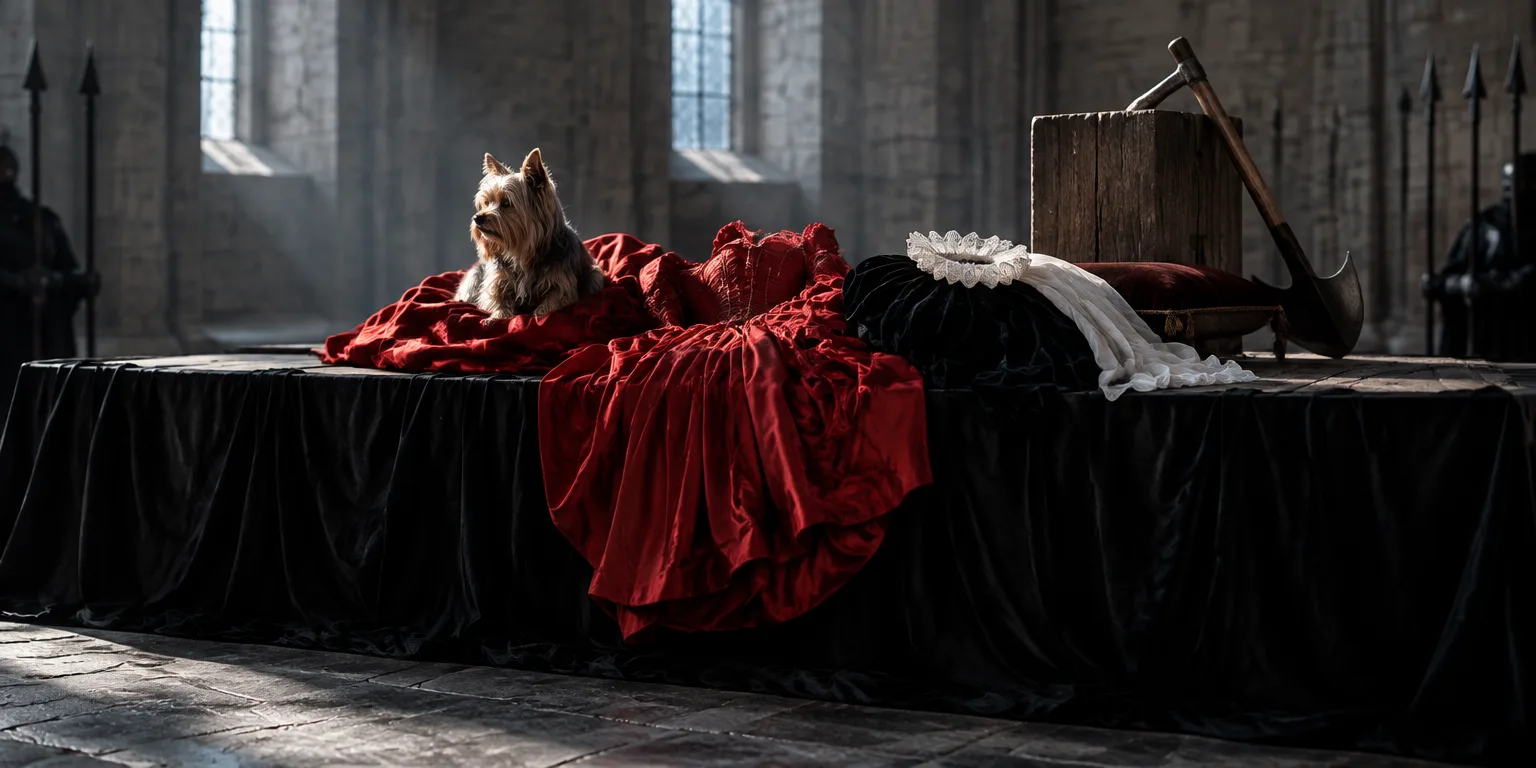
By the time Mary Queen of Scots walked into the great hall, she was an hour late. Carpenters had worked through the night to build a scaffold and drape the walls and platform in black. Soldiers with long spears lined the room. On the platform waited the executioner, a man hired under the false name Bull, in a black mask and gown with a white apron, holding a large axe.
Mary, 44 and after 19 years as a prisoner of her cousin, Queen Elizabeth I of England, had dressed for the part. She wore a loose black velvet gown, a white veil, and a fine lace collar at her neck. As her jailer, the stern Puritan Sir Amias Paulet, helped her up the steps, she told him, "This will be the last trouble I shall give you and the most agreeable service you have ever done me."
What followed was not the quiet, orderly death Elizabeth's ministers wanted. Mary turned a traitor's beheading into a Catholic martyrdom, staged in front of two Protestant earls, an Anglican preacher, and several hundred witnesses, and remembered ever since for its blood, theater, and botches.
First she took on the preacher. Robert Fletcher, the dean of Peterborough who had been chosen by Elizabeth for the occasion, tried to give a sermon and then to read prayers in English for the Church of England. Mary stared him down until he abandoned the sermon. Then she and her six ladies answered his English prayers aloud with their own prayers in Latin, the language of the Catholic Mass, until their voices drowned him out and he fell silent.
Kneeling, Mary drew out a small silver crucifix she had kept hidden in her clothing and switched to English herself, loud enough for everyone to hear, asking blessings for those who condemned her, for the English queen, and for the realm. Then her women removed her veil and black outer gown.
Underneath, as Garrett Mattingly wrote, she wore "underbodice and petticoat of crimson silk," bright red from neck to toe against the black scaffold. Red is the color Catholics associate with martyrs who die for the faith. Protestant officials were so shocked that none of their official reports mentioned it. The story was spread by her six Catholic attendants.
She kissed her ladies goodbye, knelt on a cushion, and let one of them cover her eyes with a white cloth. She laid her neck on the block, still praying in Latin. Bull raised the axe and brought it down on the back of her head. She cried out, "Lord Jesus, receive my soul." The second blow hit her neck but did not cut through, and he had to hack and saw with the blade to finish the job.
Then came two final shocks. When Bull picked up the severed head to hold it up in the customary way, the hair stayed in his hand while the head rolled away. She had covered her thinning gray hair with a false hairpiece, and her own head underneath was shrunken, gray, and aged by illness and captivity. And as the men bent to strip the body, they found her favorite Skye terrier, a small, long-haired Scottish dog, hidden all along in her skirts. It lay in its mistress's blood and howled.
As Mattingly put it, "Mary Stewart had always known how to embarrass her enemies, and not just to embarrass them, but to do them the maximum harm." She did it to the last.
Questions people ask
Why was red the color of martyrdom?
In the Catholic Church, red is the liturgical color for the blood of Christ and for saints killed for their faith. Priests still wear red vestments on feast days for martyrs. By appearing head to toe in crimson, Mary was telling every Catholic witness that she was dying not as a traitor, but as a martyr.
What happened to the little dog?
Eyewitness accounts say the terrier refused to leave Mary's body and had to be carried away, covered in blood. It was reportedly washed and later kept by one of her ladies. Its loyalty became one of the most repeated details in Catholic retellings of her death.
Was the executioner punished for needing two blows?
No record suggests Bull, who was almost certainly working under an alias, was punished. Botched beheadings were grimly common with an axe, which required great strength and accuracy. The authorities were more embarrassed by Mary's staging than by his aim.