Matching Wood Finishes Flattens a Room
Three related finishes add the depth that one perfect match cannot.
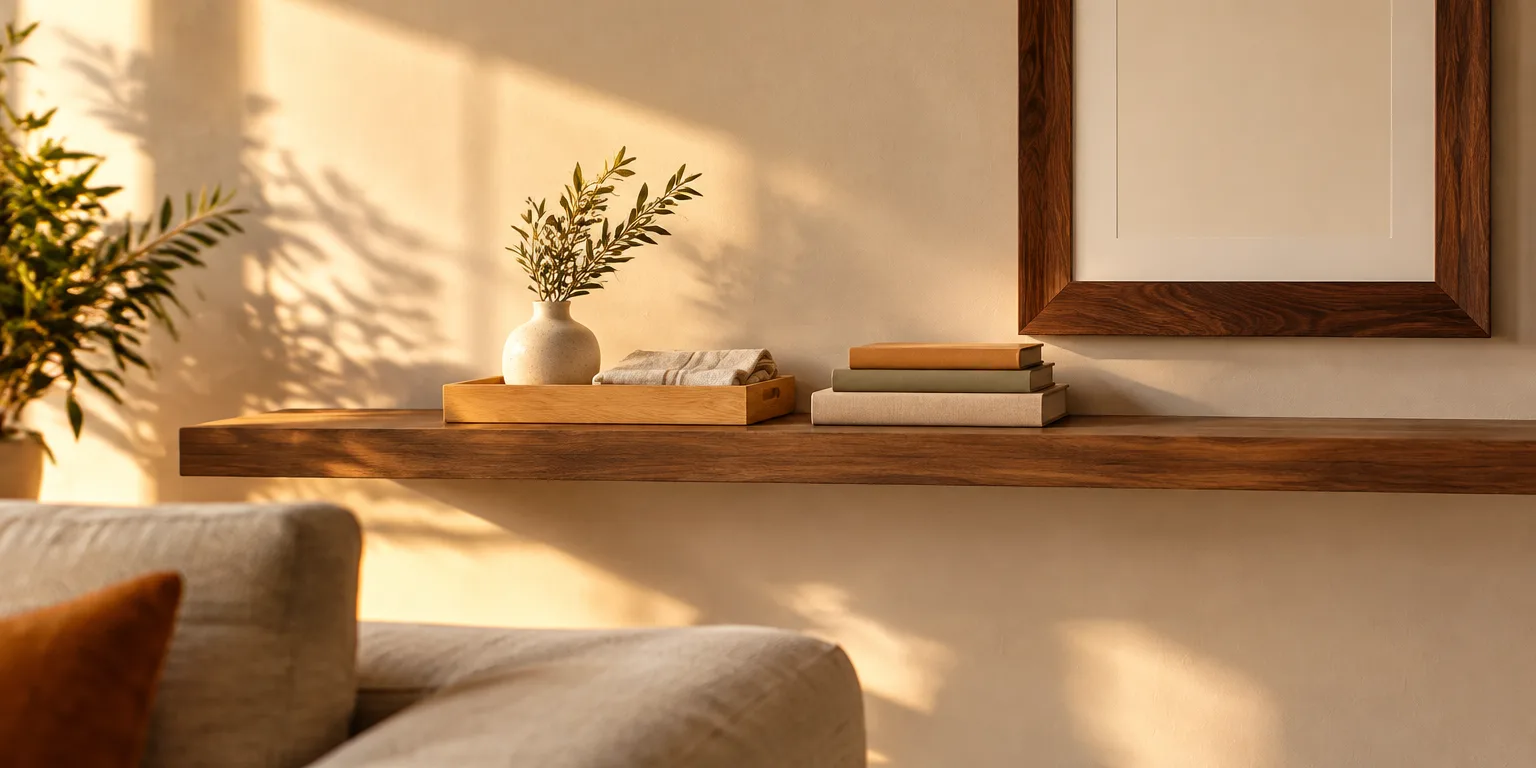
It feels logical to buy everything in walnut, or everything in oak. But sticking to one finish can leave a space feeling one-note and without much dimension.
The fix is to bring together three tones that share the same underlying warmth or coolness. That common character keeps the pieces comfortable side by side, while the shift from light to dark gives the eye more to notice.
Start with a dominant tone, usually the largest furniture piece. Then bring in a paler wood for contrast and one darker tone for grounding.
A working combination is medium walnut floating shelves as the dominant piece, a pale oak tray resting on the shelving for contrast, and a deep walnut frame hung nearby for grounding. Because they share warm undertones, the pieces feel coordinated even though the finishes differ.
Questions people ask
How do I tell whether my wood is warm or cool?
Look at the undertone beneath the brown. Woods with golden, honey, red, or orange casts generally read as warm, while gray, ashy, or pale neutral casts generally read as cool. Compare samples side by side in daylight, since temperature is easier to judge in relation than alone.
What if my big furniture already matches?
Leave the large pieces alone and add the contrast in smaller objects. A lighter tray, cutting board, or side table and a darker frame, bowl, or lamp base can supply the second and third tones. Small moves are enough to break up the matched look.
Can I mix warm and cool woods in the same room?
It is riskier, because contrasting temperatures can make a room feel disjointed. If you want to try it, keep one temperature clearly dominant and repeat the outlier at least twice so it looks intentional. Most beginners get a calmer result by staying in one family.