Medieval Lords Capped Wages After the Plague, but Workers Got Raises Anyway
An auditor at Westminster Abbey cut a ploughman's pay "because of the statute," yet supply and demand proved stronger than the law.
 Institute of Economic Affairs · How The Black Death Increased Worker's Wages: Medieval England's Economic Revolution | IEA Interview
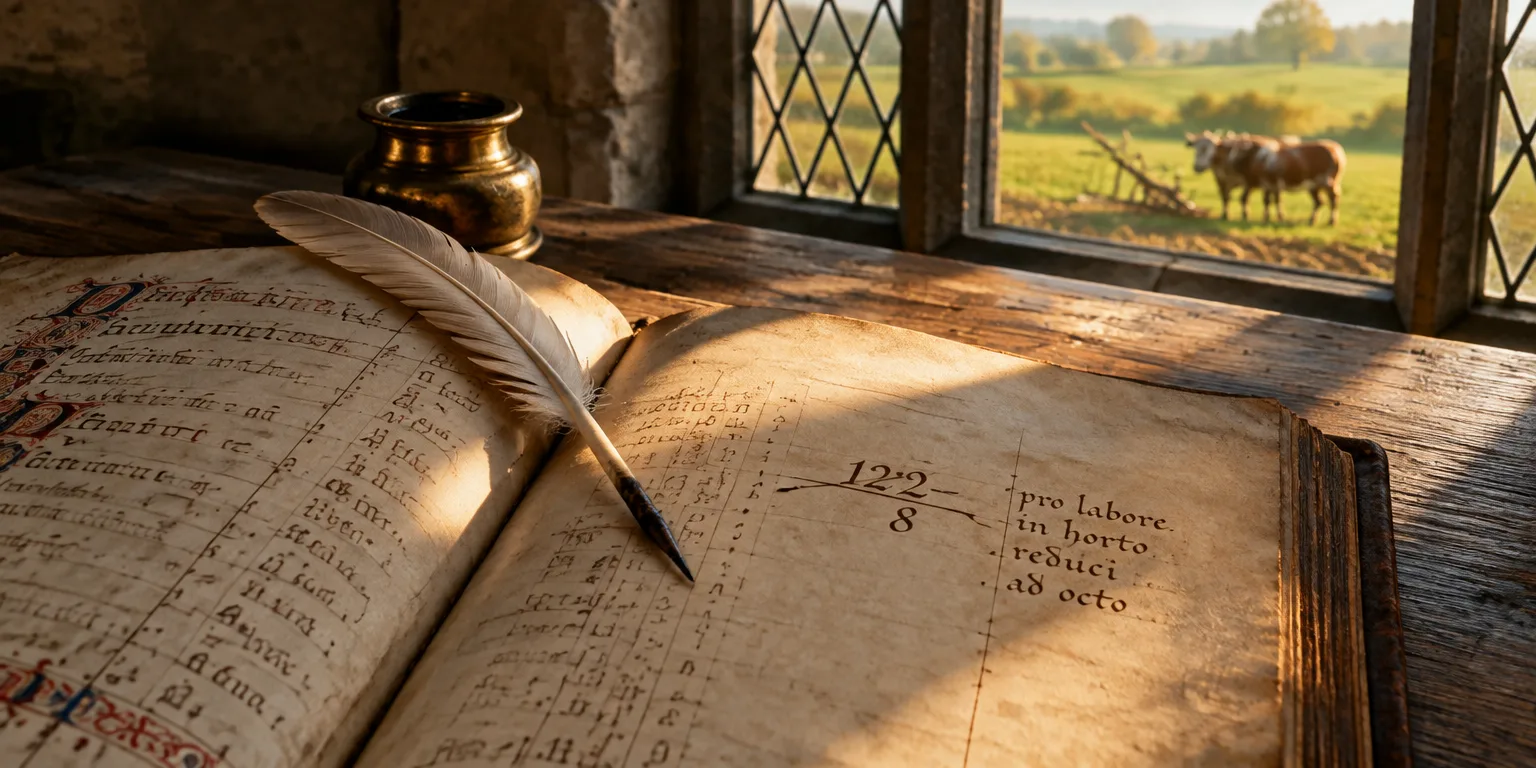
The payment to the ploughman at Westminster Abbey was written down, and then it was undone. A clerk had recorded what the abbey paid the man who drove its plough after the Black Death had struck. An auditor came later, crossed out the figure, wrote in a lower number, and added a note in Latin in the margin: quia statuta, because of the statute.
Jordan Clarage, a historian of the preindustrial economy at the London School of Economics, came across the correction in the abbey accounts. The monks lived near the center of authority and might have felt more closely watched than landlords farther off, as Clarage suggests. The crossed-out wage shows an employer trying to follow a law that the market would soon break.
The law was an attempt by England's great landowners to hold wages at preplague levels. When the Black Death arrived in 1348, it killed about half the population. Almost overnight, England flipped from a place rich in workers and hungry for land to a place rich in land and starved for workers, with crops rotting in the fields for lack of hands. Day wages for harvest workers roughly doubled between 1348 and 1349.
The landowners were also the makers of policy, and they acted like what Clarage calls a cartel of employers. In the Ordinance and Statute of Labourers in the years right after the plague, they tried to hold wages at preplague levels and punish those who paid more. For a decade, perhaps 15 years, the rule had some bite.
But demand for labor was too strong, and workers had too many outside options, including land that could now be had for the asking. Estates farther from the center might have been more willing to break the rule than a watched house like Westminster, Clarage suggests. Lords did not try to restore their power by restoring serfdom, under which workers were tied to a lord's land and owed labor, but by trying to control hiring and pay, with only limited success.
Within 10 or 15 years, the scolding notes in the margins start to disappear. Supply and demand had pushed wages back up, and kept them high, like a ratchet that will not turn back. At the abbey, the ink that had lowered the ploughman's pay was left behind by an economy that had already moved on.
Questions people ask
What exactly did the wage law require?
The Ordinance of Labourers in 1349 and the Statute of Labourers in 1351 tried to fix wages at preplague levels, require able-bodied people without other support to accept work when offered, and punish both workers who demanded more and employers who paid more. It also tried to limit workers from moving to seek better pay.
Why didn't lords just force people back into serfdom?
By the mid-1300s forced labor was already hard to enforce because workers could leave for vacant land or better-paying employers, and tracking them across a depleted countryside was costly. Clarage argues lords understood this, so they tried to exert control through the labor market with a wage cap rather than by restoring serfdom. That strategy also failed because competition for scarce workers was too intense.
Did ordinary workers actually end up better off?
In material terms, yes. With half as many people sharing the country's land, coins, and tools, pay per worker rose and land became easier to obtain. By 1400, Clarage finds, about 20 days of harvest work could pay a year's rent on a 10-acre plot, and workers increasingly demanded a larger share of pay in cash.