Most Allied Soldiers in World War II Could Not Bring Themselves to Fire
Killing up close feels almost impossible, so armies rely on distance and dehumanization to make it feasible.
 Channel 4 News · Rutger Bregman on elites, survival of the friendliest, rethinking human history
In World War II, "only 15 to 25 percent of Allied soldiers" "were actually capable of firing their guns" at the enemy, as historian Rutger Bregman, author of Humankind: A Hopeful History, put it, citing historical research. Faced with the moment to shoot another person, most could not do it. Historians debate the exact figure.
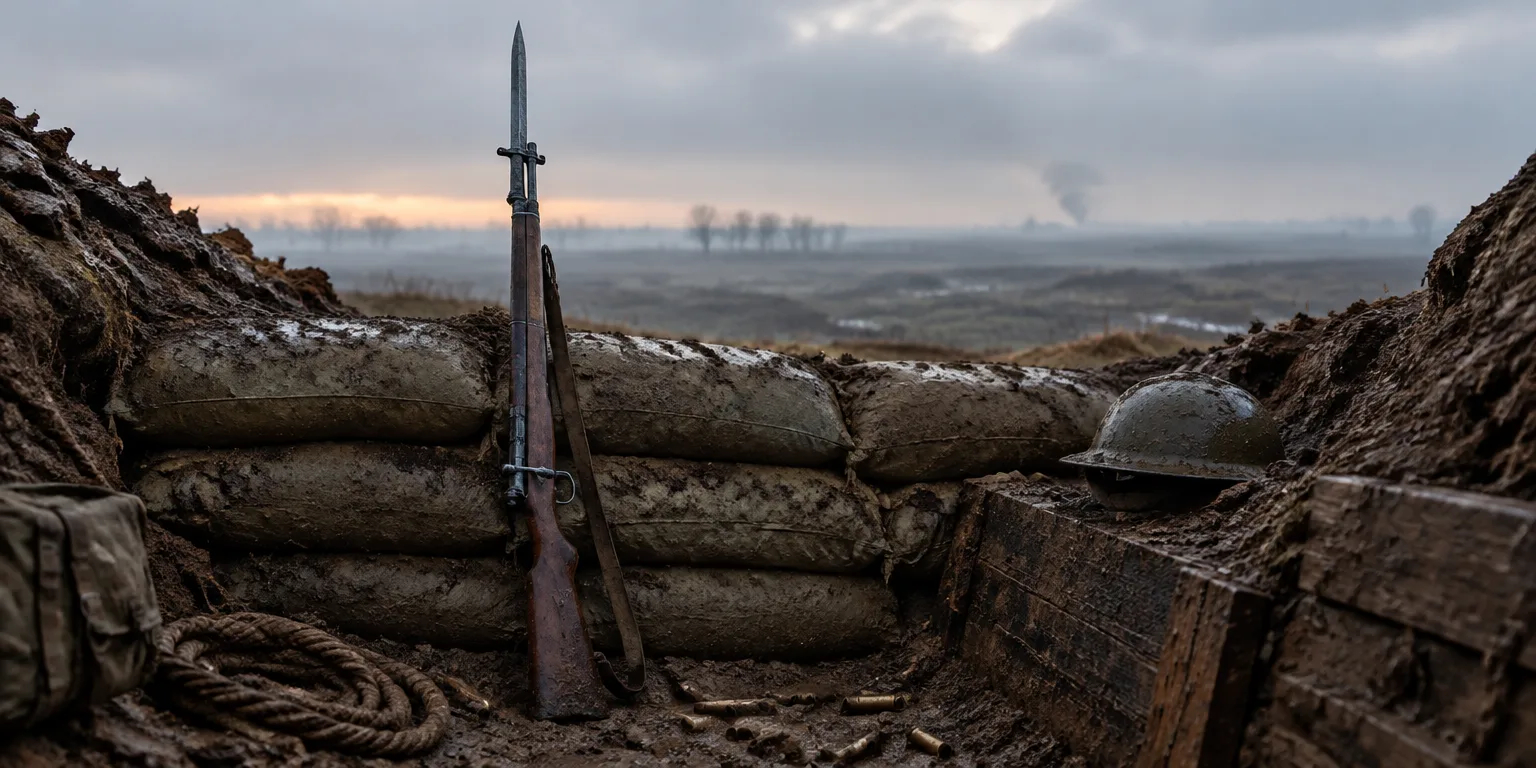
The same pattern shows up with bayonets, the long blades fixed to the ends of rifles for close fighting. Bregman says most bayonets throughout history were never used, because stabbing someone a few feet away is psychologically too hard. At the Battle of the Somme in World War I, and at Waterloo, where Napoleon was defeated, almost none of the wounds came from bayonets.
Almost all of those wounds came from artillery. Bregman argues that difference shows why distance matters. It is much easier, he says, to push a button and cause an explosion far away than to hurt someone you can see and hear. Distance does the work, both physical distance and psychological distance.
That psychological distance often comes from dehumanization, treating the other side as less than human. Bregman calls that "a terrible truth about our species that we are capable of this." We are capable of it, but he argues it does not come naturally.
His evidence is what happens afterward. Eating and sex feel easy and good, he notes, because they fit our bodies and needs. Violence is different. Soldiers who kill often come home with trauma and post-traumatic stress, as if they destroyed something inside themselves. That damage, he thinks, suggests people are not born to kill, even though they are capable of it.
Questions people ask
What is PTSD and why do soldiers who kill get it?
Post-traumatic stress is a lasting stress reaction after terrifying or morally wrenching events, with flashbacks, nightmares, and numbness. In combat veterans it is strongly linked not only to being in danger, but to killing and seeing others killed, which can conflict with a person's sense of right and wrong.
If so few soldiers fired, how do armies get soldiers to shoot today?
Later military training changed to condition soldiers to fire reflexively, using human-shaped targets, rapid drills, and orders from authority. Historians debate the exact World War II firing figures, but training that creates physical and psychological distance has made firing rates much higher in recent wars.