Most American houses are poured around their own plumbing
It saves money on day one, then turns every moved pipe into a concrete problem.
 Wendover Productions · Why American Houses Are So Flimsy
The typical new American house does not start with a basement or stilts. It starts with a flat pad of concrete poured directly on the ground, a design builders call an at-grade slab foundation. About 73% of American homes begin this way, and for single-family houses, which account for most new construction, it is the default opening move.
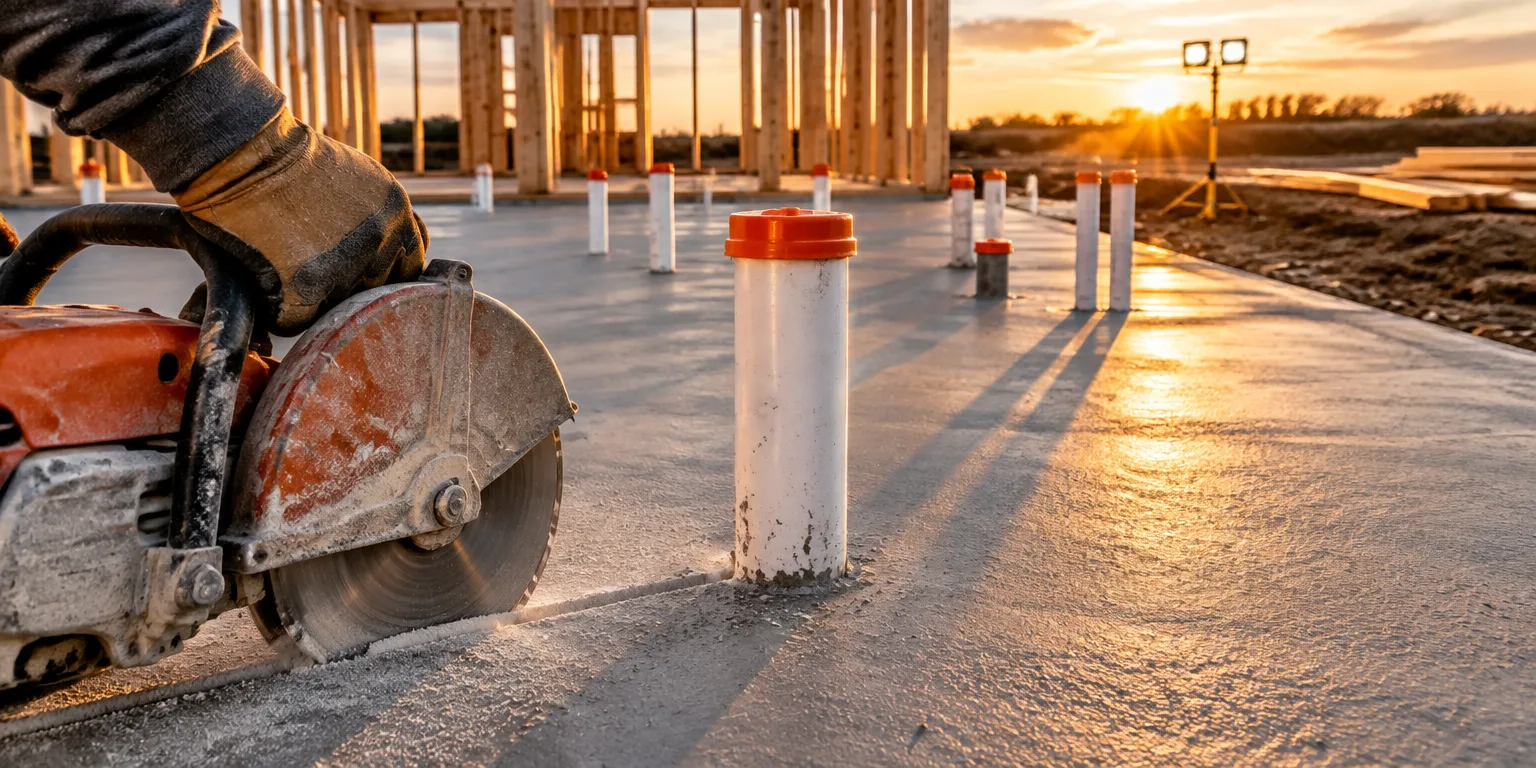
Before the concrete arrives, workers lay out the utility lines for water, drains, and other services where the walls, bathrooms, and kitchen will go. Then they pour concrete on and around those pipes, locking them inside the foundation. It is fast, it uses relatively little material and labor, and it does the job.
The problem shows up later. The pipes are often not exactly where later plans need them to be, a complaint contractors make constantly. Because the lines are encased, shifting a drain or water line is not a matter of crawling underneath with a wrench. It can mean cutting into or tearing up the slab itself, and a renovation that moves a kitchen or bathroom turns into a costly ordeal.
There is a well understood alternative. A crawlspace foundation lifts the house a few feet off the earth, leaving a shallow open area underneath for pipes, wiring, and ducts. That gap makes repairs and changes simpler, and it adds a buffer that helps shield the structure above from damp ground and insects.
Builders know that, but crawlspaces cost more to dig, wall, and ventilate. So most choose the slab. The result captures the basic bargain of American homebuilding: less money upfront, in exchange for a house whose insides are much harder to reach or rearrange later.
Questions people ask
What exactly is a crawlspace foundation?
A crawlspace is a shallow unfinished space, usually two to four feet tall, between the ground and the first floor. The house rests on short walls or piers, and a person can crawl underneath to reach pipes, wires, and ducts for repair. Vents or sealed liners control moisture.
Is it really that expensive to move plumbing in a slab house?
Yes, and usually by a lot. Cutting concrete, rerouting drains embedded in a slab, and repouring can cost thousands of dollars more than the same change under a crawlspace. That is why owners often leave bathrooms and kitchens where they are in slab houses.