Most Duels Were Designed So Nobody Would Die
Honor was defended through formal letters, negotiated settlements, and guns made to miss.
 The Rest Is History · Was Alexander Hamilton Murdered? | Founding Fathers EP 3
By the time Aaron Burr, then the sitting vice president, challenged his longtime political rival Alexander Hamilton in 1804, the machinery for their meeting was already familiar to every gentleman. An affair of honor was less a gunfight than a piece of legal theater, and it was built to stop before anyone fired. About nine in ten duels ended with nobody dying.
It began on paper. After a reported insult, the offended man sent a formal demand that the other avow or disavow what he had said. In this culture, honor mattered enormously, and Burr may have wanted such a pretext to rebuild his credibility after losing the race for New York governor. If the other man refused to apologize, the challenger issued a challenge and each side named a second, a trusted friend who acted as negotiator and referee.
The seconds then fixed a time and place, and tried hard to fix a settlement instead. Most affairs of honor never reached actual firing and were settled by compromise that let both men keep their reputations. Hamilton himself had been in at least six such disputes before 1804 without ever pulling a trigger. The process worked like threatening a ruinous lawsuit today, with ritual letters and mounting risk pushing both sides to settle before trial. A man could refuse a duel, but Hamilton believed public opinion required it, and that refusal would make him look less of a man.
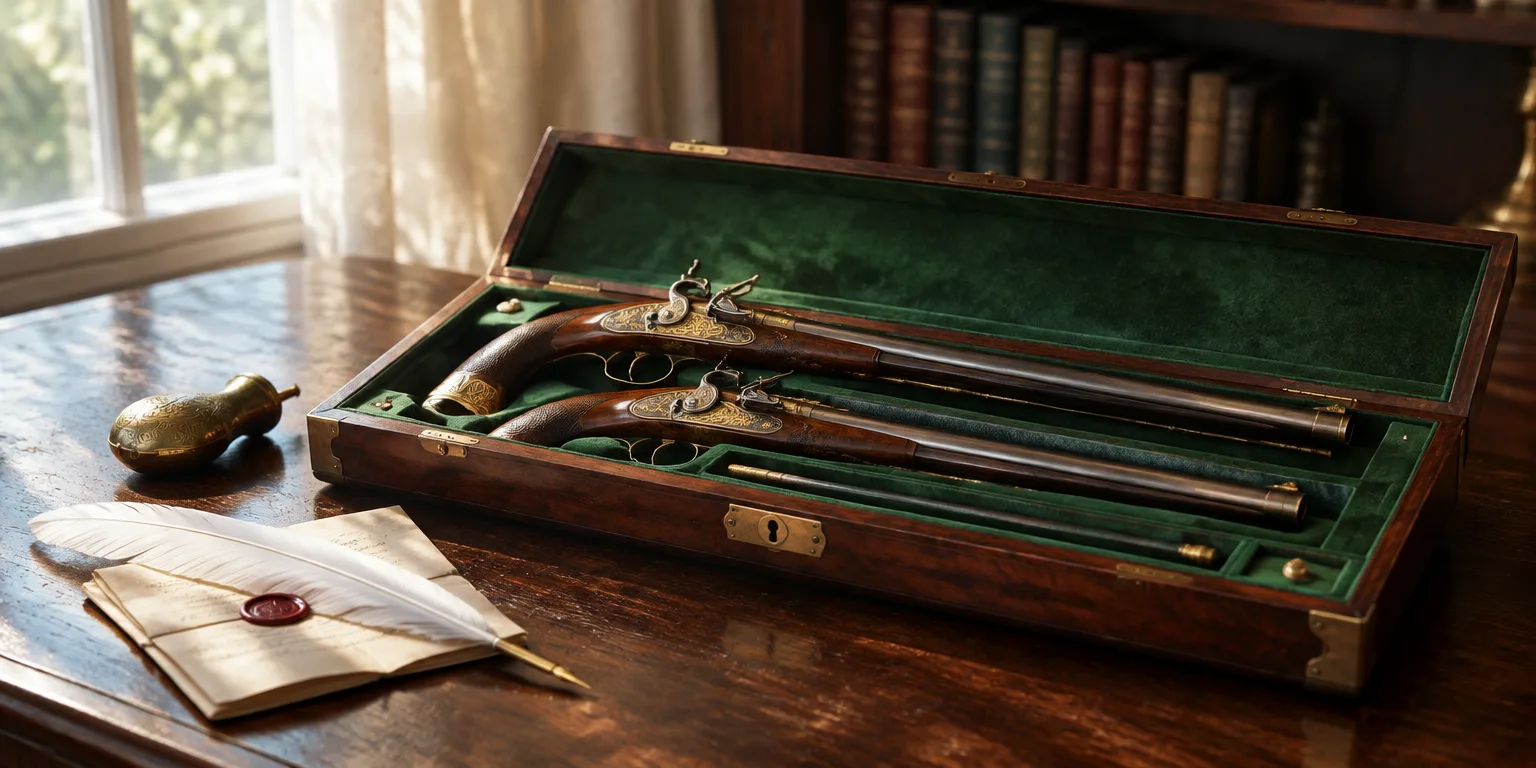
Even on the field, the equipment favored survival. Gentlemen often used large, brass and gold trimmed pistols made for dueling, such as the pair made in London by Wogdon and Barton that Hamilton supplied from the collection of his brother-in-law John Barker Church. The guns were intentionally hard to aim with, so both men could shoot, miss, and walk away with honor and lives intact. They could also be fitted with a hair trigger, a setting that required only light pressure and let a shooter hold his hand steadier and aim more accurately.
If shots were still required, strict rules called the code duello governed every move. The duelists walked ten paces apart and turned, the second running the duel asked if they were ready, then called "present" as the signal to fire. One man fired first. Then the other man's second counted "one, two, three, fire," giving the second man his turn, which he could also throw away by firing into the air or declining to use it. The seconds then met and asked if the obligations of honor had been satisfied, and if both sides agreed, the affair was over.
Questions people ask
What exactly did a second do?
A second was a gentleman friend who acted as negotiator, witness, and enforcer of the rules. He carried letters, negotiated an apology or compromise, arranged the time and place, supervised the firing, and afterward helped confirm that honor had been satisfied.
How does a hair trigger work?
A hair trigger is a setting that greatly reduces the force needed to fire a gun. Because the shooter does not have to squeeze hard, his hand shakes less, which makes his aim steadier and potentially more lethal. In Hamilton’s case, his second offered to set Hamilton’s trigger but not Burr’s, and Hamilton refused because he feared being accused of cheating.
If dueling was illegal, why did people still do it?
Dueling was technically illegal in many states, but some men continued anyway. Benjamin Franklin called it a murderous practice, while Thomas Jefferson and John Adams also disliked it. It survived because men who had served in the army favored it and, especially, Southern gentlemen treated it as central to honor.