Most of an octopus's neurons are in its arms, not its brain
A snail cousin carries about as many nerve cells as a dog, and most of them are outside its brain.
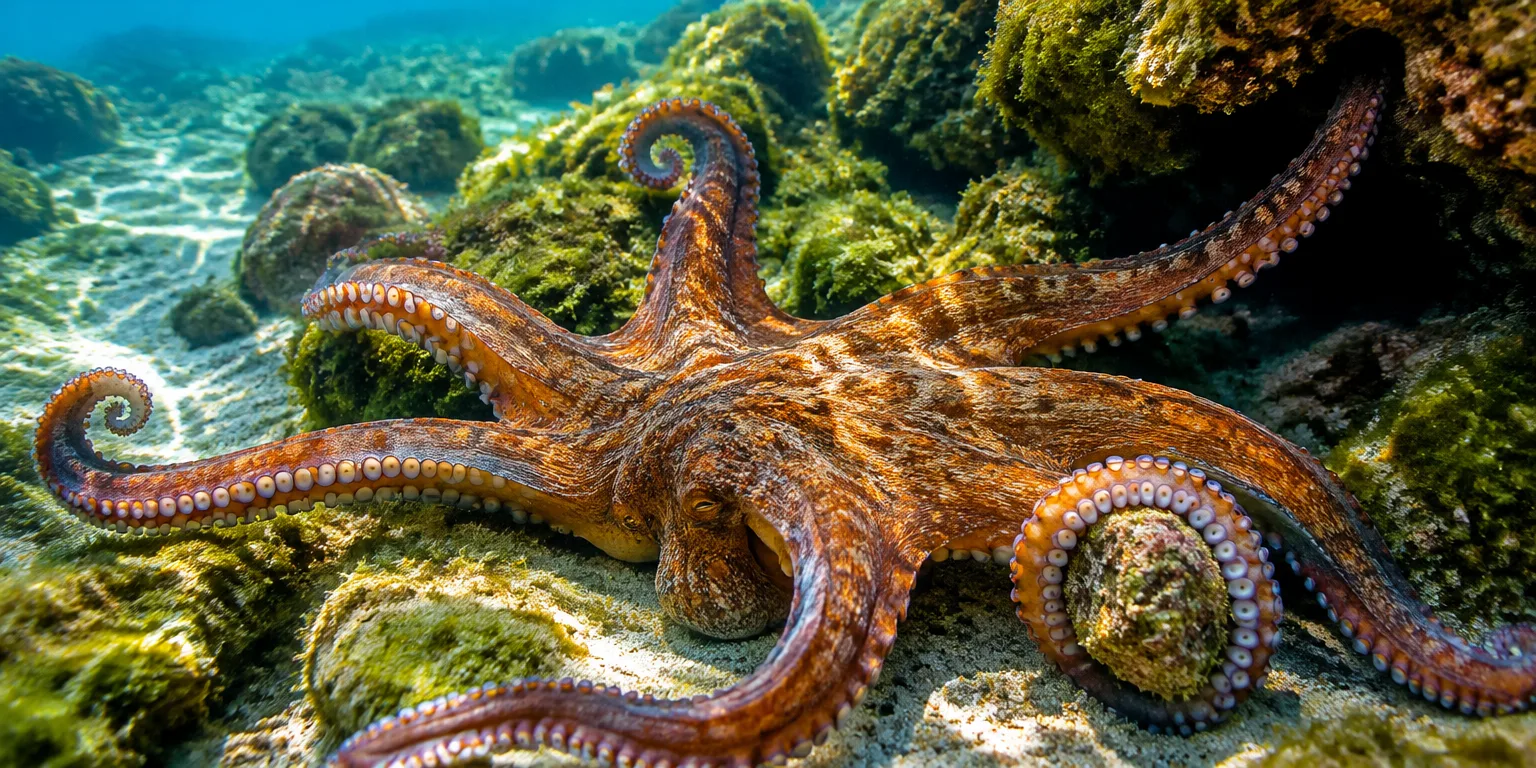
 TED-Ed · Why the octopus brain is so extraordinary - Cláudio L. Guerra
Most of an octopus's neurons, the nerve cells that carry signals, live in its arms rather than its head.
An octopus is a mollusk, a member of the soft-bodied animal group that includes garden snails. It carries about 500 million nerve cells, roughly the total for a dog. Only about 10% sit in the central brain, about 30% sit in the two large centers that handle vision, and the other 60% are spread through its eight arms.
Without a spine or lungs, the animal still has a large brain for its body size, on the scale seen in other intelligent animals such as crows, dolphins, and apes. Octopuses can solve puzzles, learn by watching, and use tools. They manage it with nervous systems built very differently from ours, with much of the control handed to the arms themselves.
Questions people ask
Do the arms really act on their own?
Partly, yes. The central brain can send a general command, such as grab, and the nerve cells in the arm work out the details of movement. A severed octopus arm can still make reaching motions for a short time because those local circuits remain active.
Why compare brain size to body size?
Bigger bodies need more brain tissue for basic control, so scientists look at whether a brain is large for the animal's size. Animals with relatively large brains, including octopuses, crows, dolphins, and apes, often show flexible learning. It is a rough guide, not a strict ranking of intelligence.
How smart is an octopus in everyday life?
In labs and aquariums, octopuses have opened jars, navigated mazes, and remembered solutions for weeks. In the wild, some carry coconut shells or stones for shelter and ambush prey. They typically live only one to two years.