Most of the World's Food Depends on Natural Gas
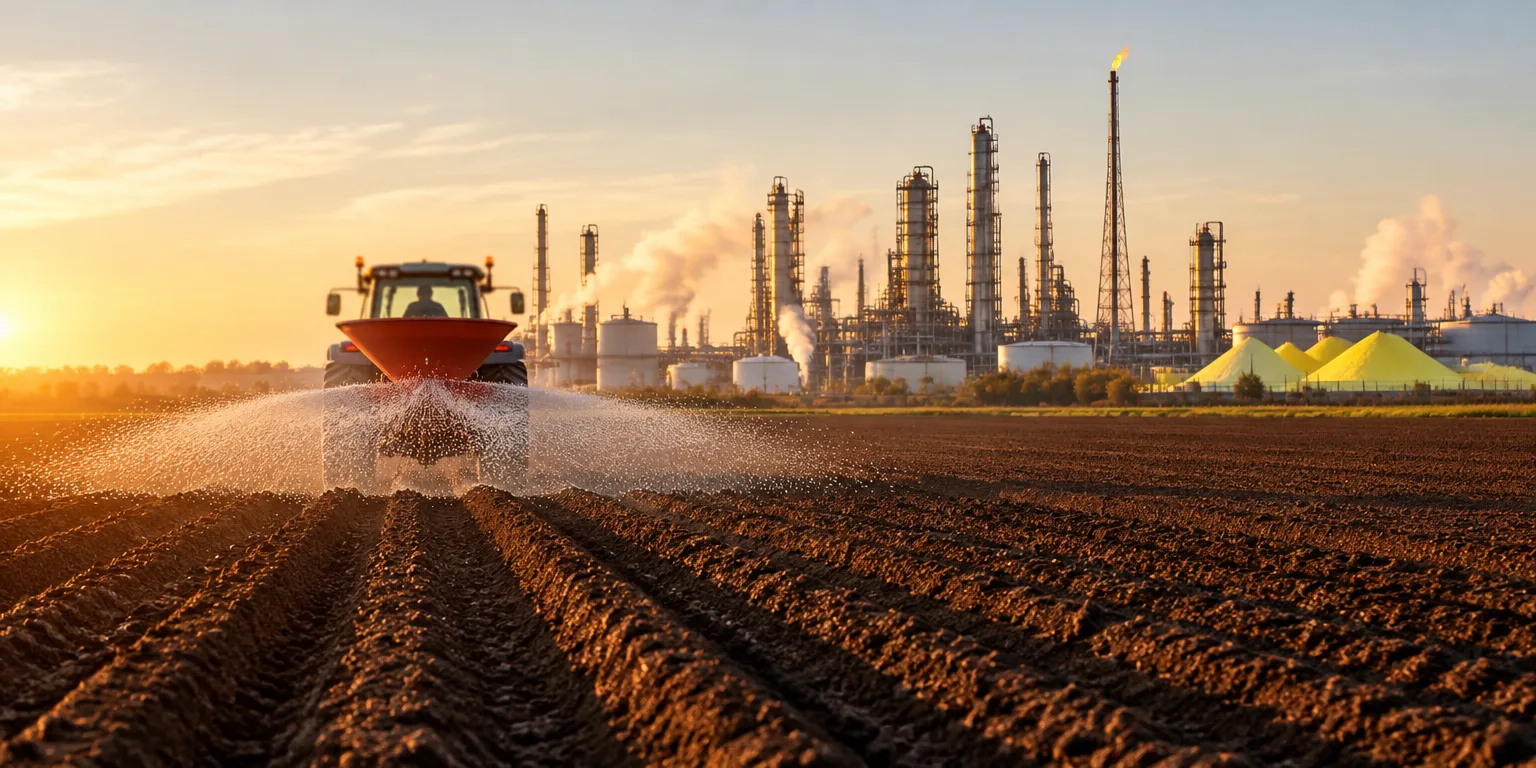
Modern fertilizer turns gas into food, with sulfur as a second key ingredient.
 The Tucker Carlson Show · Trump’s Energy Crisis Causes Food Shortages, Skyrocketing Prices, and Global Suffering. What’s Next?
Most fertilizer is natural gas in a bag. That is how energy analyst Morgan Downey describes it, and it explains why dinner depends on the same fuel that heats homes.
Plants need nitrogen to grow, and air is full of it, but crops cannot use it in that form. In the 1800s, farmers had to rotate crops and regularly plant crops that pull nitrogen from the air into the soil, or the soil wore out in a season or two and yields fell.
Around 1910, researchers in Europe found a shortcut called the Haber-Bosch process. Natural gas is a fuel made from ancient life buried underground, and the process takes hydrogen from that gas and joins it with nitrogen pulled from the air.
The result is ammonia and urea, powders that farmers spread on fields to put usable nitrogen straight into the soil. Downey says that trick increased crop yields by 500 to 600 percent over time, through cheap energy and cheap food.
That is why gas prices reach food prices. Downey puts American gas at about $2 to $3, while buyers in Asia pay about $30.
Downey says half of Qatar's production was knocked out in 2026, pushing up the cost of the gas feedstock that becomes fertilizer. He puts Qatar at about 20 percent of global output of LNG, the supercooled liquid form of gas shipped by tanker, and ammonia.
Sulfur is the second pinch point. It is stripped out of heavy crude oil and oil sands, so plentifully that Canada holds piles of yellow sulfur that producers would almost give away. In 2026, Downey says, the fertilizer industry was hit by both problems at once, lost Qatar gas and disrupted sulfur supply from the Middle East.
Questions people ask
Why can't plants just use nitrogen straight from the air?
Air is mostly nitrogen gas, but the two atoms are locked together so tightly that plants cannot break them apart. They need nitrogen in fixed forms, such as ammonia or nitrates, made by soil bacteria, lightning, or factories. Fertilizer simply supplies those usable forms in large amounts.
What is LNG?
LNG stands for liquefied natural gas. Gas is cooled to about minus 260 degrees Fahrenheit until it becomes a liquid, shrinking to roughly one six-hundredth of its gas volume. That makes it practical to move by ship, then warm back into gas at the destination.
Why is natural gas so much cheaper in the US than in Asia?
Gas is cheap to move by pipeline but costly to move across oceans. The United States has abundant production and pipelines, while buyers in Europe and Asia often depend on LNG tankers, cooling plants, and longer routes. Those extra steps, plus local supply and demand, widen the price gap.
What does sulfur have to do with fertilizer?
Sulfur is itself a plant nutrient, and large amounts of sulfuric acid are used to process phosphate rock into fertilizer. Most sulfur today comes as a byproduct of cleaning oil and gas, rather than from mines. So when oil and gas flows are disrupted, fertilizer makers can lose both energy and chemistry at once.