Mother Trees Recognize Their Young and Feed Them More
Injury increases the flow to relatives.
 TEDx Talks · Nature's internet: how trees talk to each other in a healthy forest | Suzanne Simard | TEDxSeattle
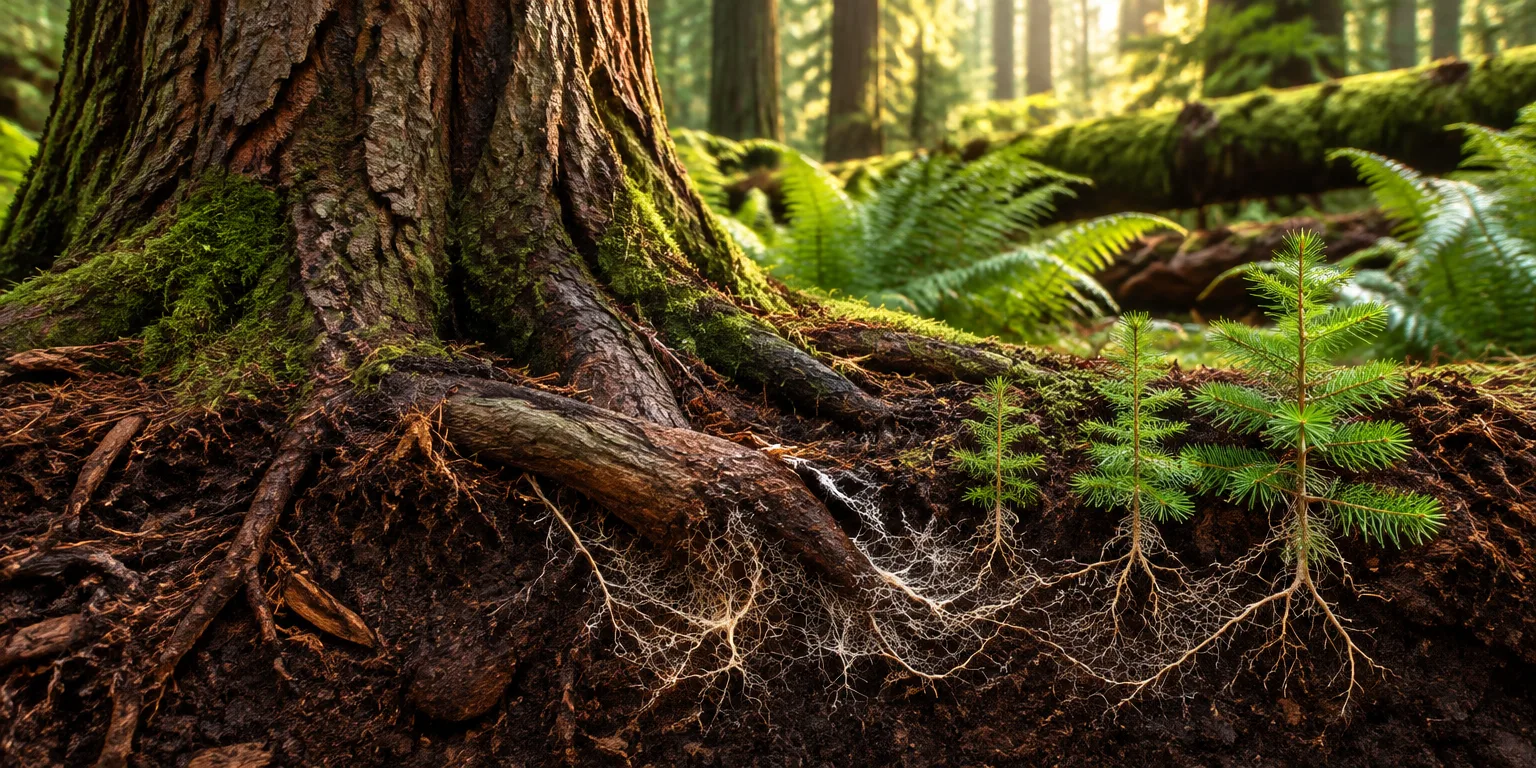
In one Douglas fir forest in British Columbia, researchers found that a big old mother tree can recognize her own seedlings in the understory, and she feeds them more than she feeds strangers.
Suzanne Simard, a forest scientist who studies those forests, found that the biggest, oldest trees sit at the center of underground webs made by fungal threads that join with tree roots. In that partnership, the fungus gathers water and nutrients from the soil and trades them for carbon, the food trees make through photosynthesis, and carbon moves through those threads from tree to tree.
The team grew related and unrelated seedlings near one mother and traced labeled carbon, using rare forms called isotopes, into each seedling. A mother sent measurably more to her kin than to unrelated seedlings nearby.
If the mother is injured, Simard said, "she sends even more carbon to her kin seedlings," as though "she's passing her energy, her legacy, to the next generation."
Questions people ask
Do all trees do this, or just Douglas fir?
The kin finding comes from Douglas fir, and related sharing has been seen between Douglas fir and birch. Scientists are still testing how widespread kin recognition is, but many forest trees form the same kind of fungal partnerships, so similar sharing may be common.